

img {width: auto;height: auto;}:root {–bs-screen-full: 100%;–bs-screen-xxl: 88%;–bs-screen-large: 83.23%;–bs-screen-mid: 74.19%;–bs-screen-small: 58%;–bs-screen-full-notebook: 100%;–bs-screen-xxl-notebook: 88%;–bs-screen-large-notebook: 88%;–bs-screen-mid-notebook: 88%;–bs-screen-full-pad: 100%;–bs-screen-xxl-pad: 88%;–bs-screen-large-pad: 88%;–bs-screen-mid-pad: 88%;–bs-screen-small-pad: 88%;–bs-screen-full-mobile: 100%;–bs-screen-xxl-mobile: 88%;–bs-screen-large-mobile: 88%;–bs-screen-mid-mobile: 88%;–bs-screen-small-mobile: 88%;–bs-font-sans-serif: ‘Poppins’;–bs-body-font-weight: 400;–bs-body-font-size: 16px;–bs-h-font-sans-serif: ‘Poppins’;–bs-h-font-weight: 500;–bs-h-font-size: 48px;–bs-nb-h-font-size: 30px;–bs-pad-h-font-size: 30px;–bs-mob-h-font-size: 24px;–bs-heading-color: #352824;–bs-body-color: #151515;–bs-body-bg: #fff;–bs-theme-color: #0164a7;–bs-sec-theme-color: #151515;–bs-link-color: #0788df;–bs-link-hover-color: #0164a7;}.demo195-body > .section-header-wrap-block.section-block-demo64-header > .layout.head > .nav > .active {margin-right: 10px;margin-left: 10px;}.demo195-body > .section-header-wrap-block.section-block-demo64-header > .layout.head > .nav > li {margin-right: 10px;margin-left: 10px;}.table-wrap table {margin-top: 0px;margin-right: 0px;margin-bottom: 0px;margin-left: 0px;width: 100% !important;}.table-wrap table tr:nth-child(2n) {background-image: initial;background-position-x: initial;background-position-y: initial;background-size: initial;background-repeat: initial;background-attachment: initial;background-origin: initial;background-clip: initial;background-color: rgb(241, 241, 241);}.table-wrap table tr:nth-child(2n+1) {background-image: initial;background-position-x: initial;background-position-y: initial;background-size: initial;background-repeat: initial;background-attachment: initial;background-origin: initial;background-clip: initial;background-color: rgb(255, 255, 255);}@media (min-width: 993px){.section-block-demo1-header {background-color: rgb(255, 255, 255);}.section-block-demo1-header .nav {padding-top: 0px;padding-right: 1rem;padding-bottom: 0px;padding-left: 1rem;justify-content: flex-end;}.section-block-demo1-header .nav > li {font-size: 18px;margin-top: 0px;margin-right: 33px;margin-bottom: 0px;margin-left: 33px;text-transform: uppercase;}.section-block-demo1-header .nav > li > a {color: rgb(95, 112, 128);line-height: 70px;padding-top: 10px;padding-right: 0px;padding-bottom: 10px;padding-left: 0px;}.section-block-demo1-header[head-active-bg=”head-ac-bg”][head-active-style=”1″][head-active-bg-ani=”head-ac-bg-an4″] .nav > li > a::after {bottom: 0px;}.section-header-wrap-block .change-language .change-language-title {font-size: 16px;color: rgb(95, 112, 128);text-transform: uppercase;}} .go1475592160{height:0;}.go1671063245{height:auto;}.go1888806478{display:flex;flex-wrap:wrap;flex-grow:1;}@media (min-width:600px){.go1888806478{flex-grow:initial;min-width:288px;}}.go167266335{background-color:#313131;font-size:0.875rem;line-height:1.43;letter-spacing:0.01071em;color:#fff;align-items:center;padding:6px 16px;border-radius:4px;box-shadow:0px 3px 5px -1px rgba(0,0,0,0.2),0px 6px 10px 0px rgba(0,0,0,0.14),0px 1px 18px 0px rgba(0,0,0,0.12);}.go3162094071{padding-left:20px;}.go3844575157{background-color:#313131;}.go1725278324{background-color:#43a047;}.go3651055292{background-color:#d32f2f;}.go4215275574{background-color:#ff9800;}.go1930647212{background-color:#2196f3;}.go946087465{display:flex;align-items:center;padding:8px 0;}.go703367398{display:flex;align-items:center;margin-left:auto;padding-left:16px;margin-right:-8px;}.go3963613292{width:100%;position:relative;transform:translateX(0);top:0;right:0;bottom:0;left:0;min-width:288px;}.go1141946668{box-sizing:border-box;display:flex;max-height:100%;position:fixed;z-index:1400;height:auto;width:auto;transition:top 300ms ease 0ms,right 300ms ease 0ms,bottom 300ms ease 0ms,left 300ms ease 0ms,max-width 300ms ease 0ms;pointer-events:none;max-width:calc(100% – 40px);}.go1141946668 .notistack-CollapseWrapper{padding:6px 0px;transition:padding 300ms ease 0ms;}@media (max-width:599.95px){.go1141946668{width:100%;max-width:calc(100% – 32px);}}.go3868796639 .notistack-CollapseWrapper{padding:2px 0px;}.go3118922589{top:14px;flex-direction:column;}.go1453831412{bottom:14px;flex-direction:column-reverse;}.go4027089540{left:20px;}@media (min-width:600px){.go4027089540{align-items:flex-start;}}@media (max-width:599.95px){.go4027089540{left:16px;}}.go2989568495{right:20px;}@media (min-width:600px){.go2989568495{align-items:flex-end;}}@media (max-width:599.95px){.go2989568495{right:16px;}}.go4034260886{left:50%;transform:translateX(-50%);}@media (min-width:600px){.go4034260886{align-items:center;}} .site-header,.site-footer,.hostinger-ai-page-title,.wp-block-post-title,.wp-block-post-featured-image{display:none!important} html{scroll-behavior:smooth}body{margin:0;background:#fff} .wp-site-blocks{padding:0!important}main.wp-block-group{margin:0!important;padding:0!important} .wp-block-post-content{max-width:none!important;margin:0!important;padding:0!important} main.wp-block-group>.wp-block-group:first-child{display:none!important} .saky-source-page{font-family:Poppins,”Segoe UI”,Arial,sans-serif;color:#151515;background:#fff} .saky-source-page *{box-sizing:border-box} .saky-source-page img{max-width:100%} .saky-source-page a{text-decoration:none} .saky-source-page .section-header-wrap-block{position:relative;z-index:40;background:#fff} @media(max-width:992px){.saky-source-page .layout{max-width:92%!important;width:92%!important}.saky-source-page table{display:block;max-width:100%;overflow-x:auto}}
Leave Your Message
.section-header-wrap-block.fixed-nav { background: #fff; }
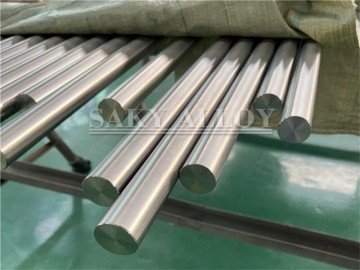
Seamless titanium tubes in multiple diameters on a clean inspection bench

Titanium technical resource | standards & applications

Grade 2 vs Grade 5 vs Grade 7 vs Grade 12 Titanium Pipe Fittings
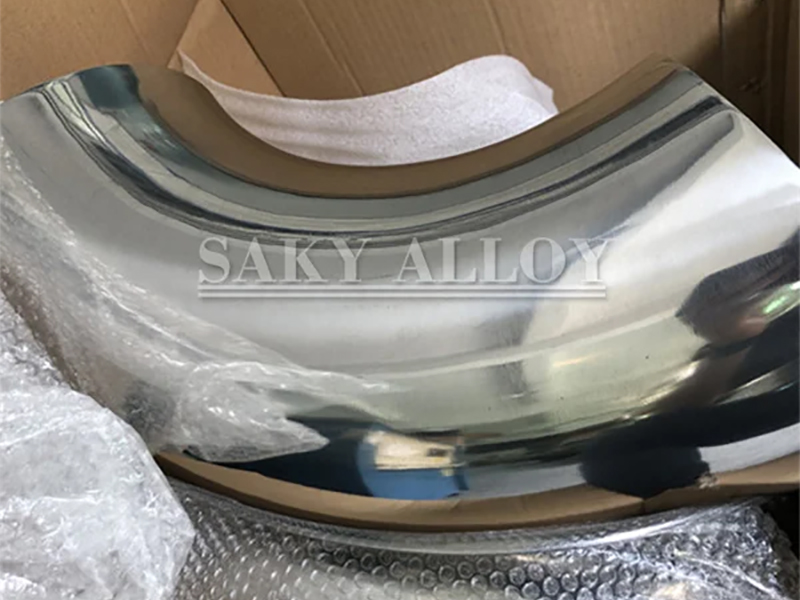
Compare Grade 2, Grade 5, Grade 7 and Grade 12 titanium pipe fittings by alloy family, strength, corrosion-selection intent, welding and RFQ requirements.

  • Standards-aware sourcing guidance
  • Grade and application comparisons
  • Inspection and RFQ considerations
.section-breadcrumb-wrap-block { background-color: #eee; } .section-breadcrumb-wrap-block .breadcrumb-nav { padding: 20px 0; } .section-breadcrumb-wrap-block .breadcrumb-nav li { list-style: none; margin-right: 15px; } .section-breadcrumb-wrap-block .breadcrumb-nav li a { display: inline-block; margin-right: 10px; } .section-breadcrumb-wrap-block .breadcrumb-nav li .la:after { content: “f105”; } .section-breadcrumb-wrap-block .breadcrumb-nav li:last-of-type .la { display: none; } .section-breadcrumb-wrap-block .breadcrumb-nav li:last-of-type a { color: var(–bs-theme-color); }

Grade 2 vs Grade 5 vs Grade 7 vs Grade 12 Titanium Pipe Fittings

2026-08-11

Grade 2 Grade 5 Grade 7 and Grade 12 titanium pipe fittings

Grade 2, Grade 5, Grade 7 and Grade 12 titanium fittings are selected for different combinations of corrosion resistance, strength and fabrication—not by assuming that a higher grade number is better. Match the fitting to the connected pipe, service chemistry, temperature, pressure design, welding procedure and governing code.

Titanium Fitting Grade Comparison

GradeUNS / alloy familyPrimary selection emphasisCritical review
Grade 2R50400, commercially pure titaniumGeneral corrosion resistance, formability and weldabilityService chemistry, strength, crevices and connected pipe
Grade 5R56400, Ti-6Al-4VHigher strength and strength-to-weight performanceCorrosion compatibility, product route, welding and code acceptance
Grade 7R52400, palladium-alloyed commercially pure titaniumSelected reducing or crevice-corrosion conditionsComplete chemical environment and economic justification
Grade 12R53400, Ti-Ni-Mo alloySelected corrosion and elevated-temperature strength requirementsSpecification, availability, forming and welding procedure

Use current product specifications and certified values for exact chemistry and mechanical acceptance. This matrix supports initial selection only.

Separate Strength Selection From Corrosion Selection

Grade 5 is commonly considered when higher strength is required, but higher strength does not prove better corrosion performance in a given process. Grade 7 and Grade 12 may be chosen for specific corrosion conditions, but neither is a universal upgrade. Review fluid composition, concentration, temperature, aeration, contaminants, velocity, deposits, crevices, cleaning and upset conditions.

Match the Connected Pipe and Welding Procedure

Confirm whether fitting and pipe grades are the same or part of an engineered dissimilar-grade joint. Define filler-metal policy, WPS/PQR, heat treatment, cleanliness and shielding. A substitution that appears acceptable by chemistry may change strength, corrosion behavior, weld qualification and code compliance.

Product Form and Manufacturing Route

The requested grade must be available in the required fitting type, wall, size and construction. State seamless or welded route where required, applicable product and dimensional standards, and whether the component is standard or drawing-specific. Do not copy allowable dimensions or properties from plate, bar or pipe when the fitting specification controls acceptance.

Product Options

Grade 2 Titanium Fittings, Grade 5 Titanium Fittings, Grade 7 Titanium Fittings, Grade 12 Titanium Fittings and the Titanium Fittings family.

Send the Service Before Fixing the Grade

Provide the medium, all operating temperatures, pressure, connected pipe, fitting type, dimensions, welding code and inspection requirements for review.

RFQ Checklist

  • Service medium, concentration, temperature and upset conditions
  • Grade, product standard, dimensional standard and revision
  • Fitting type, NPS/OD, wall, ends and quantity
  • Connected pipe, welding and heat-treatment requirements
  • Inspection, certificate and traceability

FAQ

Is Grade 7 always more corrosion resistant than Grade 2?

No. Grade 7 offers advantages in selected environments; suitability depends on the actual service.

Can Grade 5 fittings be welded to Grade 2 pipe?

Only after engineering and welding-procedure review. Strength, corrosion, filler metal and code requirements must be addressed.

Can grades be distinguished visually?

No. Use marking, traceability, material certificates and required verification testing.

Related Reading

Butt Weld Fittings Matrix · Seawater and Desalination Components · Grade 2 vs Grade 7 Tube

.section-block-demo1-pagenew1 { position: relative; } .section-block-demo1-pagenew1 .new-title { font-size: 1.8rem; margin-bottom: 2rem; } .section-block-demo1-pagenew1 .new-time { color: #aaa; } .section-block-demo1-pagenew1 .new-time svg { fill: #aaa; } .section-block-demo1-pagenew1 .item-desc { line-height: 2; margin-top: 2rem; }

WhatsApp