

Titanium Butt Weld Fittings Purchasing Matrix: Elbows, Tees, Reducers and Ends
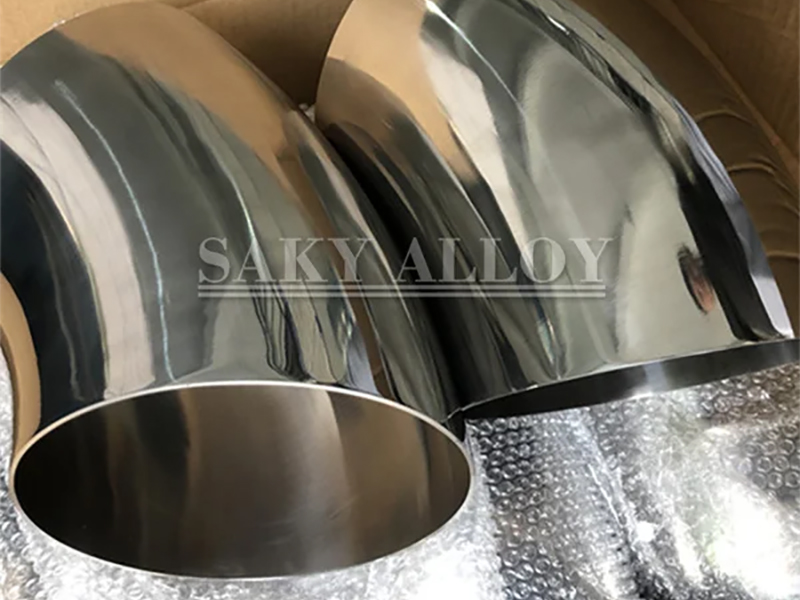
A titanium butt weld fitting must be ordered by function, alloy grade, pipe size or outside diameter, wall thickness, geometry, end preparation, dimensional standard and inspection scope. “Titanium fitting” or grade and quantity alone cannot define a manufacturable or verifiable component.
Titanium Butt Weld Fittings Purchasing Matrix
| Fitting type | Function | Critical RFQ dimensions | Selection note |
|---|---|---|---|
| 45° or 90° elbow | Changes direction | NPS/OD, wall, angle, radius and center-to-end | State long- or short-radius geometry and dimensional standard |
| 180° return bend or pipe bend | Reverses or redirects flow | OD, wall, bend radius, center spacing, tangent length and ends | Distinguish a standard fitting from a drawing-specific bend |
| Equal or reducing tee | Creates or combines a branch | Run size, branch size, wall, center-to-end and bevels | Define branch transition and any reinforcement requirement |
| Concentric or eccentric reducer | Changes line size | Large end, small end, walls, length and offset orientation | Eccentric reducers require flat-side orientation in the assembly |
| Cap | Closes a line end | Size, wall, depth, shape and bevel | Confirm pressure design and mating pipe |
| Stub end | Provides a lap-joint flange interface | OD, wall, overall length, lap diameter and radius | Match the backing flange and facing arrangement |
Material and Product Standards
State the titanium grade and applicable material specification. ASTM B363 or ASME SB363 may apply to seamless and welded titanium and titanium-alloy welding fittings when the product is within scope. The dimensional standard or approved drawing must also be stated. Material compliance does not by itself define geometry, pressure rating or end dimensions.
Wall, Ends and Mating Pipe
Provide the connected pipe OD or NPS, schedule or actual wall, corrosion allowance and end preparation. Confirm wall transitions at tees and reducers, bore matching, bevel angle, root face and alignment tolerance. A schedule designation alone may not fully define custom or nonstandard titanium components.
Manufacturing Route and Inspection
Define seamless or welded construction where the specification or project requires it, starting-material route, forming, heat treatment and weld controls. Inspection may include chemistry and mechanical certification, dimensions, surface condition, penetrant testing, radiography or ultrasonic examination, and pressure testing when applicable. Select examinations from the governing specification, code and service risk rather than requesting every optional test.
Available Product Types
Titanium Butt Weld Fittings, 45° Elbow, 90° Elbow, Equal Tee, Reducing Tee, Concentric Reducer, Eccentric Reducer, Pipe Cap and Stub End.
Request a Fitting Review
Send the line class or drawing, grade, fitting type, dimensions, wall, quantity, service, tests and destination. For fabricated assemblies, also review Titanium Pipe Spools.
RFQ Checklist
- Fitting type, grade and governing specifications
- NPS/OD, wall or schedule, geometry and dimensions
- Ends, bevels, mating pipe and welding code
- Seamless or welded route where required
- NDE, pressure testing, certificate and traceability
- Quantity, packaging, destination and delivery date
FAQ
Can fittings be quoted from pipe size and schedule only?
No. Fitting type, grade, geometry, dimensional standard, ends, quantity and inspection are also required.
Is a formed pipe bend the same as an elbow?
Not automatically. They can follow different geometry, manufacturing routes and dimensional requirements.
Does ASTM B363 define every fitting dimension?
No. Invoke the applicable dimensional standard or approved drawing in addition to the material/product specification.
Related Reading
Titanium Fitting Grade Comparison · Fittings for Seawater and Desalination · Pipe Spool RFQ Guide
Related Titanium Fitting Products
Move from the geometry matrix to the relevant product page for dimensions, material options, inspection details and an RFQ form.