

Waterjet vs Laser vs Machined Titanium Circular Blanks
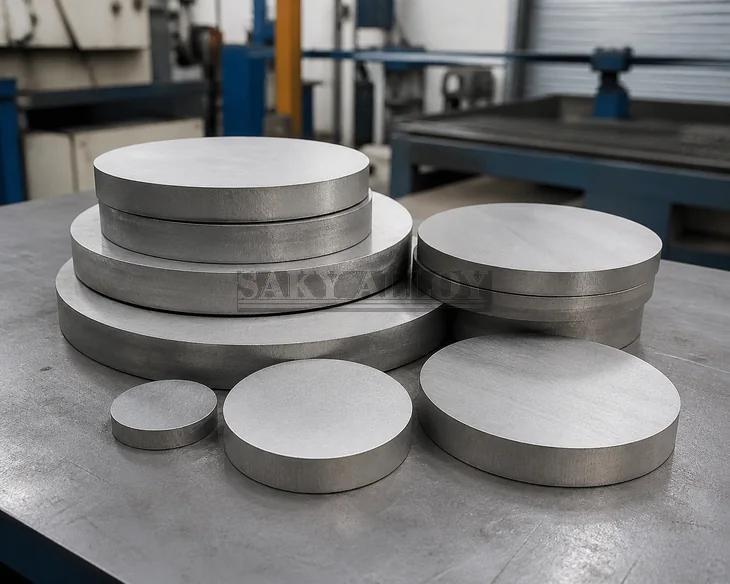
Select the titanium circular-blank cutting route from the finished-part drawing, edge acceptance and machining allowance. Appearance alone does not show heat input, taper, contamination or remaining cleanup.
Process Comparison
| Route | Useful feature | Critical review |
|---|---|---|
| Waterjet | Low thermal input and flexible nesting | Taper, striations, embedded abrasive and allowance |
| Laser | Fast profile cutting where suitable | Heat-affected edge, dross and required removal |
| Machined profile | Controlled OD and edge finish | Workholding, stock allowance, cost and inspection |
Define the Delivered Edge
State as-cut, cleaned, ground, rough-machined or finish-machined condition. Give OD tolerance, roundness, edge squareness/chamfer, burr limit and cleanup allowance. Critical use may require complete removal of the original cut edge.
Material Integrity and Inspection
Cutting must preserve material identification and heat traceability. Specify visual/dimensional inspection and any penetrant or other examination after edge preparation. The downstream manufacturer remains responsible for finished-part qualification.
Choose Grade and Delivered Condition
Review Grade 2 Circular Blank and Grade 5 Circular Blank.
RFQ Checklist
- Grade, source plate and condition
- OD, thickness, tolerance and quantity
- Permitted cutting route and delivered edge
- Machining allowance and finished application
- Inspection, marking and traceability
FAQ
Is waterjet always superior because it is cold cutting?
No. Taper, edge quality, contamination, accuracy, quantity and cost must be compared.
Can laser-cut edges remain on the final part?
Only when the drawing and qualified manufacturing plan permit the resulting edge condition.
Related Reading
Grade 2 vs Grade 5 · Specify Circular Blanks · Blank vs Forged Disc