

Titanium Strip Applications and Selection Guide
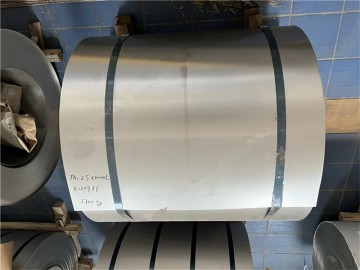
Titanium strip is selected for continuous or repeat fabrication where corrosion resistance, low density, controlled gauge and slit-width accuracy are important. The correct grade, condition, dimensions and coil configuration follow the service environment and downstream stamping, forming, welding or assembly process.
Application Selection Matrix
| Application area | Why strip is considered | Critical selection data |
|---|---|---|
| Chemical-processing components | Corrosion-resistant material for formed liners, seals and small fabricated parts | Medium, temperature, crevices, grade, forming and welding |
| Heat-transfer and energy equipment | Controlled gauge and repeat dimensions for formed components | Gauge, width, flatness/camber, cleanliness and joining route |
| Marine and desalination equipment | Chloride-service component fabrication | Water chemistry, galvanic contact, grade, strain and inspection |
| Precision stamping and roll forming | Continuous feed and repeatable part production | Thickness, slit width, burr, camber, coil set and mechanical direction |
Start With Service and Downstream Processing
For corrosion service, provide chemicals, concentration, temperature, contaminants, deposits, cleaning and upset conditions. For formed parts, identify tooling, bend direction, minimum radius, draw depth, joining and expected production speed. A grade suitable for the environment can still be unsuitable for a severe forming route or required condition.
Thickness, Width and Coil Configuration
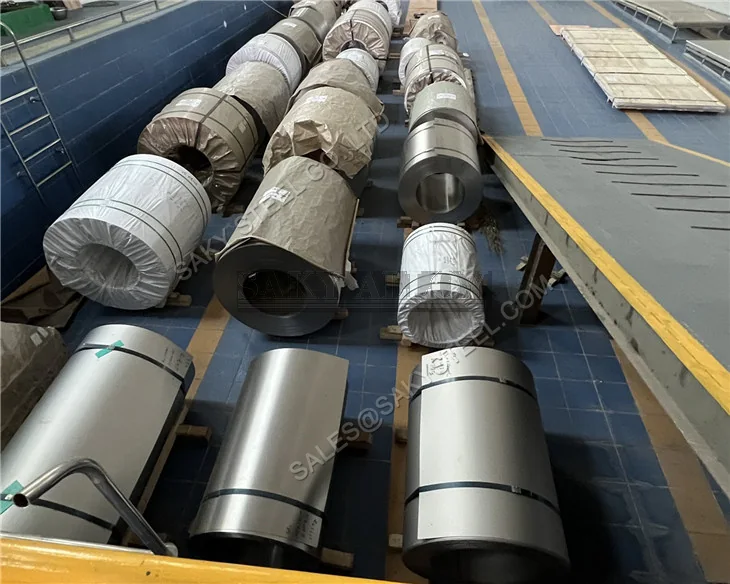
State thickness and width tolerances, coil ID and maximum OD, maximum unit weight, winding orientation and whether multiple coils may satisfy the quantity. Processing lines often have strict mandrel, lifting and payoff limits. Define minimum acceptable coil length when welds or frequent coil changes disrupt production.
Edge, Camber and Surface Control
Specify slit or mill edge, permitted burr height and direction, edge cracks, camber, coil set and telescoping. Define finish, cleanliness, allowed handling marks and protective packaging. Edge and surface requirements should follow their effect on tooling, forming, weld quality and finished appearance.
Grade, Condition and Inspection
Invoke the material specification and revision, alloy grade and condition. Require chemistry, mechanical properties, dimensions, surface inspection, heat or lot traceability and certificate format. When forming behavior is critical, state test direction or request production trials rather than relying on a generic elongation value.
Match the Strip to the Process
Compare Grade 1, Grade 2, Grade 7 and Grade 12 Titanium Strip.
RFQ Checklist
- Application, environment and downstream process
- Grade, specification, revision and condition
- Thickness, width, tolerances and quantity
- Coil ID/OD, weight, winding, edge, burr and camber
- Surface, inspection, certificate, traceability and packaging
FAQ
Which grade is best for stamping?
There is no universal answer. Forming severity, condition, thickness, direction, service and finished-part requirements must be reviewed.
Why specify camber?
Excess lateral curvature can cause poor tracking, feeding and dimensional variation during continuous processing.
Does corrosion-resistant strip need clean handling?
Yes. Contamination, surface damage and crevices can affect fabrication and service performance.
Related Reading
Strip vs Sheet vs Foil · Strip Grade Comparison · Titanium Coil RFQ Data