

Titanium Solid Rivets vs Blind Rivets
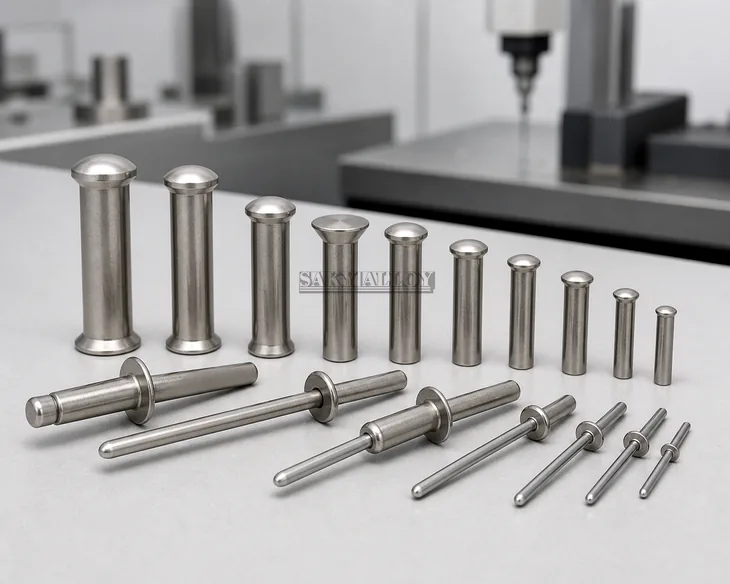
Solid rivets normally require access and support appropriate to forming the tail, while blind rivets are installed from one side with a body and mandrel system. Selection depends on access, clamped thickness, load, hole preparation, service and inspection.
Comparison
| Item | Solid rivet | Blind rivet |
|---|---|---|
| Installation access | Typically requires both sides or approved backing support | Designed for one-side installation |
| Length definition | Shank length and upset allowance | Grip range and installed configuration |
| Critical controls | Hole fit, forming force, driven head and damage | Body expansion, mandrel retention, installed head and grip |
Joint Data
Provide titanium grade, rivet type, head geometry, diameter, length or grip range, total clamped thickness, hole diameter, joint materials, temperature, corrosion exposure, installation equipment and acceptance criteria.
Material Compatibility
Titanium rivets are not automatically interchangeable with aluminum, steel or nickel-alloy rivets. Differences in stiffness, strength, forming load, thermal expansion and galvanic behavior require joint review.
Define the Installed Joint
Review Titanium Rivets and send the stack thickness, access, hole, load, service and inspection data.
FAQ
Can a blind rivet be selected only by diameter?
No. Grip range, body and mandrel material, head, hole, installation tool and service conditions are required.
Can solid rivets be reused?
No. A removed permanent rivet should be replaced according to the approved repair procedure.
Related Reading
Titanium Fastener Purchasing Matrix · How to Prevent Galling