Direct Answer: When Should a Shaped Titanium Bar Be Used?
Use hex, square or flat titanium bar when its cross-section is closer to the finished component and reduces machining removal, cycle time or scrap compared with round bar. The benefit must be balanced against shaped-stock availability, dimensional tolerances, corner condition, grain orientation, straightness and minimum order quantity.
Shaped-Bar Selection Matrix
| Starting form | Primary dimensions | Typical component fit |
|---|
| Hex bar | Across flats, corners, twist, straightness | Fasteners, valve parts, wrench-driven and six-sided components |
| Square bar | Side, diagonals, squareness, corners, twist | Blocks, keys, tooling blanks and four-sided machined parts |
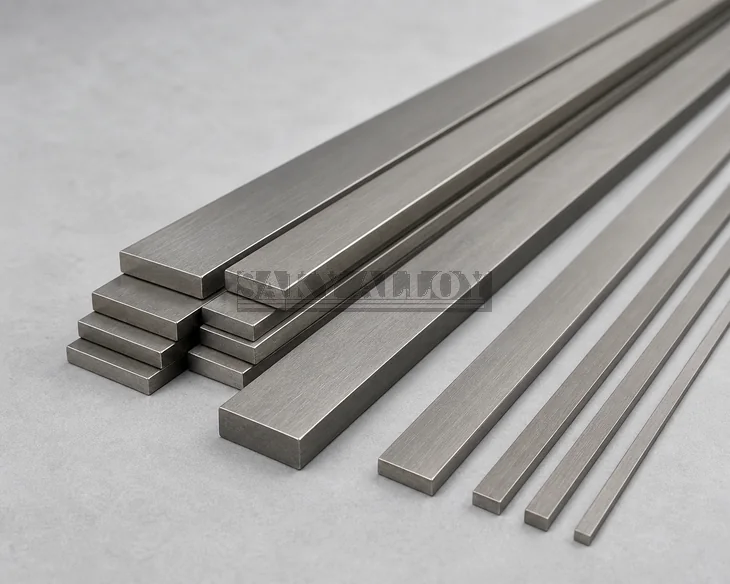
| Flat bar | Thickness, width, edge, flatness and camber | Brackets, straps, frames and rectangular parts |
| Hollow bar | OD, ID, wall, eccentricity and straightness | Bushings, sleeves, rings and annular machined parts |
Application and Grade Selection
Grade 2 is commonly reviewed for chemical-process, marine and desalination components where corrosion resistance, ductility and weldability are important. Grade 5 Ti-6Al-4V is reviewed for aerospace, motorsport and higher-load machined parts. Grade selection must follow actual service chemistry, stress, temperature, fatigue, fabrication and the controlling specification.
Do not quote shaped bar using an approximate round diameter. Hex bar needs an across-flats dimension and corner definition. Square bar needs side and diagonal control. Flat bar requires thickness, width, edge and flatness. Hollow bar requires OD, ID, wall and eccentricity. State whether rolled, drawn, forged or machined-from-round material is acceptable because route affects corners, surface, grain direction and cost.
FAQ
Does shaped bar always reduce cost?
No. It can reduce machining waste, but availability, minimum quantity, tooling and tighter shape tolerances may offset the saving.
Can flat bar be cut from plate?
Sometimes, but rolled flat bar and plate-cut strip can differ in grain direction, edge condition, tolerance and certification. State the acceptable route.
What belongs in the RFQ?
Provide grade and standard, exact cross-section, dimensions and tolerances, length, condition, surface, quantity, finished drawing, inspection and documents.
Titanium Hex Bar | Titanium Square Bar | Titanium Flat Bar | Titanium Hollow Bar | Request a quote