

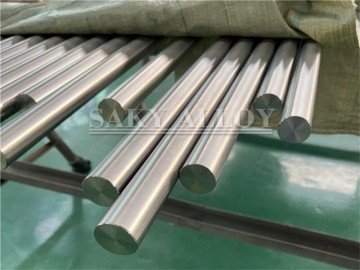
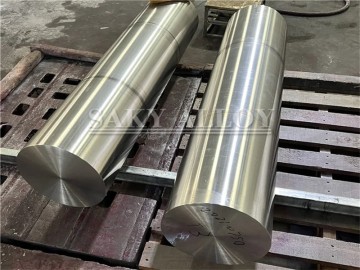
Titanium Bar Quotations: Compare Billable Weight and Usable Yield
The lowest price per kilogram is not always the lowest cost per usable titanium bar blank. Before comparing offers, align the material specification, stock diameter, ordered length, billing basis, cutting allowance and inspection package. Then compare the total cost for the same quantity of acceptable blanks. This is a purchasing comparison, not permission to reduce an engineering requirement.
Start with One Common Purchase Schedule
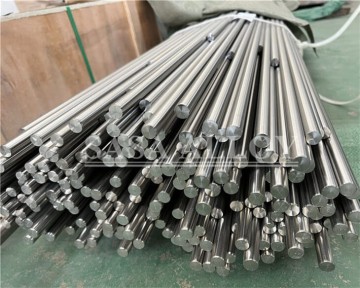
Send every bidder the same schedule: grade and UNS designation, governing standard and revision, diameter or section, condition, surface, dimensional tolerances, length, quantity and documents. ASTM B348/B348M addresses titanium bars and billets; it should not be substituted for a flat-product specification just because the alloy name matches. Identify any additional drawing or project requirements separately.
For commercially pure stock, review Grade 2 titanium bar. For a specification-led order, use the ASTM B348 titanium bar page. Neither a grade name nor an advertised size confirms current availability: obtain written confirmation for the complete schedule.
A Side-by-Side Quotation Comparison
| Compare | Ask each bidder to state | Common mismatch |
|---|---|---|
| Material scope | Grade, standard edition, condition and certification | Same alloy name but different test or acceptance requirements |
| Billing basis | Actual net weight, theoretical weight, or price per piece | Comparing rates without comparing payable quantity |
| Stock dimensions | Diameter tolerance and supplied length | Larger stock weight without more usable finished pieces |
| Cutting scope | Cut count, kerf allowance, end trim and cut-length tolerance | A mill-length offer compared with a cut-blank offer |
| Inspection | Included tests, methods, acceptance criteria and documents | Required examination priced as an extra or omitted |
| Delivery scope | Packing, freight basis, named destination and exclusions | Comparing shipment costs on different delivery terms |
Distinguish Net, Gross and Theoretical Weight
Net weight means material weight without packaging; gross shipment weight includes packing. Theoretical weight is calculated from nominal geometry and an assumed density. It is useful for planning, but dimensional variation and the agreed billing method can make the invoice differ from that estimate. Ask which basis controls payment and whether a weighbridge or packing-list weight is provided.
For round bar, theoretical weight in kilograms is π/4 × diameter² × length × density when diameter and length are in metres and density is in kg/m³. Use the density appropriate to the ordered alloy. The titanium weight calculator helps with estimates; it does not replace the order’s contractual weight basis.
Calculate Cut-Length Yield Before Comparing Unit Prices
Ask how many acceptable blanks can be produced from each supplied bar after end trimming, saw kerf and required machining allowance. A planning check is: total blank lengths + total cutting losses + end trim must fit within usable stock length. The actual cutting plan must confirm the number of cuts and the usable ends.
For example, 20 blanks at 250 mm require 5,000 mm of blank length. If the planning assumption is 20 cuts at 3 mm kerf plus 40 mm total end trim, the required length is 5,100 mm. This is an illustrative arithmetic example, not a stated cutting capability or tolerance. A 5,000 mm bar cannot meet that assumed cutting plan.
A useful comparison is total quoted cost for the agreed scope ÷ number of acceptable blanks. Apply the same definition of acceptable blank, inspection and delivery scope to every offer. Do not count unusable offcuts as finished output; agree whether reusable remnants are returned and how they retain traceability.
Reduce Cost Without Silently Changing the Specification
- Review compatible mill lengths and a consolidated cut schedule.
- Separate genuinely critical tolerances from dimensions that will be machined later.
- Ask whether different sizes can share packing and dispatch, while keeping each heat identifiable.
- Request the cost of optional services separately from mandatory tests.
- Keep any alternative grade, condition or route as a separately identified proposal requiring engineering approval.
For the broader factors behind minimum quantities and price, see the bulk titanium MOQ and alternatives guide. For the ordered finish, compare hot-rolled, forged, peeled and ground bar.
FAQ
Should every quotation use price per kilogram?
No. Per-piece offers can be appropriate for cut blanks. Convert competing offers to the same acceptable output and included scope before comparison.
Does a larger diameter tolerance increase the invoice?
It can when the material is billed by actual weight. It may also increase machining removal. Confirm the permissible size range and billing basis rather than assuming nominal weight controls.
Can testing be removed to lower the price?
Only optional tests can be reconsidered without changing mandatory acceptance requirements. Any change to a project, drawing or material-standard requirement needs the responsible party’s approval.
Send a Comparable Titanium Bar RFQ
Send your grade, standard revision, stock dimensions, finished blank sizes, annual or batch quantity, test requirements, billing preference and destination. Browse the titanium bar range or send the schedule for quotation. Request that any deviation or alternative is stated separately.
Material-standard scope reference: ASTM B348/B348M — Titanium and Titanium Alloy Bars and Billets. Use the revision specified by your purchase order.