

How to Specify Titanium Forged Nozzles
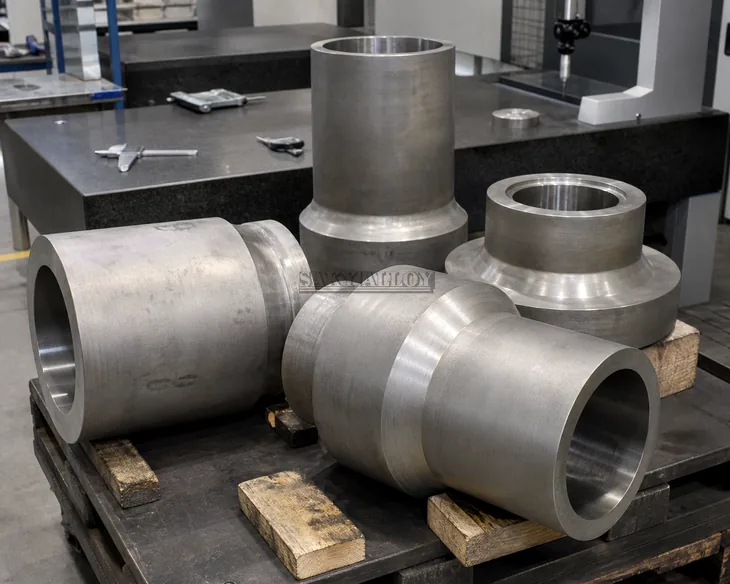
A titanium forged-nozzle RFQ must define both the finished pressure-boundary component and the forging envelope used to machine it. Grade and nominal bore alone do not establish hub, reinforcement, weld end, stock or inspection.
Geometry Definition Matrix
| Area | Required definition |
|---|---|
| Flow path | Finished bore, wall and internal transition |
| External form | OD, hub, shoulder, reinforcement and overall length |
| Weld interface | Preparation, angle, land, root and vessel-side transition |
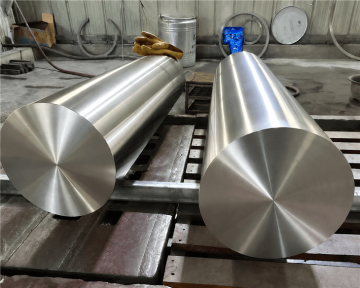
| Forging stock | Envelope, allowance by surface, datums and rough-machined condition |
Material and Forging Route
State titanium grade, ASTM B381/ASME SB381 or other specification, condition, heat treatment, specimen orientation, forging reduction and required product form. Clarify whether hollow forging, pierced blank or bored solid blank is permitted by the approved design.
Pressure-Design Boundary
The equipment code drawing and responsible design authority control geometry, reinforcement, pressure-temperature basis and weld details. A material standard qualifies forging material within scope; it does not alone qualify the finished nozzle.
NDE, Dimensions and Traceability
Define UT/PT procedure, coverage, stage and acceptance criteria; dimensional report points; surface acceptance; MTC; heat identity; mechanical results; marking and any third-party witness. “UT required” without procedure and acceptance is incomplete.
Send the Code Drawing and Forging Envelope
See Titanium Forged Nozzles and Titanium Forgings.
RFQ Checklist
- Code drawing, revision and design basis
- Grade, forging specification and condition
- Finished geometry, weld end and stock envelope
- Heat treatment, testing and NDE plan
- Reports, marking, traceability and quantity
FAQ
Can thick titanium pipe replace a forged nozzle?
Only if the approved design accepts the product form, properties, geometry, reinforcement, welding and inspection.
Is ASTM B381 enough for a finished nozzle?
No. The finished component also needs drawing, code, machining, weld and NDE definitions.
Related Reading
Pressure Vessel Head Selection · Forging Machining Allowance · Forging Form Selection