
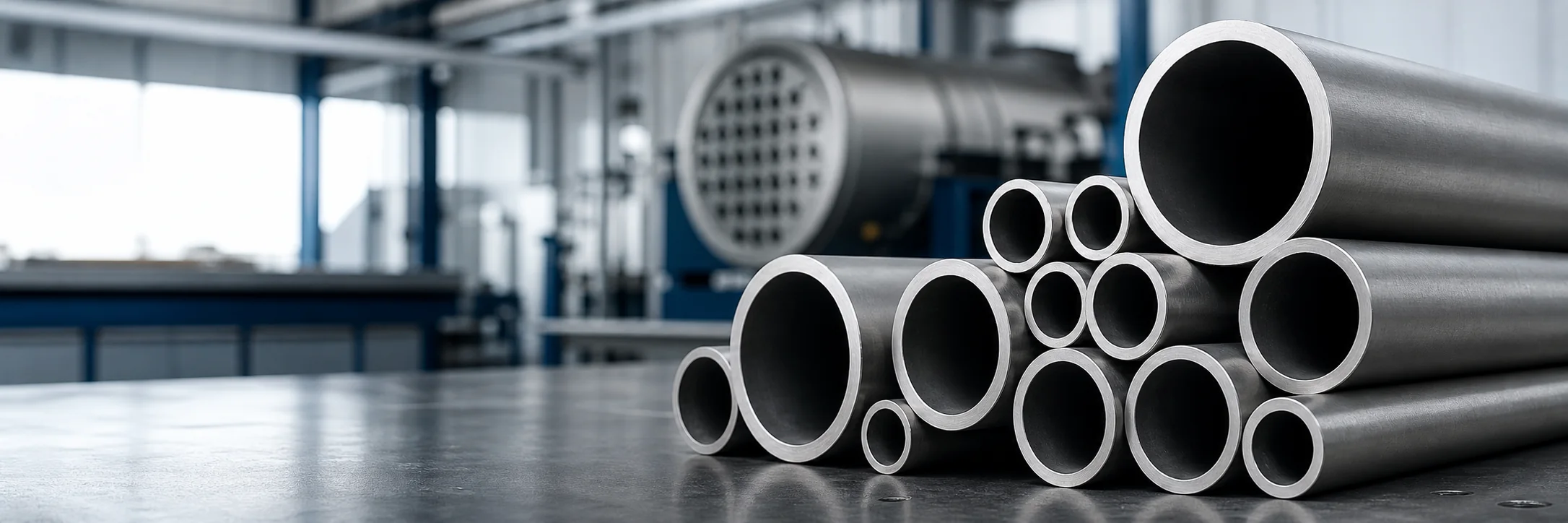
Titanium Pipe Spools for Chemical, Marine and Desalination Systems
Titanium pipe spools can reduce field welding in chemical, marine and desalination systems, but their reliability depends on correct alloy selection, clean fabrication, qualified shielding and review of the complete piping system. Titanium components do not remove the need to evaluate gaskets, bolting, mating materials, supports, thermal movement and operating upsets.
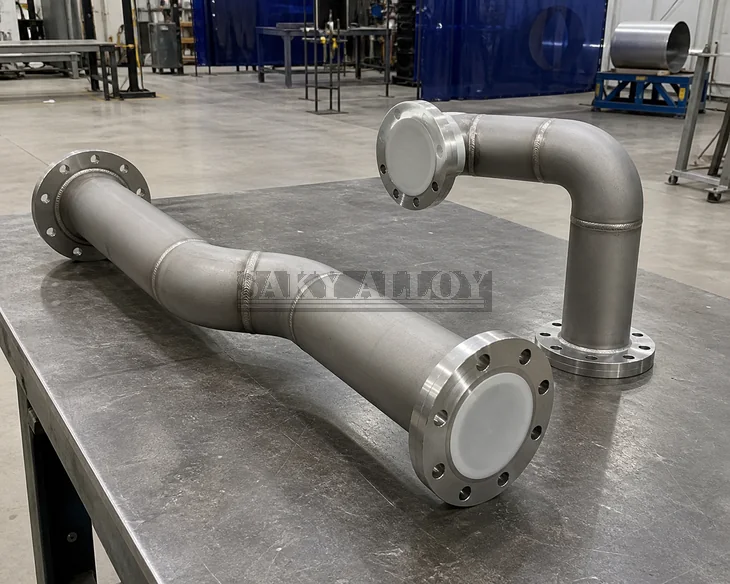
Application Review Matrix
| System | Service data to provide | Important system checks |
|---|---|---|
| Chemical processing | Medium, concentration, temperature, pressure, aeration, impurities and cleaning | Grade selection, crevices, weld condition, gaskets and upset exposure |
| Marine and offshore | Seawater chemistry, flow, deposits, pressure, vibration and external atmosphere | Galvanic interfaces, supports, flange joints, accessibility and inspection |
| Desalination | Feedwater or brine chemistry, chlorides, scaling, temperature and cleaning cycles | Crevices, dead legs, joining, preservation and integration with equipment |
Alloy Grade Must Follow the Environment
Grade 2 is commonly evaluated for seawater and many oxidizing environments. Grade 7 may be considered for selected reducing or crevice-corrosion conditions, while other grades may be required by the process or design. Provide normal, cleaning, start-up, shutdown and upset conditions; a generic description such as “marine service” is not enough for final selection.
Component Compatibility and Line Class
List the grade and specification for pipe, fittings, flanges and filler metal. Confirm pressure rating, wall or schedule, flange facing, gasket, bolting, branch details and corrosion allowance. Review transitions to dissimilar metals and electrically conductive supports for galvanic effects. Each component keeps its own product standard, while the completed assembly follows the governing piping code and project quality plan.
Clean Welding and Fabrication
Use qualified WPS/PQR and welders, clean tools and work areas separated from iron contamination, and effective primary, trailing and root shielding. Define weld discoloration acceptance, purge quality, interpass cleaning and repair controls. Inspect internal cleanliness before closing assemblies where access will be limited.
Inspection, Testing and Preservation
Specify the weld map, visual and penetrant examination, and radiographic or ultrasonic scope where required. Define dimensional inspection and approved pressure or leak tests. Protect flange faces and ends, cap clean interiors, support the spool against distortion and mark the line and spool identity for site installation.
System-Level Risks to Review
- Crevices, stagnant zones, deposits and cleaning chemistry
- Gaskets, bolting and dissimilar-metal interfaces
- Supports, vibration, thermal expansion and nozzle loads
- Field tie-ins, flange alignment and installation sequence
- Inspection access and future maintenance
Request an Application Review
Send the service data, line class and isometric through the Titanium Pipe Spool page. Review Titanium Pipe & Tube, Titanium Buttweld Fittings and Titanium Flanges for component requirements.
RFQ Checklist
- Service medium and all operating conditions
- Code, line class, alloy grade and component specifications
- Approved isometric, BOM, dimensions and quantity
- Welding, shielding, NDE and test requirements
- Cleaning, preservation, data book and delivery schedule
FAQ
Is Grade 2 suitable for all desalination piping?
No. Review brine chemistry, temperature, deposits, crevices, flow and system interfaces.
Does titanium prevent galvanic corrosion?
No. Titanium can participate in galvanic couples. Review mating metals, area ratios, electrolytes and electrical isolation.
Can the completed spool be certified only to ASTM B861?
No. B861 can apply to seamless pipe components; fittings, flanges, fabrication, welds and assembly testing require their applicable specifications and records.
Related Reading
Pipe Spool RFQ Guide · Spool vs Loose Components · Flanges and Fittings for Seawater
Pipe and Fitting Products for Titanium Spools
A spool RFQ normally combines the straight pipe specification with fitting geometry, wall, end preparation, welding and inspection requirements.