
Grade 2 vs Grade 9 Titanium Seamless Tube
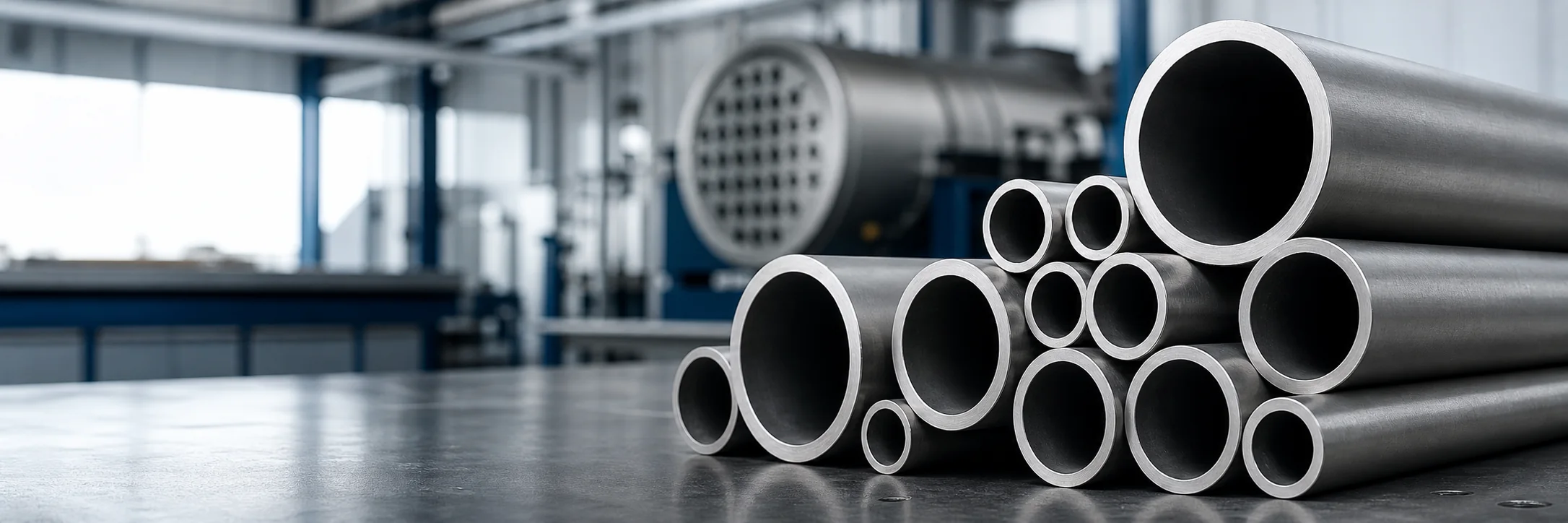
Grade 2 and Grade 9 titanium tube serve different design priorities. Grade 2 (UNS R50400) is commercially pure titanium commonly selected for corrosion resistance and formability; Grade 9 (Ti-3Al-2.5V, UNS R56320) is an alpha-beta alloy selected when higher strength and useful forming capability are required. Grade 9 is not simply a corrosion upgrade from Grade 2.
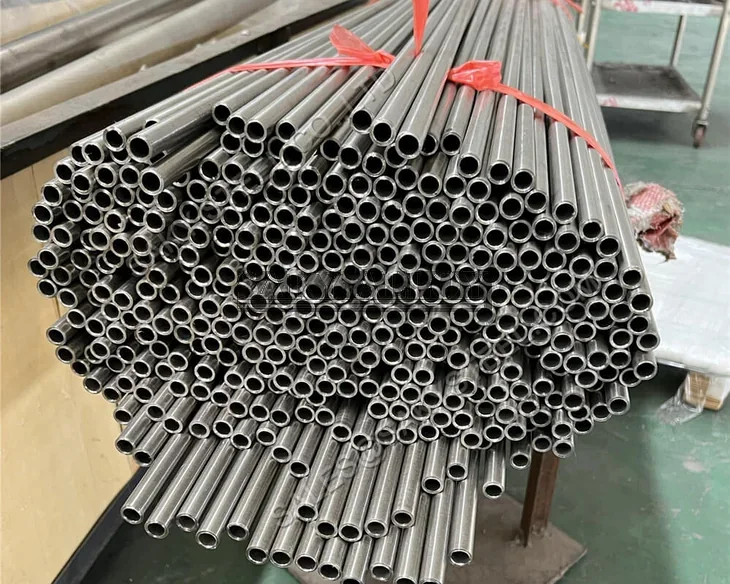
Grade 2 vs Grade 9
| Item | Grade 2 | Grade 9 |
|---|---|---|
| UNS | R50400 | R56320 |
| Alloy family | Commercially pure titanium | Ti-3Al-2.5V alpha-beta alloy |
| Primary design emphasis | Corrosion resistance, ductility, forming and welding | Higher strength-to-weight performance with useful tube formability |
| Typical condition | Commonly annealed | Annealed or another condition permitted by the invoked specification |
| Selection caution | Verify corrosion environment and strength | Verify corrosion suitability, condition, fabrication and fatigue design |
Where Grade 2 Is Commonly Considered
Grade 2 is widely evaluated for chemical processing, marine systems, seawater heat transfer and general corrosion-resistant equipment. Its lower strength relative to Grade 9 may require different wall or structural design. Suitability depends on fluid chemistry, temperature, crevices, velocity, fabrication and the governing code.
Where Grade 9 Is Commonly Considered
Grade 9 tube is often evaluated for aerospace, motorsport, bicycle, hydraulic and lightweight structural tubing where strength-to-weight ratio matters. The final design should address condition, wall thickness, bending, welding, fatigue, surface quality and dimensional tolerance. Do not transfer application assumptions between industries without engineering review.
Standards and Condition
State the controlling product standard and edition. ASTM B338 applies to heat-exchanger and condenser tube, while ASTM B861 covers seamless pipe; project or industry specifications may control structural or aerospace tubing. Specify OD or NPS, wall or schedule, length, condition, tolerances, surface and testing. Grade alone does not define a compliant tube.
Fabrication and Verification
Confirm bend radius, cold-work limits, heat treatment, welding procedure, filler policy, cleaning and final inspection. Require chemistry, mechanical properties, dimensions, surface acceptance and heat or lot traceability. Grade 2 and Grade 9 can look similar, so visual inspection cannot verify the alloy.
Compare Product Options
Grade 2 Seamless Tube, Grade 9 Seamless Tube and related Titanium Pipe & Tube products.
RFQ Checklist
- Application, design code and service environment
- Grade, standard, condition and manufacturing route
- OD or NPS, wall, length, quantity and tolerances
- Bending, welding, surface and end requirements
- Testing, certificate and traceability requirements
FAQ
Is Grade 9 always better because it is stronger?
No. Higher strength does not establish corrosion suitability, formability, weldability or compliance with the design.
Can Grade 9 replace Grade 2 without redesign?
No. Material substitution requires engineering review of properties, dimensions, fabrication, corrosion and code approval.
Can the grades be identified by appearance?
No. Use marking, traceability, certificates and any required verification testing.
Related Reading
Grade 9 Applications · Seamless vs Welded Tube · Titanium Tube and Pipe Standards