
Grade 9 Titanium Seamless Tube Applications and Selection
Grade 9 titanium seamless tube (Ti-3Al-2.5V, UNS R56320) is commonly evaluated where a tubular component needs higher strength than commercially pure titanium while retaining useful forming and welding capability. The application, product specification, condition and qualified fabrication route—not the grade name alone—determine suitability.
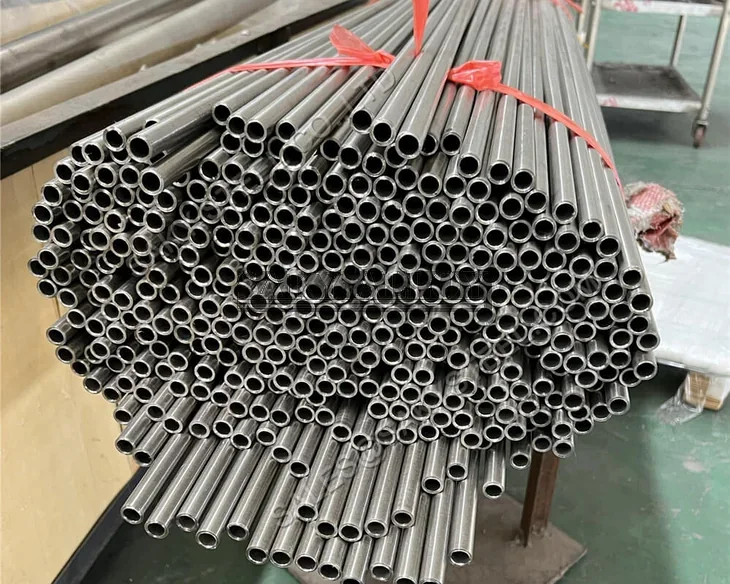
Where Grade 9 Tube Is Commonly Evaluated
| Application area | Why Grade 9 may be considered | Critical engineering checks |
|---|---|---|
| Aerospace tubular structures | Strength-to-weight performance | Approved material specification, condition, fatigue, joining and full traceability |
| Motorsport and performance assemblies | Lightweight structural tubing with useful formability | Load cases, bending, weld details, inspection and regulatory requirements |
| Bicycle and engineered frames | Strength and tube-forming potential | Butting or wall design, joint geometry, fatigue and production controls |
| Industrial tubular components | Higher strength where corrosion behavior is also suitable | Environment, pressure, code, dimensions and fabrication qualification |
These are selection contexts, not blanket approvals. Safety-critical and aerospace applications often require specifications, testing and supplier approvals beyond a general ASTM product requirement.
Condition and Mechanical Design
State the required condition exactly as permitted by the governing specification. Annealed, cold-worked and stress-relieved, or other specified conditions can produce different mechanical and forming behavior. Design values must come from the applicable standard, certified material and engineering allowables—not from a generic Grade 9 data sheet.
Bending, Forming and Wall Control
Confirm outside diameter, wall thickness, ovality, wall variation, straightness, bend radius and allowable thinning. Tooling, lubrication, mandrel support and production trials may be needed for tight bends or thin walls. Surface defects that seem minor can become important under forming or cyclic loading.
Welding and Fatigue Review
Use qualified welding procedures, clean preparation and effective shielding. Review filler-metal policy, joint design, heat input, discoloration acceptance and post-weld inspection. Where cyclic loading matters, evaluate weld toe geometry, surface condition, residual stress and the complete assembly; base-metal strength alone does not establish fatigue life.
Inspection and Traceability
Define chemistry, tensile properties, dimensions, surface acceptance, nondestructive examination and any project-specific tests. Require heat or lot traceability and the agreed certificate format. Visual appearance cannot distinguish Grade 9 from other titanium grades.
Request Grade 9 Tubing
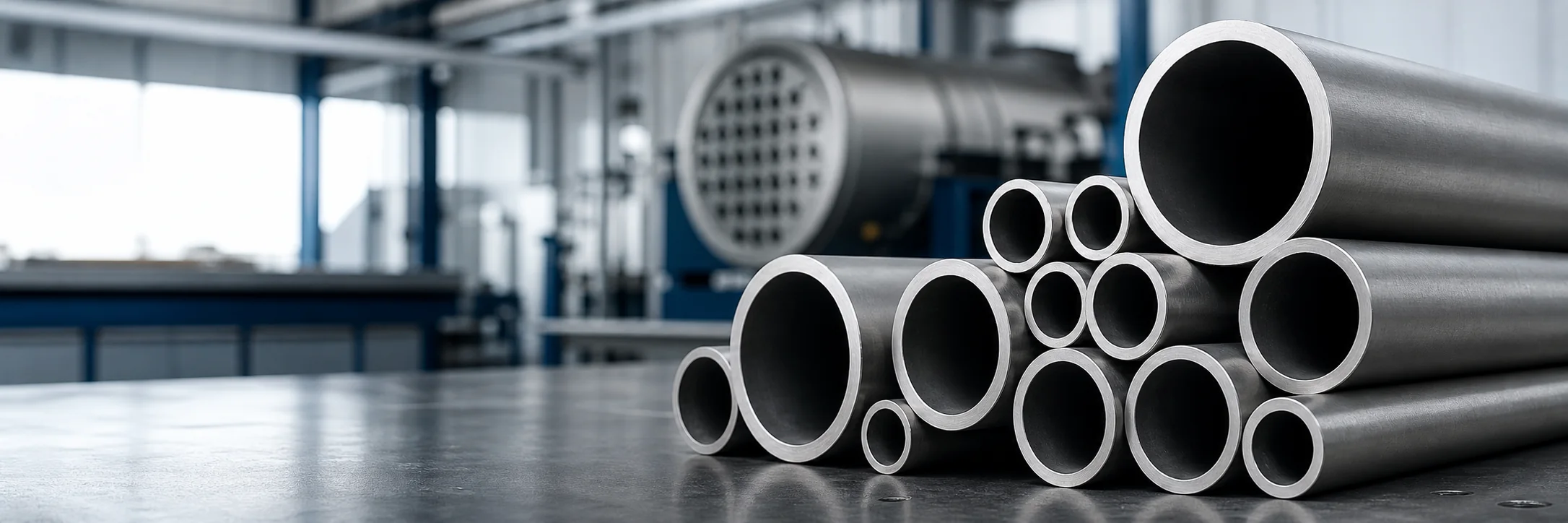
Send the specification and revision, condition, OD, wall, length, tolerances, quantity, application, tests and certificates for Grade 9 Titanium Seamless Tube. Compare the broader Titanium Pipe & Tube range when the grade is not yet fixed.
RFQ Checklist
- Application, load cases, design code and service environment
- Grade, specification, revision and condition
- OD, wall, length, tolerances and quantity
- Bending, welding, surface and end requirements
- Testing, certification, traceability and approval requirements
FAQ
Is Grade 9 the same as Grade 5?
No. Grade 9 is Ti-3Al-2.5V; Grade 5 is Ti-6Al-4V. Their chemistry, properties, product availability and fabrication behavior differ.
Is Grade 9 suitable for every pressure tube?
No. The piping or equipment code, specification, condition, dimensions, service and design approval must support its use.
Can Grade 9 tube be bent and welded?
It can be fabricated using qualified procedures, but allowable bend severity, tooling, welding controls and inspection depend on the product and design.
Related Reading
Grade 2 vs Grade 9 Tube · Seamless vs Welded Tube · Titanium Tube and Pipe Standards