

Titanium Hex, Square, Flat and Hollow Bar Selection Guide
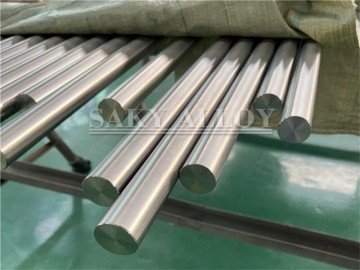
Titanium hex, square, flat and hollow bars are near-net stock forms used to reduce machining or provide the required finished section. They should not be treated as interchangeable with round bar or thin-wall tube.
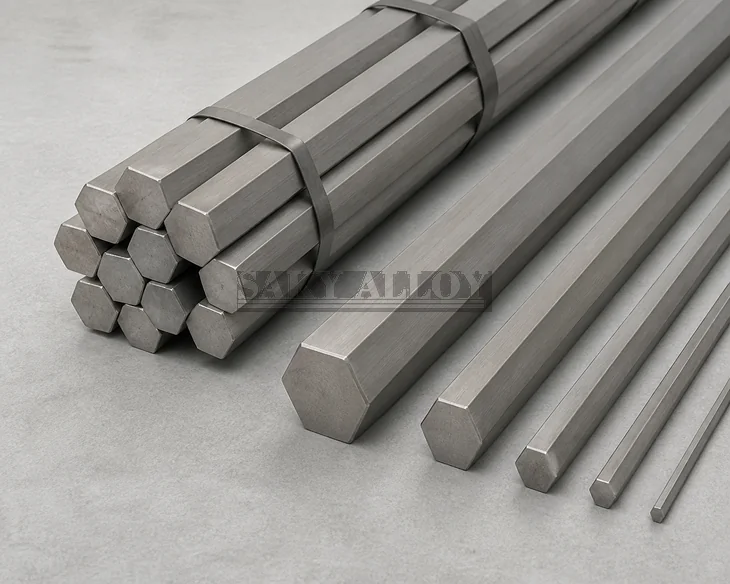
Titanium Bar-Form Comparison
| Form | Primary dimensions | Typical purchasing focus |
|---|---|---|
| Hex bar | Across flats, corner condition | Twist, straightness and machining stock for hex parts |
| Square bar | Width, corner radius | Squareness, twist and straightness |
| Flat bar | Width and thickness | Edges, camber, flatness and straightness |
| Hollow bar | OD, ID and minimum wall | Concentricity, machining allowance and manufacturing route |
Confirm the Product Specification Covers the Shape
ASTM B348 / ASME SB348 may apply to titanium bars and billets within its scope. Special hollow machining stock may instead require an approved seamless-tube, forging or customer specification. State the grade, form and route explicitly.
Use Finished-Part Geometry to Define Stock Allowance
Provide the finished component envelope, cleanup allowance, cut length and critical tolerances. Oversized stock can increase titanium cost and machining time, while insufficient allowance can prevent cleanup.
Control Straightness, Twist and Corners
Non-round bar needs more than a nominal section size. Define straightness, twist or camber, corner radius or chamfer, surface, cut ends and measurement method where these affect machining or assembly.
Choose the Stock Form From the Finished Component
Compare titanium hex bar, titanium square bar, titanium flat bar and titanium hollow bar. Send grade, dimensions, tolerances, length, quantity, condition and inspection.
RFQ Checklist
- Titanium grade and governing specification
- Exact stock form and section dimensions
- Tolerances, straightness, twist or camber
- Corner, edge and surface requirements
- Length, machining allowance and quantity
- Testing and certificates
Frequently Asked Questions
Is every titanium bar specification available in hex, square, flat and hollow forms?
No. Product specifications define particular forms, grades, conditions and dimensions. Confirm that the cited specification covers the requested shape or state an agreed drawing-specific requirement instead of assuming round-bar rules apply.
Which bar shape minimizes machining waste?
The closest practical stock envelope may reduce material removal, but availability, corner radius, straightness, twist, dimensional allowance, workholding and inspection can change the overall cost. Compare the finished drawing with available stock sizes.
What should be specified for shaped titanium bar?
State grade, applicable specification, shape, across-flats or width/thickness dimensions, wall dimensions for hollow bar, length, tolerances, corner radius, straightness or twist, condition, surface, testing and material certificate.