
How to Specify Titanium Hex Flange Bolts and Flange Nuts
Titanium hex flange bolts and flange nuts combine wrenching geometry with an integral bearing flange. The larger bearing area can reduce local contact stress and simplify hardware, but flange underside, mating surface and installation method must be treated as part of the joint design.
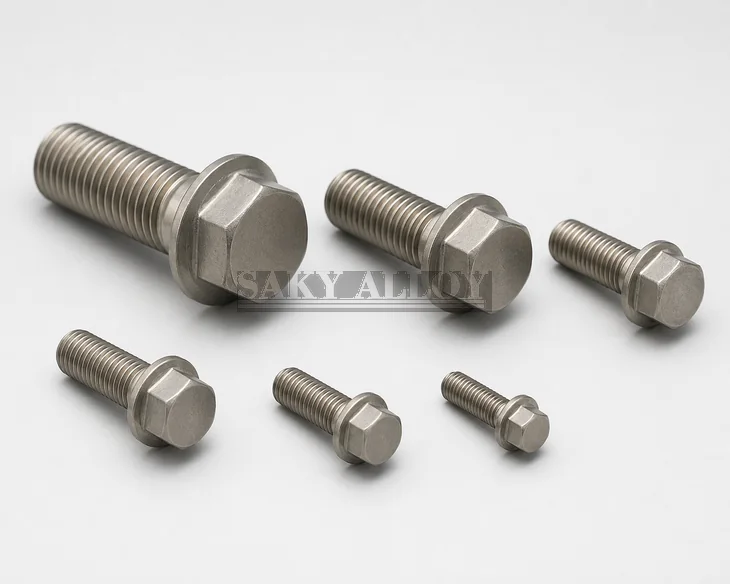
Define the Flange Interface
State flange diameter, thickness, underside shape and required seating surface. Confirm whether a separate washer is permitted. The mating surface must provide enough flat bearing area and strength for the intended clamp load.
Plain or Serrated Underside
A plain flange provides a continuous bearing surface. Serrations may increase resistance to rotation in some applications, but can damage coatings or softer mating materials and can change reuse and corrosion behavior. Do not assume that a serrated part is reusable or suitable for every service.
Thread, Engagement and Tightening
Define metric or inch thread, class of fit, bolt length, grip, engagement and mating hardware. Titanium thread friction can vary substantially with surface condition, mating material, lubricant or coating and installation speed. A validated tightening procedure is more useful than transferring a steel torque value.
Material and Acceptance
Grade 2 / UNS R50400 is commonly selected for corrosion resistance and ductility. Grade 5 / Ti-6Al-4V / UNS R56400 provides higher source-material strength. Geometry references such as ISO 4162 or DIN 6921 do not by themselves define finished titanium fastener mechanical performance.
RFQ Checklist
- Grade and material condition
- Dimensional standard or drawing revision
- Flange diameter, underside and serration option
- Thread, length, grip and engagement
- Mating surface and washer policy
- Installation method, quantity, tests and certificates
Need a Titanium Flange Fastener Review?
Review Grade 2 hex flange bolts, Grade 5 hex flange bolts, Grade 2 flange nuts and Grade 5 flange nuts. Send the joint drawing, quantity and inspection plan for quotation.
Frequently Asked Questions
Can the integral flange replace a washer?
Sometimes, but only after reviewing bearing area, mating-surface condition, hole geometry, preload and service requirements. The drawing should state the washer policy.
Do serrations always prevent loosening?
No. Locking performance depends on joint preload, mating material, vibration, surface condition and installation. Serrations are not a universal substitute for joint validation.
Can steel torque tables be applied directly?
No. Titanium joint torque depends on material combination, friction, lubrication or coating, thread fit and the required preload.