

Titanium Lock Nuts: Nylon Insert vs All-Metal Prevailing Torque
Nylon-insert and all-metal titanium lock nuts can both create prevailing torque, but they do it differently. The right choice depends on temperature, chemicals, mating threads, installation cycles, lubrication and the torque limits required by the joint design.
What Does “Prevailing Torque” Mean?
Prevailing torque is the resistance to rotation created by the locking feature before the nut’s bearing face seats. It is not the same as the final tightening torque used to generate joint preload. During installation, total torque includes the locking feature, thread friction and bearing friction.
This distinction matters because a lock nut can require additional running torque without creating additional clamp load. A plain-nut torque value therefore cannot be transferred automatically to a prevailing-torque nut. The joint engineer should define the installation method for the actual materials and surface condition.
How Nylon-Insert Titanium Lock Nuts Work
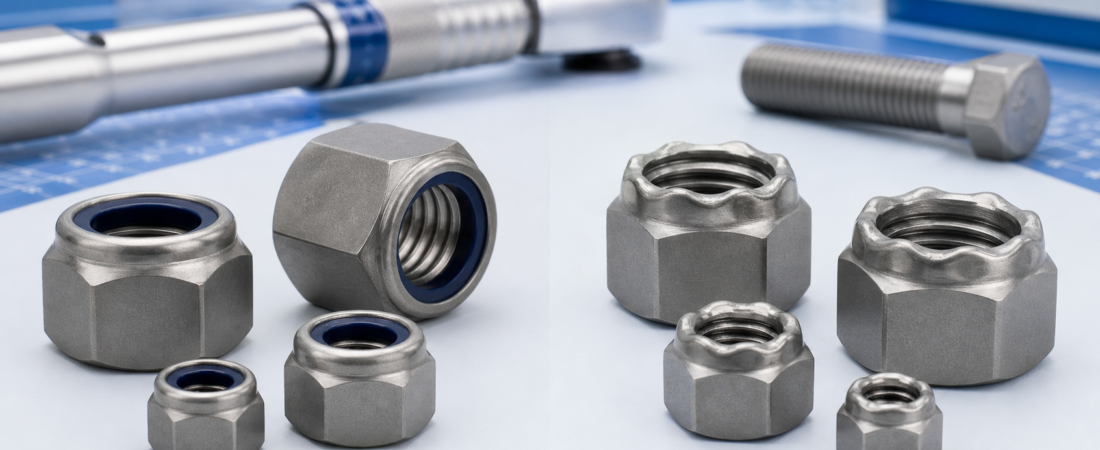
A non-metallic insert nut contains a polymer ring retained in the upper portion of the nut. As the mating external thread enters the insert, the polymer deforms around the thread and produces drag. Buyers often call this configuration a nylon-insert nut or “nyloc” nut, although the purchase order should identify the actual insert material and required performance.
Potential advantages
- Visible locking element that is easy to identify during inspection
- Controlled drag without intentionally deforming the titanium nut body thread
- Suitable for many moderate-temperature assemblies when the insert is qualified
- Can reduce direct metal locking-feature contact with the mating thread
Points requiring qualification
Insert performance can change with heat, cold, chemicals, radiation, moisture, aging and repeated installation. A generic temperature figure from an unrelated nylon product is not enough. Confirm the specific polymer, manufacturer data, assembly exposure and required torque after conditioning.
How All-Metal Titanium Lock Nuts Work
An all-metal prevailing-torque nut uses controlled deformation or another metallic locking geometry to create interference with the mating thread. Common concepts concentrate the locking action near the top threads, but the exact construction and performance are defined by the standard or drawing.
Potential advantages
- No polymer insert to set the service-temperature limit
- Can suit environments where a selected polymer is chemically unsuitable
- Single-material body construction can simplify visual part identification
Points requiring qualification
Metal interference can affect the mating thread, create heat and contribute to galling, especially in titanium-on-titanium combinations. Removal torque and subsequent-cycle performance can change after each installation. All-metal does not mean unlimited reuse or automatic suitability at every temperature.
Side-by-Side Selection Table
| Selection factor | Non-metallic insert | All-metal |
|---|---|---|
| Locking action | Polymer deformation around mating thread | Metal interference or deformed locking section |
| Temperature | Limited by qualified insert and exposure | No polymer limit, but material and torque behavior still require review |
| Chemicals | Check polymer compatibility | Check titanium and any coating or lubricant |
| Galling review | Still required for titanium mating threads | Especially important because of metal interference |
| Reuse | Only if subsequent-cycle torque meets specification | Only if subsequent-cycle torque and thread condition meet specification |
| Inspection | Insert identity, retention, dimensions and torque | Locking geometry, thread condition and torque |
What the Current Standards Actually Cover
ISO 7040:2025 specifies regular prevailing-torque hexagon nuts with a non-metallic insert in steel and stainless steel within its published scope. ISO 7042:2025 specifies all-metal prevailing-torque high nuts in steel and stainless steel within its published scope. ASME B18.16.6 covers defined inch-series prevailing-torque locknut forms and performance requirements for its listed material grades.
These standards provide important geometry and testing frameworks, but their stated material scope does not automatically establish a Grade 5 titanium lock nut. A titanium RFQ should identify which geometry or test provisions are being adopted and separately control the Ti-6Al-4V body, locking element, finished-part requirements and acceptance criteria.
ASTM F467 addresses nonferrous nuts for general use and can be relevant when the specified titanium alloy and product requirements fall within its current scope. A locking feature still needs defined prevailing-torque performance.
Why Titanium Grade Matters
Grade 5 titanium, Ti-6Al-4V / UNS R56400, is frequently considered for fasteners where higher strength-to-weight performance is required. Commercially pure Grade 2 may be considered for corrosion-oriented applications with different strength requirements. They are not automatic substitutes.
The nut body grade does not by itself define prevailing torque, proof load, fatigue or reuse. Those properties depend on finished geometry, processing, locking feature, mating thread and test method. Buyers comparing Grade 5 titanium lock nuts should request finished-part data appropriate to the application.
Galling and Lubrication
Titanium can gall through adhesive transfer under pressure and sliding contact. Prevailing-torque nuts deliberately add rotational resistance, which makes surface finish, alignment, installation speed and lubrication particularly important.
An approved lubricant or coating can reduce friction and galling risk, but it also changes running torque and clamp load. Torque testing and installation instructions should use the same defined surface condition. See also how to prevent galling in titanium bolts and nuts.
How to Define a Prevailing-Torque Test
A result is meaningful only when the test setup is controlled. The RFQ or inspection plan should state:
- Mating bolt or test mandrel material and thread class
- Surface finish, cleanliness and lubrication
- Installation speed and test temperature
- First installation and first removal limits
- Number of cycles and subsequent-cycle limits
- Whether the bearing face is seated during each measurement
- Sampling quantity and acceptance criteria
If the test mandrel differs materially from the field bolt, document the reason and correlation. Titanium-on-titanium, titanium-on-steel and coated combinations can behave differently.
Can Titanium Lock Nuts Be Reused?
Reuse is a specification decision, not a general product promise. Polymer inserts can wear, take a set or change after heat and chemical exposure. All-metal locking sections can relax or damage mating threads. In both cases, prevailing torque commonly changes with cycling.
A maintenance plan should identify whether the nut is single-use, how the part is inspected, the minimum removal or running torque, and whether the mating bolt must also be replaced. Critical joints may require new lock nuts at each service event.
Lock-Nut RFQ Checklist
- Titanium grade and UNS number
- Nylon-insert or all-metal form
- Insert material where applicable
- Standard, revision or drawing
- Thread designation and class
- Mating bolt material and finish
- Service temperature and chemicals
- Lubrication or coating
- Prevailing-torque limits and cycles
- Reuse policy
- Inspection and certificates
- Quantity and delivery destination
Frequently Asked Questions
Is an all-metal nut always better for vibration?
No. Performance depends on the specific design, torque limits, mating thread, installation and joint. Select a qualified locking system for the actual assembly.
Does a nylon insert protect against titanium galling?
It changes the locking contact, but the titanium threads still engage each other or another metal. Galling review and an approved assembly method remain necessary.
Which documents should be requested?
Common requirements include material certification, dimensional and thread inspection, insert verification, prevailing-torque results, lot traceability and a certificate of conformity.
Compare Grade 5 Titanium Lock Nut Options
Send SAKY ALLOY the locking form, thread, mating bolt, environment, torque limits, cycles, quantity and inspection requirements for technical review.