

Titanium Long Weld Neck vs Standard Weld Neck Flange
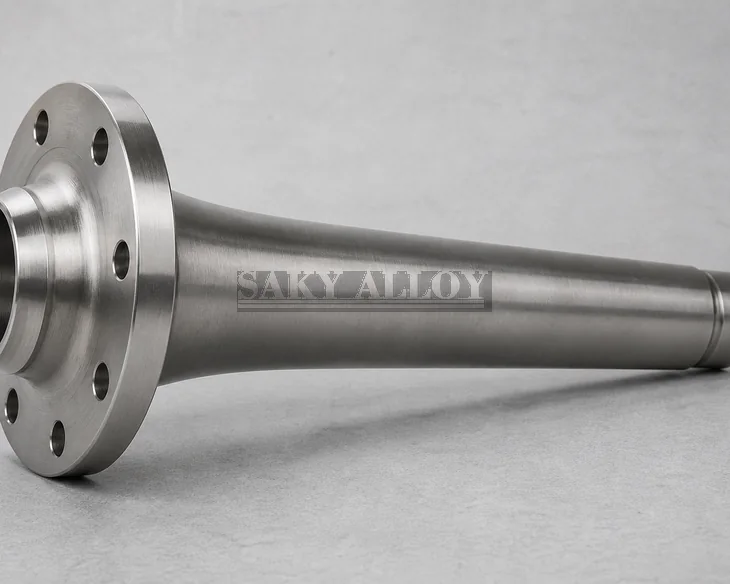
A standard weld neck flange joins pipe through a defined tapered hub; a long weld neck flange has an extended neck and is commonly drawing-controlled for vessel, column or nozzle connections. Extending a standard hub does not automatically preserve its design rating.
Selection Matrix
| Item | Standard weld neck | Long weld neck |
|---|---|---|
| Geometry | Standard hub and bore | Extended neck, wall and transition |
| Use | Butt-weld piping connection | Extended nozzle or equipment connection |
| RFQ basis | Size, class, facing, bore and schedule | Add drawing, length, wall, radii and end preparation |
| Design control | Invoked flange/piping standard | Project pressure-equipment design and approval |
Design Boundary
Neck length, wall, taper and transition affect mass, stress distribution, machining, welding and examination. The responsible design authority must approve geometry and design basis; a supplier should not infer pressure-temperature capability from appearance.
Material, Welding and Inspection
Define titanium grade, source-product standard, condition, facing, bore, weld end, dimensional inspection, surface/NDE, MTC and heat traceability. Confirm mating pipe or vessel wall, weld procedure and any post-fabrication examination.
Compare Product Forms
Titanium Long Weld Neck Flange, Titanium Weld Neck Flange and the Titanium Flange family.
RFQ Checklist
- Approved drawing and design basis
- Grade, size, class, facing and bore
- Neck length, wall, taper, radii and weld end
- Mating component and service conditions
- Inspection, NDE, MTC and traceability
FAQ
Can a standard weld neck simply be made longer?
No. The altered geometry requires design and manufacturing review.
Is a long weld neck always a standard catalogue item?
No. Many configurations are drawing-controlled.
Related Reading
Special Flange Selection · Orifice Flange RFQ · Reducing Flange RFQ