

Titanium Grade 5 Bar: Sizes, Tolerances and Machining Considerations
Titanium Grade 5 Bar: Sizes, Tolerances and Machining Considerations
Quick answer: A Grade 5 titanium bar order should define more than diameter and length. Buyers should specify Ti-6Al-4V / UNS R56400, the applicable bar standard, delivery condition, dimensional tolerance, straightness, surface route, ultrasonic testing when required, machining allowance, certificate and cut-length plan.
These details determine whether the supplier should quote hot-worked, forged, peeled, turned, centerless-ground or polished bar. They also affect machining yield, inspection cost and delivery time.
Grade 5 titanium bar identification
Grade 5, also called Ti-6Al-4V, is an alpha-beta titanium alloy widely selected for high strength-to-weight ratio and useful corrosion resistance. ASTM B348/B348M covers titanium and titanium-alloy bars and billets, while aerospace projects may require an AMS or OEM specification with additional melting, testing, source and quality requirements.
Do not treat ASTM B348 material as automatically equivalent to every aerospace requirement. The drawing and purchase order control the acceptable specification.
Choose the bar form and surface for the next operation
| Bar condition | Typical buyer objective | Important RFQ detail |
|---|---|---|
| Black / hot-worked | Economical stock for heavy machining | Allow sufficient stock removal and confirm surface defects permitted by the standard. |
| Peeled or rough turned | Remove scale and improve diameter consistency | State final supplied diameter and minimum machining allowance. |
| Ground | Tighter diameter and straighter stock for precision machining | Specify tolerance class, straightness and surface requirement. |
| Polished / bright | Improved appearance or reduced finishing work | Define roughness or visual acceptance rather than using “polished” alone. |
| Cut-to-length blank | Reduce sawing time and scrap | State length tolerance, squareness, saw allowance and part identification. |
Diameter range and availability
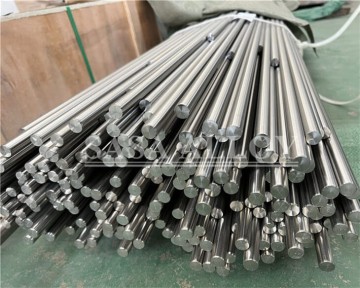
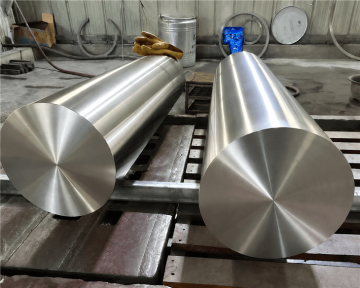
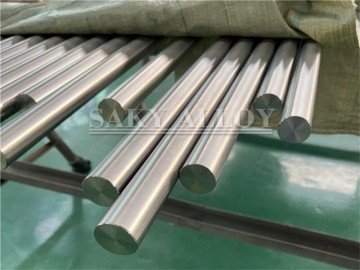
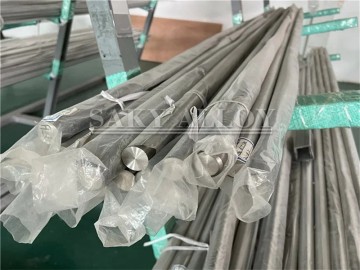
SAKY ALLOY’s published Grade 5 rod range includes small diameters through large forged or rolled bar, with custom lengths and round, square or hexagonal forms available by quotation. Actual stock, minimum quantity, standard, tolerance and lead time vary by diameter and condition. See the current Grade 5 titanium rod product page and request confirmation for the exact size.
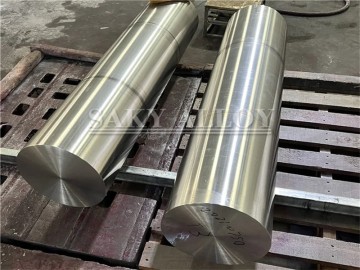
For large diameters, buyers should clarify whether the requirement is rolled bar, forged bar or billet, and whether ultrasonic testing, macrostructure or additional sampling is required.
How to specify tolerance without overpaying
The tightest tolerance is not always the best commercial choice. A CNC shop should work backward from the finished component, chucking method, straightness need and stock-removal plan. Ground bar can reduce setup and machining time, but rough stock may be more economical when substantial material will be removed.
- State the supplied diameter and tolerance, not only the nominal finished-part diameter.
- Define straightness over a stated gauge length when it affects turning or automatic feeding.
- Specify length tolerance and end condition for cut blanks.
- Add surface roughness only when it is functionally required.
- Identify areas that must remain free of seams, laps, deep grinding marks or handling damage.
Machining considerations for Ti-6Al-4V bar
Grade 5 has low thermal conductivity compared with many common engineering metals, so heat can concentrate near the cutting edge. It can also react with cutting tools at elevated temperature. Stable fixturing, sharp tools, controlled cutting parameters and effective coolant delivery are therefore important.
Use a rigid setup, avoid rubbing from a dull tool and maintain a positive feed appropriate to the operation. Interrupted cuts, deep holes and thin walls need extra process planning. Final parameters should come from the machine, tool and coolant supplier and be validated on the actual bar condition.
When buying near-net blanks, include saw-cut allowance, facing stock, grain-flow or orientation requirements, and the location of test coupons if applicable.
Inspection and documents
A professional bar RFQ may request heat-number marking, EN 10204 3.1 MTC, actual chemistry, tensile results, dimensional inspection, straightness, surface inspection, PMI and ultrasonic testing. The required UT class and acceptance criteria must be stated; “UT tested” alone is incomplete.
Questions buyers frequently ask
Is Grade 5 the same as Grade 23?
No. Both are Ti-6Al-4V alloys, but Grade 23 has tighter extra-low-interstitial limits and is ordered to the appropriate product and application specification.
Should I buy ground or black bar for CNC machining?
Ground bar is useful when diameter consistency and straightness reduce setup time. Black or rough-turned stock can be more economical for heavy stock removal.
Can the supplier choose the tolerance?
The supplier can propose a practical option, but the buyer should approve it against the finished component, machining plan and governing drawing.
Request a Grade 5 titanium bar quotation
Send the standard, diameter, tolerance, length, quantity, condition, surface, UT requirement, certificate, packing, destination and target delivery date to sales@sakyalloy.com. SAKY ALLOY can review standard bar, forged bar and cut-to-length machining blanks.