
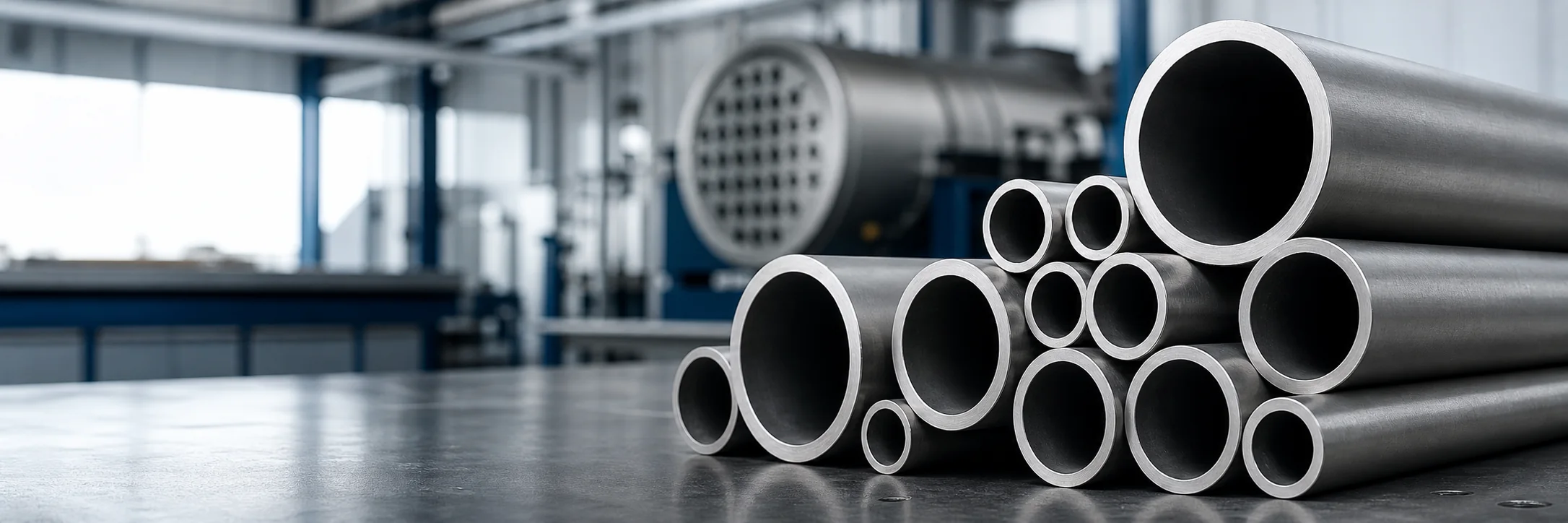
Titanium Grade 4 Pipe Tube: The Latest Advancements in High-Performance Piping
Titanium Grade 4 pipe and tube use the highest-strength of the common commercially pure titanium grades, achieved partly through a higher permitted oxygen level than Grades 1–3. It should not be described as a low-oxygen grade. Selection requires balancing strength and formability with corrosion environment, fabrication and the applicable pipe or tube specification.
Where Grade 4 Fits Among CP Titanium
| Characteristic | Grade 4 implication |
|---|---|
| Material identity | Commercially pure titanium, UNS R50700 |
| Strength | Higher minimum strength than common CP Grades 1–3 under the relevant product standard |
| Formability | Generally lower ductility than lower-strength CP grades; forming route must be reviewed |
| Corrosion | Protective oxide film provides resistance in many services, but suitability depends on chemistry, temperature and crevice conditions |
Pipe and Tube Are Not Interchangeable Terms
Pipe is commonly ordered by nominal pipe size and schedule, while heat-exchanger or condenser tube is typically defined by outside diameter and wall thickness. ASTM B338 is widely associated with titanium seamless and welded tube for condenser and heat-exchanger service. Other pipe or tube specifications may apply according to form and application. The purchase order must name the exact standard and edition.
RFQ Information
- Grade 4 / UNS R50700 and the governing specification
- Seamless or welded construction
- NPS and schedule, or OD and wall thickness
- Length, tolerance, end finish and surface condition
- Hydrostatic, pneumatic, eddy-current or other required tests
- Quantity, MTR and additional inspection documentation
A melting point or generic corrosion claim does not establish pressure-system suitability. Design pressure, temperature, weld quality, allowable stress and code compliance must be evaluated for the completed system.
Continue to Titanium Pipe and Tube
Review Titanium Grade 4 Pipe & Tube, ASTM B338 Titanium Tube and the Titanium Pipe & Tube category.