
How to Specify Titanium Self-Tapping Screws for a Reliable Joint
Titanium self-tapping screws create or shape a mating thread during installation. A successful joint depends on the exact screw geometry and the substrate, so the order must define more than titanium grade, diameter and length.
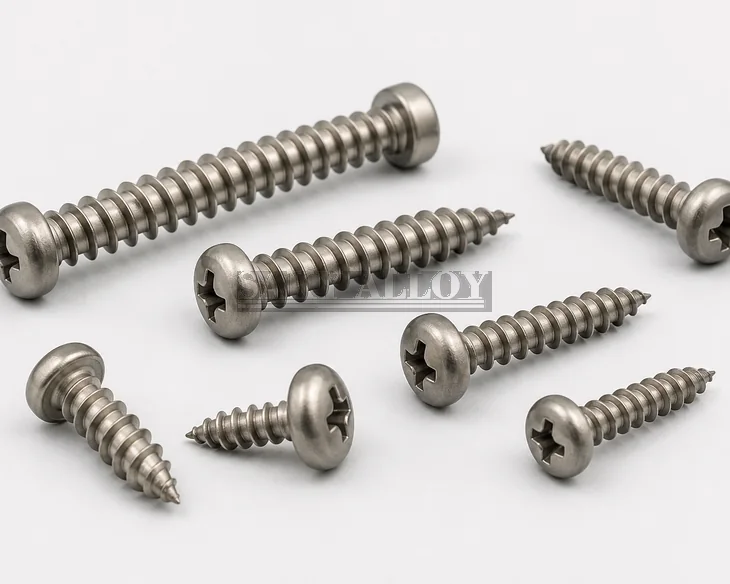
Define the Substrate First
State the substrate material, hardness, thickness and surface condition. A screw that forms a useful thread in a ductile sheet may require a different point, pilot hole or test plan in a harder or more brittle material. Galvanic compatibility and service corrosion should also be reviewed.
Specify Pilot-Hole Diameter and Preparation
The pilot hole affects installation torque, thread engagement and stripping resistance. Define diameter and tolerance, whether it is drilled, punched or molded, and any burr or edge requirements. The final value should be validated in representative production material.
Thread, Point, Head and Drive
Identify the tapping-thread form, point style, nominal diameter, length, head geometry and drive. ISO 7049, DIN 7981 or another expressly invoked reference can help define geometry, but titanium material condition and functional acceptance must be stated separately.
Establish an Installation Window
Installation speed, drive engagement, seating torque and stripping torque should be evaluated together. Titanium-to-titanium or other galling-prone combinations may require an approved lubricant, coating or alternative joint design compatible with the operating environment.
Useful Qualification Tests
- Drive and installation test in representative substrate
- Seating and stripping torque comparison
- Pull-out or shear testing where required
- Head and drive inspection after installation
- Corrosion or environmental testing when applicable
- Material certificate and heat or lot traceability review
Need a Pilot-Hole and Tapping-Screw Review?
Compare Grade 2 titanium self-tapping screws and Grade 5 titanium self-tapping screws. Send the substrate, thickness, pilot hole, screw geometry, quantity and required tests for quotation.
Frequently Asked Questions
Can titanium self-tapping screws be installed without a pilot hole?
That should not be assumed. The selected design and substrate must explicitly support the installation method. Most applications require a controlled pilot hole.
Is Grade 5 always better for self-tapping screws?
No. Selection depends on corrosion, forming or cutting behavior, finished-screw properties, substrate, installation torque and joint testing. Higher source-material strength alone does not prove better tapping performance.
Can the same screw be removed and reinstalled?
Reuse can alter the formed substrate thread, holding strength and drive condition. The application should establish a validated reuse policy or specify replacement after removal.