
What Is Titanium Pipe and Why It’s Gaining Popularity
Titanium has long been recognized as one of the most advanced engineering metals available, prized for its high strength-to-weight ratio, corrosion resistance, and biocompatibility. In recent years, titanium pipe has seen a surge in demand across industries ranging from aerospace to marine, chemical processing to medical systems. But what exactly is titanium pipe, and why is it gaining so much popularity?
In this article, we’ll explain what titanium pipe is, its core properties, and the key reasons why more industries are turning to this exceptional material. Whether you’re a procurement professional, engineer, or project designer, understanding the value of titanium pipe can help you make smarter, future-proof material choices.
What Is Titanium Pipe?
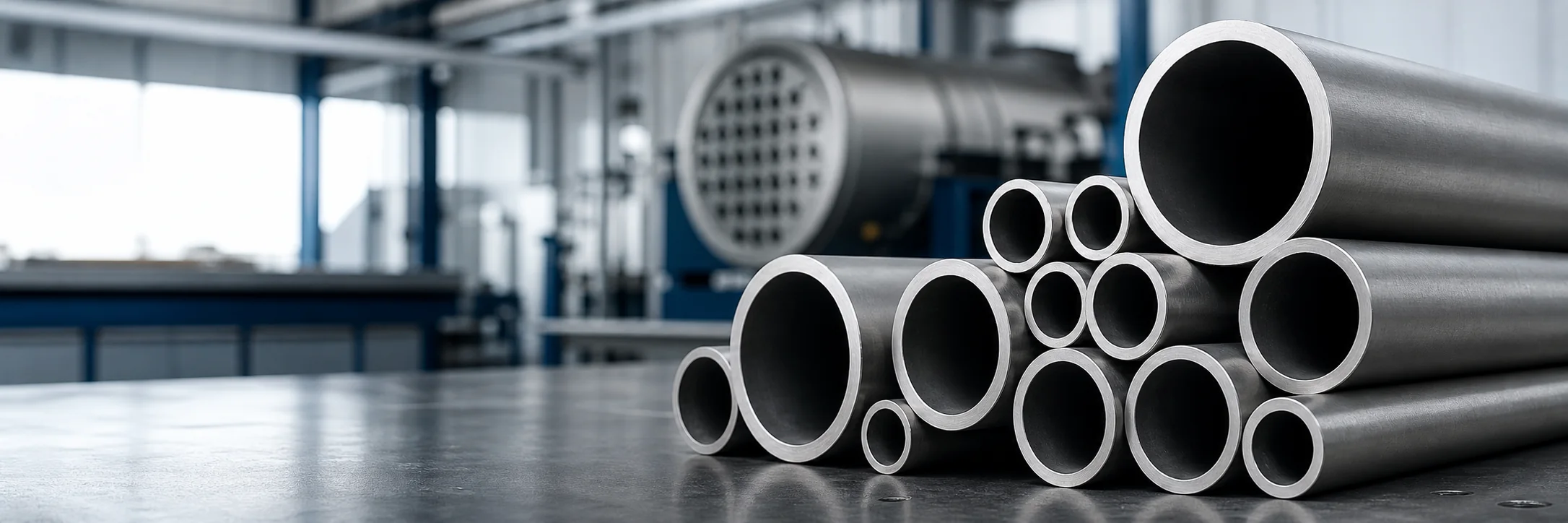
Titanium pipe is a hollow cylindrical structure made from titanium or titanium alloys, designed to transport fluids, gases, or solids in various industrial systems. Titanium pipe can be seamless or welded and is manufactured according to international standards such as ASTM B861 (seamless) and ASTM B862 (welded).
The most commonly used titanium grades in piping applications include:
-
Grade 2 Titanium: Commercially pure, offering excellent corrosion resistance and weldability
-
Grade 5 Titanium (Ti-6Al-4V): A high-strength alloy used in high-performance applications
-
Grade 7 and Grade 12: Used in more aggressive chemical environments due to improved corrosion resistance
At sakyalloy, we supply titanium pipes in various grades, sizes, and forms to meet the specific demands of industries worldwide, ensuring both quality and consistency.
Key Properties of Titanium Pipe
Titanium pipe offers a unique blend of properties that distinguish it from traditional metals like stainless steel or copper:
-
High strength-to-weight ratio: Titanium is nearly as strong as steel but about 45% lighter
-
Exceptional corrosion resistance: Especially in saltwater, chlorides, and oxidizing environments
-
Low thermal expansion: Ideal for temperature-stable installations
-
Non-magnetic: Suitable for sensitive environments like medical imaging systems
-
Biocompatibility: Safe for contact with biological fluids in medical and food industries
These features make titanium pipe suitable for critical and high-performance environments where failure is not an option.
Why Titanium Pipe Is Gaining Popularity
1. Corrosion Resistance in Harsh Environments
Titanium forms a stable, protective oxide layer on its surface when exposed to air or moisture, making it incredibly resistant to rust and corrosion. This makes titanium pipe ideal for:
-
Marine systems
-
Desalination plants
-
Offshore oil and gas platforms
-
Chemical reactors and heat exchangers
Unlike other metals that may require coatings or frequent maintenance, titanium performs consistently over long periods, even when exposed to seawater or industrial acids.
2. Superior Performance in High-Stress Applications
Titanium pipes are widely used in aerospace, defense, and high-pressure applications due to their strength and fatigue resistance. They can withstand high internal pressures and dynamic loading without deforming or failing.
In industries where safety and reliability are paramount, titanium pipe offers an excellent long-term investment that reduces downtime and increases equipment lifespan.
3. Lightweight for Structural Efficiency
Weight reduction is a key priority in industries like aviation, automotive, and marine. Titanium pipe provides structural strength without adding unnecessary weight, which helps improve fuel efficiency, reduce support requirements, and optimize performance.
This advantage is also valuable in large-scale construction, where weight affects both foundation design and transport costs.
4. Compatibility with Human and Environmental Safety
Titanium is used in selected pharmaceutical, medical-process and hygienic systems, but suitability depends on the alloy grade, surface condition, fabrication, cleaning procedure and the governing equipment standard. Recycling and lifecycle considerations should be evaluated for the complete installation.
For regulated service, material certificates, traceability, surface acceptance and cleaning documentation should be defined before purchase.
5. Long-Term Cost Savings
Titanium pipe often has a higher initial material and fabrication cost than common steel or polymer systems. A lifecycle comparison should consider verified corrosion rate, design life, inspection, maintenance, downtime and replacement cost rather than material price alone. Potential project benefits may include:
-
Fewer replacements
-
Less downtime
-
Reduced maintenance labor
-
Lower total cost of ownership
For quotation and comparison, provide the service environment, governing standard, grade, dimensions, quantity, fabrication scope, inspection requirements and destination.
Common Applications of Titanium Pipe
Titanium pipe is used in many mission-critical applications across various sectors, including:
-
Aerospace and aviation: Hydraulic and fuel lines
-
Chemical processing: Heat exchangers and pressure vessels
-
Marine engineering: Ship systems and desalination
-
Medical and pharmaceutical equipment: Process lines and equipment components made to the applicable specification
-
Power generation: Condensers and turbine cooling systems
-
Oil and gas: Selected offshore and process systems after project-specific corrosion and design review
Suitability for above-ground or submerged systems depends on fluid chemistry, temperature, pressure, external environment, joining, galvanic interfaces and the governing design code.
Welding and Fabrication Advantages
Titanium pipe can be joined by qualified gas-tungsten-arc welding procedures with complete inert-gas shielding, clean tooling and strict contamination control. A properly qualified joint can provide:
-
High joint strength
-
Excellent fatigue resistance
-
Seamless integration into complex systems
Shielding must protect the weld and heat-affected material until sufficiently cool. Procedure qualification, welder qualification, purge quality, cleaning, inspection and acceptance criteria must follow the project specification.
SAKY ALLOY can review the requested grade, product standard, dimensions, condition, testing and documentation before quotation. Final system design and welding acceptance remain the responsibility of the qualified project team.
Conclusion
Titanium pipe is considered where its corrosion resistance, strength-to-weight ratio and available product standards provide a documented benefit for the service. It is not a universal replacement for steel, nickel alloy or polymer piping.
From aerospace fluid lines to seawater and chemical systems, performance depends on selecting the correct grade, pipe or tube specification, dimensions, manufacturing route, joining procedure and inspection plan.
Review the relevant product specification and send complete RFQ data so availability, testing, documentation and bulk pricing can be evaluated against the actual requirement.
Titanium Pipe and Tube FAQ
What is the difference between titanium pipe and titanium tube?
Pipe is commonly ordered by NPS and schedule or specified wall thickness, while tube is commonly ordered by outside diameter and wall thickness. Similar dimensions do not make the products interchangeable because tolerances, testing and end-use standards can differ.
Which ASTM standard applies to titanium pipe?
ASTM B861 is used for seamless titanium pipe and ASTM B862 for welded titanium pipe. ASTM B338 is commonly used for seamless or welded condenser and heat-exchanger tube. Confirm the current standard edition and project requirements.
What information is needed for a bulk quotation?
Provide the grade and UNS number, standard and edition, seamless or welded route, NPS or OD, schedule or wall, length, quantity or total weight, ends, tests, MTC and traceability requirements, destination and required delivery date.
Can one titanium grade replace another to reduce cost?
Only after engineering and purchasing approval. A substitution can change corrosion performance, mechanical properties, fabrication procedures, code compliance and documentation requirements.
Continue From Technical Review to Product Specification
Browse the Titanium Pipe & Tube category and ASTM B338 Titanium Tube. Compare ASTM B338 vs B861 vs B862 and the Grade 1 vs Grade 5 vs Grade 12 guide before specifying material.
For quotation: provide grade, standard and revision, seamless or welded construction, OD, wall, length, tolerance, quantity, service conditions, inspection documents and destination.
Choose the Correct Titanium Pipe or Tube Specification
“Titanium pipe” is not a complete purchase description. ASTM B338 is commonly used for seamless or welded condenser and heat-exchanger tube, ASTM B861 covers seamless titanium pipe, and ASTM B862 covers welded titanium pipe. Similar dimensions do not make these products interchangeable.
| Required product | Starting specification | Define in the RFQ |
|---|---|---|
| Heat-exchanger or condenser tube | ASTM B338 titanium tube | Grade, seamless/welded route, OD, wall, length, tube condition and tests |
| Seamless process pipe | ASTM B861 seamless pipe | Grade, NPS or OD, schedule/wall, ends, pressure testing and documentation |
| Welded process pipe | ASTM B862 welded pipe | Grade, dimensions, weld route, seam examination, ends and acceptance criteria |
Browse the complete titanium pipe and tube range. For pricing, send the grade, governing standard and edition, dimensions, quantity, service conditions, required inspection documents and destination.