

How to Specify Titanium Circular Plate Blanks
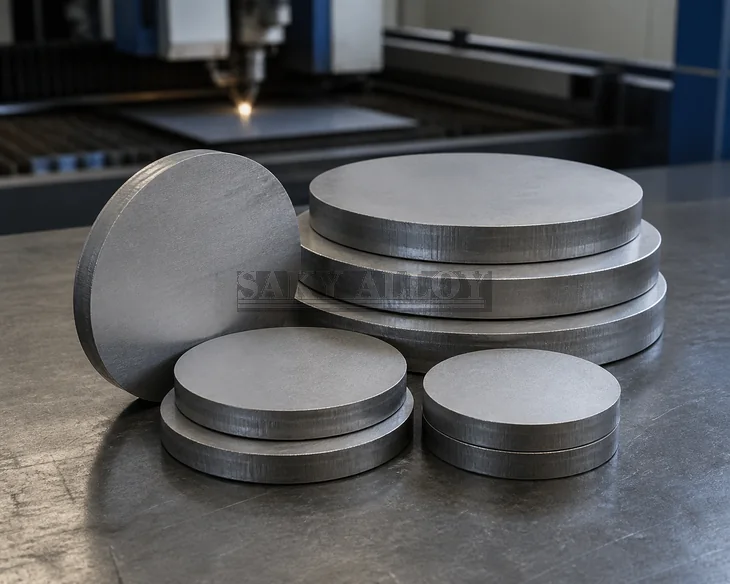
A useful circular-blank quotation needs both certified base-plate requirements and cut-geometry requirements. Omitting either can cause incorrect allowance or inspection assumptions.
RFQ Checklist
- Grade, UNS and ASTM B265/B265M revision
- Rough or finished diameter and tolerance
- Thickness, flatness and roundness
- Cutting route and required edge condition
- Positive machining allowance
- Quantity, finished-part application and inspection
- Base-plate MTC and heat/lot traceability
Use a Controlled Drawing
The plate specification does not define blank diameter, cut-edge quality or machining stock. Show these values on the drawing or purchase order.
Browse Titanium Plate & Sheet or open the Grade 2 Titanium Circular Blank and Grade 5 Titanium Circular Blank product pages.
Related Reading
Grade 2 vs Grade 5 Titanium Circular Blanks · Waterjet vs Laser vs Machined Titanium Circular Blanks · Titanium Circular Blank vs Forged Disc
Direct Answer: How to Specify a Titanium Circular Plate Blank
A complete titanium circular blank RFQ states the certified parent-plate grade and standard, finished or rough diameter, thickness, diameter and thickness tolerances, roundness, flatness, surface, cut-edge condition, machining allowance, quantity, cutting route, inspection and traceability. ASTM B265 can govern the source plate when invoked, but the order or drawing must separately control the circular geometry and cut edge.
Circular Blank RFQ Data
| RFQ field | What to state | Why it matters |
|---|---|---|
| Material | Grade, UNS, parent-plate specification and revision | Controls chemistry, properties and source-plate certification |
| Geometry | Diameter, thickness, roundness, flatness and tolerances | Prevents insufficient stock or unnecessary machining |
| Edge | Saw, waterjet, laser, plasma or machined; taper and HAZ limits | Controls contamination, heat input and finish allowance |
| Machining allowance | Finished drawing plus positive radial and face allowance | Supports cleanup of cut edge, flatness and surface |
| Quality | MTC, heat mapping, dimensions, surface, edge and optional NDE | Maintains traceability from parent plate to each blank |
Grade and Manufacturing Decisions
Grade 2 blanks are commonly reviewed for corrosion-resistant valve, pump, marine and chemical-process parts. Grade 5 Ti-6Al-4V blanks are reviewed for higher-strength machined components and may require stricter control of heat-affected-zone removal, machining allowance and fatigue-critical surfaces. A plate-cut circular blank is not the same as a forged disc: the starting product, grain flow, available thickness, inspection plan and qualification route differ.
Waterjet and saw cutting limit thermal effects but can leave taper or roughness. Laser and plasma cutting may require explicit removal of the heat-affected edge. Finish machining provides tighter geometry at higher processing cost. The approved route should match the finished drawing rather than being selected from price alone.
FAQ
Does ASTM B265 define circular blank diameter tolerance?
No. It can define the source titanium plate when invoked. The blank diameter, roundness, edge and machining allowance must be stated separately.
Is a circular blank a forged disc?
No. A blank is cut from rolled plate; a forged disc follows a forging route. Engineering approval is required before substitution.
What should be sent for quotation?
Send the parent-plate standard and grade, drawing, diameter, thickness, tolerances, edge, machining allowance, quantity, application, tests and required documents.
Grade 2 Titanium Circular Blank | Grade 5 Titanium Circular Blank | Request a quote