

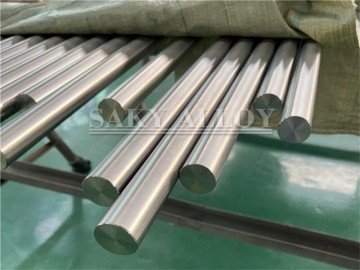
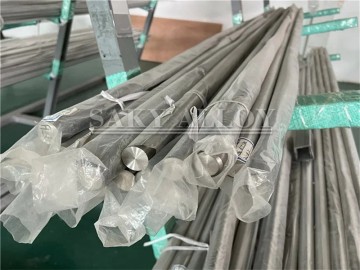
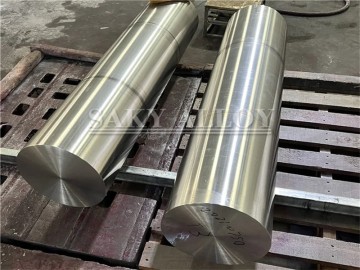
Hot Rolled vs Cold Rolled Titanium Plate and Sheet
Hot rolled titanium plate and cold rolled titanium sheet describe different production and supply routes. Selection should be based on thickness, surface, dimensional control and downstream fabrication—not on the assumption that one route is universally better.
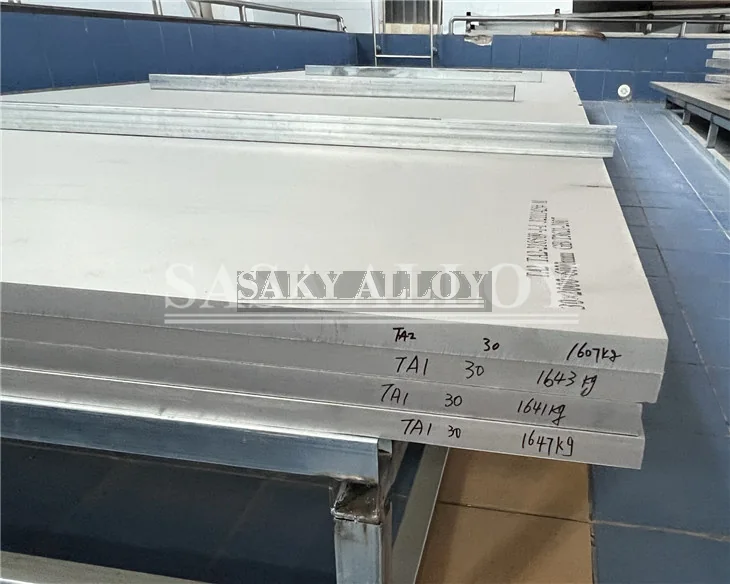
Quick Comparison
| Item | Hot rolled plate | Cold rolled sheet |
|---|---|---|
| Typical purchasing focus | Heavier section, machining allowance and structural fabrication | Controlled gauge, surface and forming |
| Surface | Descaled, pickled, blasted, ground or machined by order | Annealed, pickled, bright, brushed or protected by order |
| Critical dimensions | Thickness, flatness, width, length and allowance | Gauge, flatness, width, length and grain direction |
| Common processing | Machining, welding, vessel and heavy fabrication | Forming, stamping, bending and light fabrication |
Do Not Select by Finish Alone
Surface appearance does not establish grade, condition, mechanical properties or acceptance. State the governing specification, grade, dimensions, tolerances and inspection plan.
Products
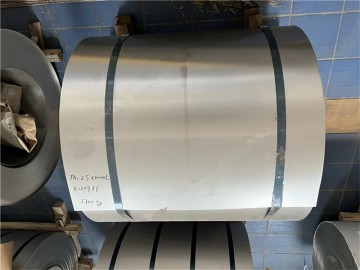
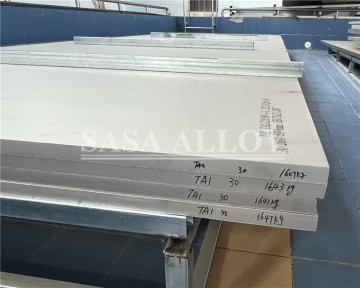
Review Hot Rolled Titanium Plate and Cold Rolled Titanium Sheet. For a quotation, provide grade, thickness, width, length, condition, flatness, surface, quantity, tests and documents.
Related Reading
How to Specify ASTM B265 Titanium · Titanium Plate Tolerance and Flatness · Chemical Processing Plate Selection
Frequently Asked Questions
Is cold rolled titanium always stronger than hot rolled titanium?
No. Strength depends on grade, thickness, processing history, heat-treatment or annealed condition and the applicable specification. “Cold rolled” or “hot rolled” alone is not a complete mechanical-property designation.
Which process gives tighter thickness and surface control?
Cold rolling is commonly associated with thinner gauges and closer surface or dimensional control, but the achievable tolerance and finish must be confirmed for the ordered grade, width and thickness.
What should a titanium plate or sheet RFQ specify?
Provide grade, standard and edition, plate or sheet designation, thickness, width, length, tolerance, flatness, surface finish, edge condition, quantity, testing, material certificate and any downstream cutting or fabrication.