

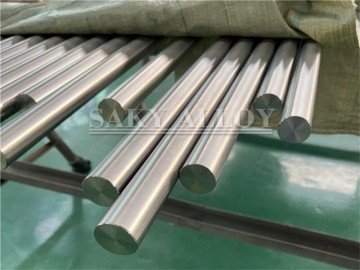
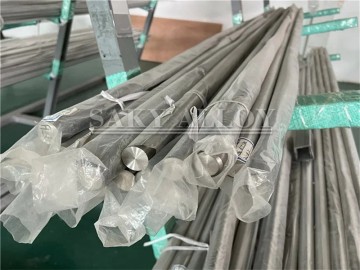
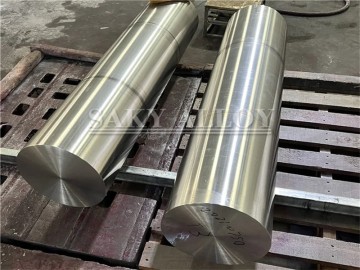
Titanium Ingot, Billet and Forging Supply Chain Guide
Titanium ingot, billet and forging are different stages of the manufacturing route. Identifying the correct stage helps buyers control melt history, breakdown, grain flow, machining allowance, testing and cost.
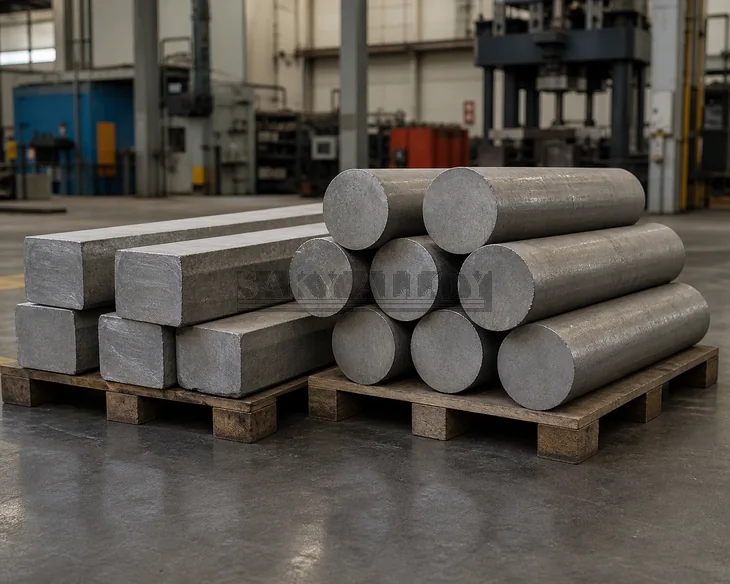
Supply-Chain Stage Comparison
| Product | Stage | Key ordering controls |
|---|---|---|
| Ingot | Vacuum-melted primary stock | Melt route, chemistry, diameter/weight, crop and traceability |
| Billet | Broken-down semi-finished stock | Section, reduction, heat treatment, surface and macrostructure |
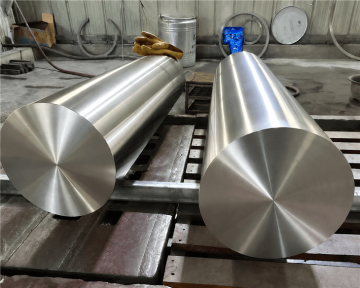
| Forged shaft | Part-oriented elongated forging | Envelope, grain flow, allowance, straightness and NDE |
| Forged block | Rectangular forging stock | Dimensions, reduction, allowance and ultrasonic class |
| Custom forging | Drawing-specific near-net product | Route, parting/flow, allowance, heat treatment and inspection plan |
Use the Specification for the Correct Product Stage
ASTM B977 may apply to titanium ingots, ASTM B348 / ASME SB348 to bars and billets within scope, and ASTM B381 / ASME SB381 to forgings. Aerospace or critical components may require an AMS or customer specification with additional controls.
Melt and Forging Route Affect Traceability
State the required vacuum melt practice, heat identity, breakdown route, minimum reduction and heat treatment. Do not infer critical-route requirements from the titanium grade alone.
Machining Allowance Must Match the Finished Drawing
Provide the finished component envelope and cleanup allowance. Excess allowance increases titanium weight and machining time, while insufficient allowance may prevent the forged surface from cleaning up to the required finished dimensions.
Plan Inspection Before Forging
Ultrasonic testing, macrostructure, microstructure, mechanical-test location and sampling may influence forging geometry and process route. Define these requirements before production rather than after machining.
Choose the Correct Supply Stage
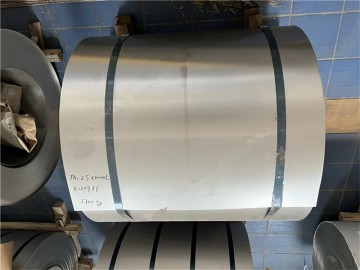
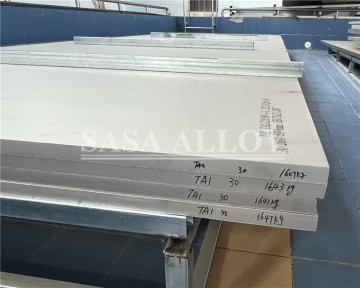
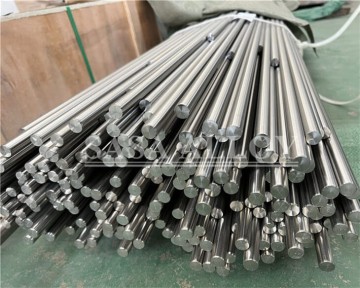
Review titanium ingot, titanium billet, titanium forged shaft, titanium forged block and custom titanium forging.
RFQ Checklist
- Titanium grade and product-stage specification
- Drawing, dimensions or weight
- Melt and forging route
- Heat treatment and machining allowance
- Mechanical, macro/microstructure and NDE requirements
- Quantity and documentation
Frequently Asked Questions
Can titanium billet certification be used as finished-forging certification?
Not automatically. Billet and finished forgings represent different product stages. The finished forging must meet its governing specification, heat-treatment, mechanical-property, dimensional, inspection and documentation requirements.
When should ultrasonic testing be specified?
Define ultrasonic examination before production when it is required by the drawing, product specification, customer requirement or critical-service design. The method, acceptance class, examination stage and reporting must be agreed in the order.
What information should a titanium forging RFQ include?
Provide grade, product specification and edition, drawing, forging type, rough and finished dimensions, machining allowance, heat-treatment condition, quantity, mechanical testing, nondestructive examination, material traceability and delivery condition.