

Titanium Cap Nuts vs Wing Nuts vs Lock Nuts: Which Nut Fits the Joint?
Titanium cap nuts, wing nuts and lock nuts may share the same thread size, but they perform different functions. Cap nuts cover an exposed thread end, wing nuts enable manual adjustment and lock nuts provide a defined prevailing-torque or locking feature. Choosing by shape alone can create an unreliable joint.
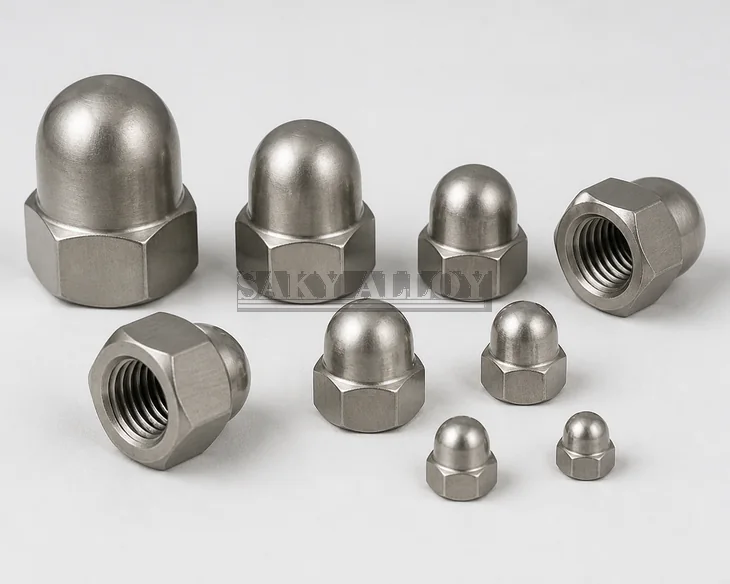
Functional Comparison
| Nut type | Main purpose | Critical check |
|---|---|---|
| Cap nut | Protect or cover the exposed bolt or stud end | Internal dome depth and stud projection |
| Wing nut | Tool-free manual adjustment | Achievable hand torque and wing clearance |
| Lock nut | Defined resistance to loosening | Locking mechanism, temperature and reuse policy |
When to Use a Cap Nut
Select a cap nut where thread-end protection or a closed external profile is needed. Confirm the stud does not bottom in the dome before the nut seats. A cap nut is not automatically pressure-tight and should not be treated as a fluid seal without an engineered sealing interface.
When to Use a Wing Nut
A wing nut suits assemblies adjusted or removed by hand. It normally develops less controlled preload than a wrench-tightened nut. Vibration resistance requires a separate validated retention method when needed.
When to Use a Lock Nut
A nylon-insert or all-metal lock nut is selected when prevailing torque is required. Temperature, chemicals, mating thread, installation cycles and reuse limitations affect the locking choice. Material grade alone does not define locking performance.
Grade 2 or Grade 5
Grade 2 titanium is commonly selected for corrosion resistance and ductility. Grade 5 Ti-6Al-4V offers higher source-material strength. The selected nut still requires compatible mating threads, sufficient engagement, finished-part acceptance and an installation plan.
Match the Nut Function to the Assembly
Compare Grade 2 cap nuts, Grade 5 cap nuts, Grade 2 wing nuts, Grade 5 wing nuts and Grade 5 lock nuts. Send the mating thread, function, environment and quantity for review.
RFQ Checklist
- Nut type and intended function
- Titanium grade and condition
- Thread, fit and engagement
- Mating bolt or stud projection
- Preload, adjustment or locking requirement
- Environment, quantity, tests and certificates
Frequently Asked Questions
Does a cap nut provide a pressure-tight seal?
Not by default. A cap nut covers the exposed thread end, but sealing depends on the complete joint design, sealing face, gasket or seal and applicable pressure requirements.
Can a wing nut be used for a high-preload structural joint?
Hand-tightened wing nuts are generally selected for frequent manual adjustment rather than controlled high preload. The required clamp load and loosening risk must be evaluated.
How should a titanium lock nut be specified?
State the locking type, grade, thread system and class, size, temperature, mating fastener, lubrication or coating, reuse policy, prevailing-torque requirements, testing and documentation.