

Titanium Plate Quotations: Compare Weight, Cutting Allowance and Nesting Yield
A comparable titanium plate quotation must use the same material grade, product specification, dimensions, tolerance, billing basis, cutting scope, inspection and delivery terms. The lowest price per kilogram may not give the lowest cost per acceptable blank when oversize stock, edge trim, kerf, nesting loss or extra testing are different.
Begin With One Common Titanium Plate RFQ
Send every bidder the same controlled schedule. State the titanium grade and UNS designation, product specification and revision, plate or sheet form, condition, thickness, width, length, quantity, tolerances, flatness, surface, edge condition, cutting scope, documents and destination. If grain direction, rolling direction, protective film or identification after cutting matters, include it in the order.
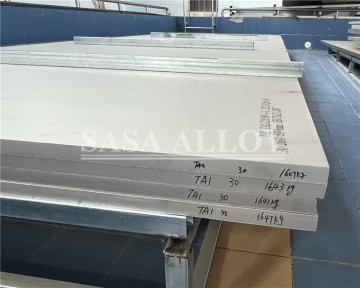
ASTM B265 covers titanium and titanium-alloy strip, sheet and plate within its stated scope; it is not one alloy grade and it does not replace a complete purchase order. Review the ASTM B265 titanium plate page and the broader titanium plate and sheet range before requesting a quote.
Titanium Plate Quotation Comparison Table
| Comparison item | Ask each supplier to state | Risk if it is not aligned |
|---|---|---|
| Material | Grade, UNS, specification revision and condition | Similar alloy wording with different acceptance requirements |
| Dimensions | Nominal size, thickness tolerance, width/length tolerance and flatness | Different payable weight or insufficient cleanup stock |
| Billing basis | Actual weight, theoretical weight, area, full plate or price per blank | Unit prices compared against different payable quantities |
| Cutting | Method, kerf, edge trim, machining allowance and cut tolerance | A full-plate offer compared with finished or near-net blanks |
| Nesting | Plate size, part orientation, web spacing, remnant policy and expected yield | Low price per kilogram but high scrap cost |
| Quality | MTC, traceability, dimensional report and any NDE or witness point | Required inspection omitted or priced later |
| Delivery | Packing, freight basis, named destination, lead time and exclusions | Offers compared on different logistics scope |
Actual Weight, Theoretical Weight and Billable Weight
Actual net weight is the measured material weight without packaging. Theoretical weight is calculated from nominal geometry and an assumed alloy density. Billable weight is the quantity the commercial agreement uses for invoicing. These values can differ, so the quotation should identify which one controls payment.
For a rectangular plate, theoretical mass is:
Mass = thickness × width × length × density
Use consistent units and the density appropriate to the ordered alloy. For example, when all dimensions are converted to metres and density is in kg/m³, the result is kilograms. The titanium weight calculator is useful for planning, but the purchase order’s agreed weight method controls the transaction.
Thickness tolerance matters when material is billed by actual weight or when machining cleanup is required. A plate near the upper permitted thickness can weigh more than the nominal estimate. A plate near the lower permitted thickness may not provide the intended machining allowance. Do not compare nominal kilogram rates without checking the supplied dimensional range.
Calculate Cutting and Nesting Yield
Nesting yield measures how much of the starting plate becomes ordered parts. A practical planning expression is:
Nesting yield (%) = net area of acceptable parts ÷ purchased plate area × 100
Area is a convenient first comparison when all pieces use the same thickness and grade. For mixed thicknesses or different stock sources, compare mass and cost by line item. The final cutting plan should include edge trim, kerf or process width, web spacing, corner radii, part orientation, test coupons, identification zones and any damaged or unusable surface area.
Illustrative example: a 2,000 × 1,000 mm plate has an area of 2.00 m². If the approved nest produces acceptable parts with a combined net area of 1.56 m², the planned area yield is 78%. The remaining 22% is not automatically waste: some material may be required for kerf and edge trim, while traceable remnants may be reusable. This example does not state a supplier’s guaranteed yield.
Compare total quoted cost ÷ acceptable part count or total quoted cost ÷ net accepted part area, not just price per kilogram. Confirm whether programming, setup, cutting, deburring, inspection, marking and packaging are included.
Cutting Allowance Depends on the Process
Sawing, waterjet, laser and machining create different kerf, heat input, edge condition, taper and cleanup needs. A drawing should distinguish the delivered blank dimension from the final machined dimension. If the supplier is responsible only for a rough blank, state the required minimum cleanup stock and allowable maximum oversize.
Use the titanium plate cut-to-size guide to compare cutting routes. The responsible engineer should approve the process for the actual grade, thickness, downstream fabrication and quality requirements.
Quality Documents and Traceability After Cutting
A full plate can carry mill marking, while small cut pieces may lose the original mark. Define how heat or lot identity will be transferred to each blank or package. The documentation schedule may include the material test certificate, certificate of conformity, dimensional report, cutting map, part list and traceability record.
Additional examination such as ultrasonic testing, positive material identification or third-party witnessing should be ordered only with the required method, coverage, acceptance criteria and reporting. Do not assume every test is automatically included by citing the alloy name.
How to Reduce Cost Without Weakening the Requirement
- Combine compatible blank sizes into one controlled nesting plan.
- Ask for standard or available plate sizes before freezing the cut layout.
- Separate mandatory tests from optional commercial services.
- Define tolerances that match the next manufacturing operation.
- Agree whether traceable remnants are retained, returned or credited.
- Request alternatives as separate lines rather than silent substitutions.
For broader commercial planning, see the bulk titanium MOQ, price and alternatives guide. Any change to grade, specification, condition, tolerance or inspection requires the purchaser’s technical approval.
Titanium Plate RFQ Checklist
- Grade and UNS designation
- Material specification and revision
- Plate, sheet or cut blank
- Condition and surface finish
- Thickness, width and length
- Tolerances and flatness
- Part drawing and quantity
- Cutting route and allowance
- Nesting and remnant policy
- Marking and traceability
- Tests and documents
- Packing, destination and delivery terms
Frequently Asked Questions
Is price per kilogram enough to compare titanium plate suppliers?
No. Compare the same grade, dimensions, tolerance, billable quantity, cutting scope, yield, inspection and delivered terms. A lower kilogram rate can produce a higher cost per acceptable part.
Should theoretical or actual weight control the invoice?
Either method may be used if the quotation and purchase order define it clearly. Confirm the density, dimensions and weighing method behind the chosen basis.
Does ASTM B265 define the finished cut part?
It specifies covered titanium flat products within its scope. The drawing and purchase order must additionally define the cut geometry, tolerances, edge condition, marking and downstream requirements.
Can remnants be counted as usable yield?
Only when the purchaser and supplier agree that the remnant is usable, identified and traceable. Do not count unqualified scrap as acceptable finished output.
Request a Comparable Titanium Plate Quote
Send SAKY ALLOY the grade, specification revision, plate size, finished-part drawings, quantities, tolerances, cutting allowance, inspection, documents and destination. Submit the complete titanium plate RFQ and ask that every deviation or alternative be listed separately.
Standards reference: ASTM B265 — Standard Specification for Titanium and Titanium Alloy Strip, Sheet, and Plate. Use the revision required by the purchase order.