

Quick answer. Define the tensile specimen axis relative to the parent plate’s rolling direction, identify the required sampling position and test condition, and agree how these details will appear in the report. Before a plate is nested into blanks, confirm that the required coupon material and its identity will remain available. The ordered material specification, its edition and the approved inspection plan control the actual tests.
Define the plate reference and specimen axis
A long rectangular blank can be cut in several orientations within one parent plate. Its longest edge therefore gives an incomplete description of test direction. Put the rolling-direction reference on the cutting plan and define the tensile specimen’s loading axis against that reference.
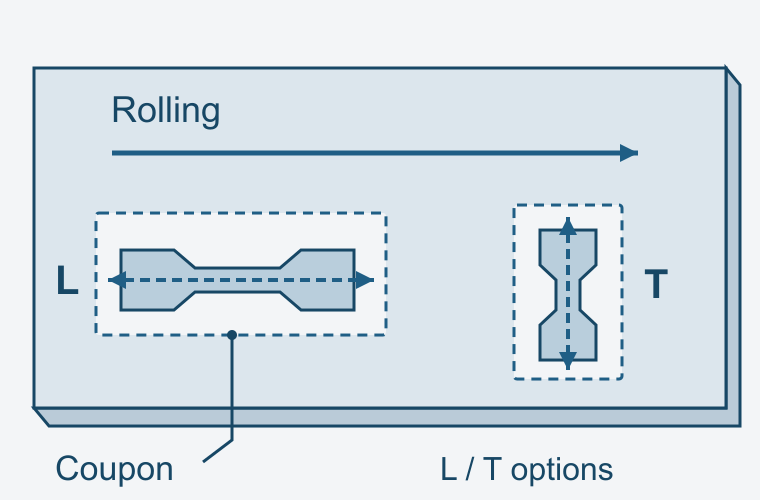
| Drawing reference | What to identify | Handover check |
|---|---|---|
| Parent-plate rolling direction | The documented reference direction of the source plate. | Carry the reference into the nesting or cutting drawing when the order requires direction control. |
| Longitudinal tensile specimen | A loading axis parallel to the rolling reference. | Confirm the laboratory uses the same reference and records the specimen identity. |
| Transverse tensile specimen | A loading axis perpendicular to the rolling reference in the plate plane. | Distinguish this from any separately specified through-thickness direction. |
| Blank or component direction | The orientation of the delivered blank relative to the source plate. | Show the required relationship to a named drawing edge or feature. |
Spell out abbreviations on the inspection plan. If a report uses L, T, LT or ST, ask the issuer to confirm its convention before comparing the results.
Read the test method with the material specification
ASTM E8/E8M describes tension testing of metallic materials. For a titanium plate order, identify the product specification and edition, grade, plate thickness and delivery condition that control the applicable acceptance requirements. Confirm the required specimen geometry, gauge length and units with the laboratory. The required sampling directions and frequency follow the governing material specification and order.
Use the broader titanium mill test certificate guide to check material identity and certification. For this direction check, focus on the connection between the reported specimen, its source plate and the drawing reference.
Reserve test material before approving the nesting plan
Distinguish the material reserved for testing from the finished tensile specimen. Agree the laboratory’s terminology for coupons and specimens. Mark the reserved material’s location in the plate and the final specimen’s loading axis on the sampling plan.
When additional testing is required, ask the responsible laboratory to confirm the specimen drawing and preparation allowance before the plate is divided. A narrow leftover strip may be unsuitable for the requested specimen or sampling position. Obtain agreement on the number of specimens, required directions, source location and any material that must remain available for an authorized retest.
Agree whether the test represents material in its supplied condition or a specified later processing condition. Carry the relevant heat or lot, plate and coupon identifiers through cutting and specimen preparation. Have the laboratory review the proposed preparation route so that the test section is suitable for the selected method.
A drawing handover example
Suppose a buyer needs several rectangular blanks from one parent plate and an additional transverse tensile test. The cutting plan should show the rolling reference, each blank’s identifier and orientation, and the proposed coupon area. The laboratory can then confirm whether the reserved material supports the required specimen. This review should take place before the cutting layout is released.
Put the reporting requirements in the RFQ
- State the titanium grade, product specification and edition, delivery condition and plate dimensions.
- Identify the controlling test method, specimen drawing, required directions and sampling locations.
- Define the lot or product represented by each test and the required coupon identification.
- Request specimen dimensions, gauge length, test condition, units, results and acceptance references in the report.
- Agree coupon reservation, preparation, laboratory review and retest disposition before cutting.
The following wording can be adapted to an approved project inspection plan.
Please confirm the required tensile sampling and reporting against the ordered material specification and edition. Submit the parent-plate direction reference, proposed coupon location, specimen axis and specimen preparation drawing for review before nesting. Link the test report to the applicable material heat or lot, plate and specimen identifiers. Confirm any extra material needed for the agreed tests.
Resolve an unclear report before releasing the blanks
If a certificate reports a result without a direction or specimen reference required by the order, ask the issuer for the underlying sampling and test record. When the original record cannot establish that relationship, have the responsible technical reviewer decide whether further verification or testing is needed. Record that decision with the order documentation before releasing the affected material.
For cut-to-size titanium plate blanks, send the drawing together with the material specification, direction references and inspection plan. SAKY ALLOY can review the requested supply and documentation against the specific order.
Discuss the plate and inspection plan
Include the parent-plate specification, blank layout, required material direction, coupon plan, quantity and delivery destination so that the quotation can identify the included processing and inspection.