
Titanium Pipe vs Carbon Steel: A Comprehensive Comparison
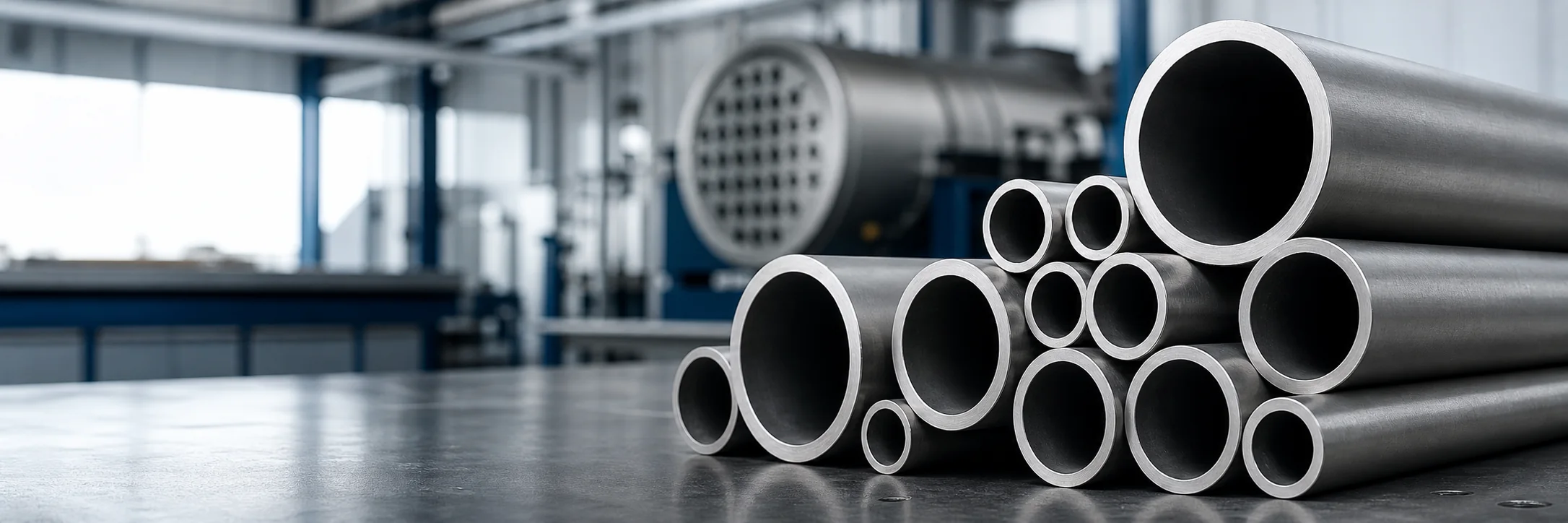
Titanium pipe and carbon steel pipe serve different design priorities. Carbon steel is widely available and economical for many compatible fluids and temperature ranges. Titanium is considered where verified corrosion performance or weight reduction justifies a different material, fabrication and inspection route. The construction code and actual service conditions must control the choice.
Titanium Pipe vs Carbon Steel Pipe Comparison
| Decision factor | Titanium pipe or tube | Carbon steel pipe |
|---|---|---|
| Corrosion strategy | Select a titanium grade using the actual chemistry, temperature, crevice and galvanic conditions; a corrosion allowance is not a substitute for compatibility | May use corrosion allowance, coating, lining, inhibitor or material upgrade as permitted by the design; water chemistry and under-deposit corrosion require review |
| Weight | Lower material density can reduce component mass, although wall and support design still control the system | Higher density, with familiar schedules, fittings, supports and fabrication infrastructure |
| Temperature and strength | Allowable properties and temperature limits depend on titanium grade, product condition and construction code | Broad code experience and grade choices for pressure and temperature service; low-temperature toughness and high-temperature behavior remain grade-specific |
| Fabrication | Requires clean handling and full inert-gas shielding for fusion welding | Conventional welding infrastructure is widespread, but procedure qualification, preheat, consumables and post-weld controls depend on grade and thickness |
| Cost basis | Higher initial material and specialist fabrication cost may be justified by lifecycle performance in a suitable environment | Often lower initial cost; coatings, corrosion allowance, inspection, maintenance and replacement must be included in lifecycle review |
| Galvanic contact | Electrical contact with dissimilar metals in an electrolyte requires area-ratio and isolation review | Contact with titanium or more noble materials can accelerate attack of the carbon steel member under unfavorable area ratios |
When Titanium Pipe Is Considered
- Service-specific corrosion data support the selected titanium grade.
- Weight reduction benefits the complete equipment, module or support design.
- Shutdown, coating renewal or replacement would create high lifecycle cost.
- Qualified titanium fabrication and inspection resources are available.
When Carbon Steel May Be Preferred
- The fluid and temperature are compatible with the selected carbon steel and corrosion-control strategy.
- Initial cost, local availability and rapid conventional fabrication are major requirements.
- The project code, pressure-temperature range and existing plant standard favor carbon steel.
- Added weight and planned corrosion management are acceptable.
RFQ and Design Data
- Fluid, concentration, contaminants, solids and cleaning chemicals
- Normal, upset and design temperature and pressure
- Construction code, product standard and design life
- Grade, OD or NPS, wall or schedule, length and route
- Corrosion allowance, coating, lining or galvanic-isolation plan
- Joining, NDT, pressure test, certification, quantity and destination
Continue to a Titanium Pipe Specification
Browse Titanium Pipe, Tube & Tubing, compare Grade 2 titanium pipe and tube with Grade 5 titanium pipe and tube, and review the ASTM B338 vs B861 vs B862 guide. Send the service conditions, standard, grade, dimensions, route, quantity and documents for quotation.
Frequently Asked Questions
Can titanium pipe replace carbon steel using the same wall thickness?
Not automatically. Allowable stress, modulus, pressure design, erosion, external loads, joining, code rules and dimensional availability must be recalculated for the selected titanium grade.
Does titanium eliminate galvanic corrosion?
No. Titanium is relatively noble in many electrolytes and can increase attack on a smaller carbon steel area when electrically coupled. Joint design, area ratio, coatings and electrical isolation require review.
Is carbon steel always cheaper?
It is often cheaper initially, but lifecycle cost can include corrosion allowance, coating, inspection, maintenance, shutdown and replacement. Compare the complete installed system over the required design life.