
Titanium for Heat Exchangers: Why Grade 2 and Grade 7 Are Widely Used
Titanium for Heat Exchangers: Why Grade 2 and Grade 7 Are Widely Used
Quick answer: Grade 2 is the usual starting grade for titanium heat-exchanger tubing because it combines corrosion resistance, weldability, formability and broad availability. Grade 7 uses a Grade 2-type commercially pure titanium base with a palladium addition and is considered when reducing acids, hot acidic chlorides or crevice conditions require a larger corrosion margin.
The correct choice cannot be made from chloride concentration alone. Temperature, pH, oxidizing potential, aeration, velocity, deposits, crevice geometry, cleaning chemistry and upset conditions should all be reviewed by the equipment designer or corrosion specialist.
Grade 2 and Grade 7 at a glance
| Selection point | Grade 2 titanium | Grade 7 titanium |
|---|---|---|
| UNS designation | R50400 | R52400 |
| Alloy concept | Commercially pure titanium | Commercially pure titanium with palladium addition |
| Typical selection | Seawater, cooling water, condensers and many oxidizing chemical duties | More severe reducing-acid, acidic chloride or crevice-corrosion conditions |
| Fabrication | Good formability and weldability | Generally similar fabrication approach, subject to the project procedure |
| Commercial consideration | Usually more readily available and economical | Higher alloy cost; availability and lead time should be confirmed |
Why Grade 2 is widely used in heat exchangers
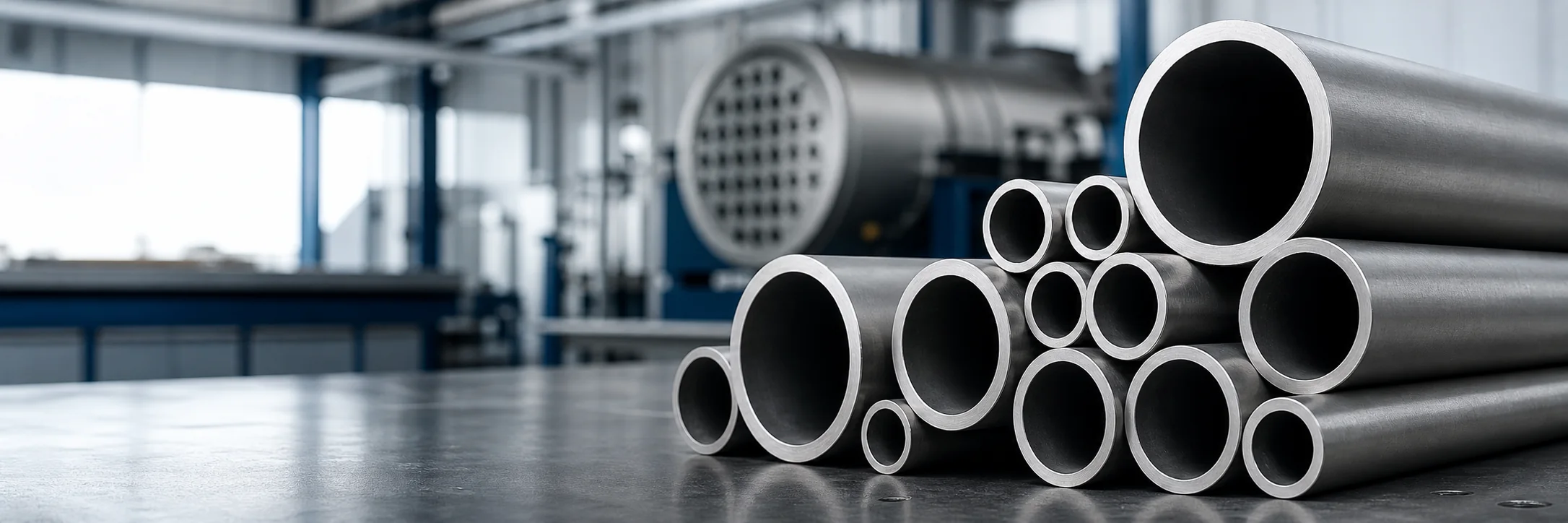
Titanium forms a stable protective oxide film in many aerated aqueous environments. In suitable service, this gives Grade 2 strong resistance to seawater and chloride-bearing cooling water. Its good ductility supports thin-wall tube production, tube expansion and fabrication. Grade 2 is used in condensers, desalination equipment, power-plant cooling systems, chemical-process exchangers and seawater heat recovery.
Grade 2 is not immune to every environment. Hot, stagnant, acidic or oxygen-depleted crevices can reduce its corrosion margin. Deposits, gasket design and contaminated cleaning solutions also matter. A materials review should consider normal operation, shutdown and cleaning conditions.
When Grade 7 may provide additional protection
The palladium addition in Grade 7 improves the stability of the passive surface in selected reducing environments. This is valuable in some acid-processing and hot chloride duties where Grade 2 may face crevice attack or insufficient corrosion resistance. Grade 7 is not automatically required for all seawater heat exchangers; specifying it without a corrosion basis can add cost without solving unrelated design problems.
Laboratory corrosion data, plant experience and the equipment licensor’s rules should be used when the operating envelope is severe or uncertain.
Use the correct product standard
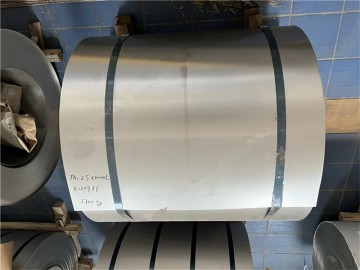
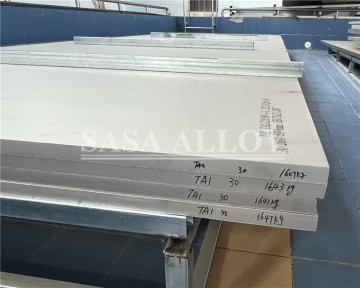
ASTM B338 / ASME SB-338 is commonly specified for seamless and welded titanium and titanium-alloy tubes used in condensers and heat exchangers. Titanium sheet and plate for channels, baffles or tube sheets may be ordered to ASTM B265 / ASME SB-265. Pipework can fall under ASTM B861 or B862 depending on whether it is seamless or welded.
The purchase order should state grade, tube type, outside diameter, wall thickness, length, tolerance, surface condition, heat treatment, inspection, certificate and tube-end requirements. Never assume that “heat-exchanger tube” defines the complete test scope.
Inspection points for titanium heat-exchanger tube
- Heat-number traceability and EN 10204 3.1 MTC when required.
- Actual chemical and mechanical results for the ordered grade and standard.
- Outside diameter, wall thickness, length, straightness and ovality.
- Inside and outside surface cleanliness, including weld-seam condition for welded tube.
- Eddy-current, hydrostatic, pneumatic or other testing required by the standard or project.
- Protected tube ends, batch labels and export packaging that prevents scratches and contamination.
RFQ information for a heat-exchanger project
Send the process and cooling media, composition, concentration, temperature range, design pressure, velocity, fouling risk, cleaning procedure, grade, standard, seamless or welded requirement, OD, wall thickness, length, quantity, NDT, certificate type, packing and required delivery date. Replacement projects should include existing tube and tube-sheet data.
Questions buyers frequently ask
Is Grade 7 stronger than Grade 2?
Grade 7 is selected primarily for enhanced corrosion resistance in certain environments, not as a general high-strength replacement for Grade 2.
Can welded titanium tube be used in a heat exchanger?
Yes, when the design permits it and the tube complies with the applicable specification and inspection requirements. The manufacturing route should be stated in the RFQ.
Which test is most important for titanium exchanger tube?
There is no single universal answer. The governing standard and equipment specification define the required combination of dimensional, surface, pressure and nondestructive examinations.
Request a titanium heat-exchanger material review
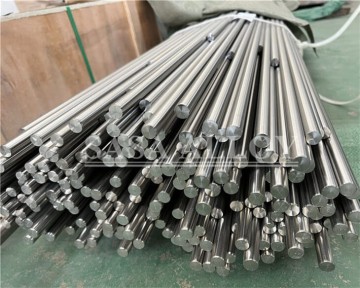
SAKY ALLOY supplies titanium tube, sheet, plate, pipe, fittings and fabricated chemical-equipment materials. See our related guide to titanium for desalination plants, or send your service conditions and specification to sales@sakyalloy.com for quotation review.