

Comprehensive Analysis of the Differences Between Ti6Al4V and Ti6Al4V ELI
Ti-6Al-4V vs ELI in one answer: ELI controls interstitial and residual content for toughness and ductility. For procurement, distinguish ASTM B348 Grade 23 / UNS R56407 from ASTM F136 / UNS R56401 surgical-implant source material. Confirm the specification, form, condition and certificate requirements before substituting either for Grade 5.
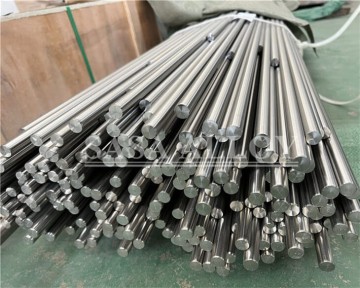
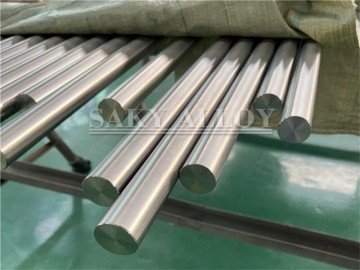
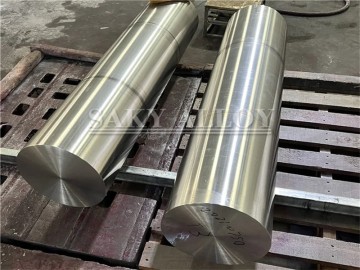
Compare Grade 5 round bar, industrial Grade 23 bar and ASTM F136 titanium rod.
Nota para compras de TA6V ELI: ASTM B348 Grado 23 / UNS R56407 y ASTM F136 / UNS R56401 no son certificados intercambiables automáticamente. Indique la norma, revisión, forma y estado del material; confirme la documentación antes de aceptar una sustitución.
References checked 18 October 2026: ASTM B348/B348M, ASTM F136, ASTM F1472 and Carpenter Ti-6Al-4V ELI data.
Ti-6Al-4V and Ti-6Al-4V ELI are related titanium alloys with nominally 6% aluminum and 4% vanadium. ELI means extra low interstitials. Its controlled chemistry supports toughness and ductility, but the material standard, product form and processing condition determine what can be certified.
When engineers and procurement specialists ask about the differences between these two materials, they often need clarity on composition, mechanical properties, applications, and standards. This article provides a comprehensive analysis of the differences between Ti6Al4V and Ti6Al4V ELI, guiding professionals in selecting the right alloy for their projects.
Introduction to Ti6Al4V
Ti-6Al-4V is commonly called Grade 5 in commercial titanium specifications. For bar, identify the exact ASTM B348/B348M or aerospace specification and revision; the alloy name alone does not define a complete order.
Key Properties of Ti6Al4V:
-
High strength-to-weight ratio.
-
Good corrosion resistance in seawater and chemical environments.
-
Machining and welding require process controls suited to titanium, the supplied condition and the component geometry.
-
Permitted service temperature must come from the component design and approved material data for the supplied condition.
Common Applications:
-
Aerospace components such as turbine blades, landing gear, and structural parts.
-
Marine equipment including propeller shafts and offshore structures.
-
Industrial applications such as pressure vessels and pumps.
-
Medical material use must follow the specified implant or device material requirements. ASTM F1472 covers wrought Ti-6Al-4V surgical-implant source material.
Introduction to Ti6Al4V ELI
Ti-6Al-4V ELI is the extra-low-interstitial version of the alloy. Commercial ASTM B348 Grade 23 is identified as UNS R56407, while ASTM F136 surgical-implant source material uses UNS R56401. These are specification-controlled descriptions and should not be treated as automatically interchangeable certificates.
Key Properties of Ti6Al4V ELI:
-
Similar strength to standard Ti6Al4V but with higher toughness.
-
Better ductility and fatigue resistance.
-
Established use as surgical-implant source material when the ordered ASTM F136 specification is met; final-device performance also depends on manufacture and validation.
-
More resistant to crack propagation.
Common Applications:
-
Medical implants such as hip joints, dental implants, and bone screws.
-
Aerospace components operating under extreme stress.
-
Cryogenic applications requiring toughness at very low temperatures.
-
High-performance defense and energy systems.
Chemical Composition Comparison
| Element | Ti6Al4V (Grade 5) | Ti6Al4V ELI (Grade 23) |
|---|---|---|
| Aluminum | 5.5–6.75% | 5.5–6.5% |
| Vanadium | 3.5–4.5% | 3.5–4.5% |
| Oxygen | ≤0.20% | ≤0.13% |
| Nitrogen | ≤0.05% | ≤0.05% |
| Carbon | ≤0.08% | ≤0.08% |
| Iron | ≤0.40% | ≤0.25% |
| Hydrogen | ≤0.015% | Use the ordered specification limit |
| Titanium | Balance | Balance |
Purchasing interpretation: lower oxygen and controlled residual content support the ELI distinction. Not every element has a lower limit in every specification: the nitrogen and carbon limits shown here are the same in both columns. This table is an orientation aid; use the ordered specification and heat certificate for acceptance.
Mechanical Property Comparison
| Property | What to compare | Evidence to request |
|---|---|---|
| Tensile and yield strength | Same form, section, delivery condition and test orientation | Ordered specification minima and actual tensile report |
| Elongation and toughness | Specified test method and specimen geometry | Material certificate and any separately required fracture test |
| Fatigue and hardness | Surface condition, processing and component duty | Approved design data or agreed qualification tests |
Property comparison: compare the same product form, section, heat treatment and test orientation. ELI chemistry can improve toughness and ductility, but neither a universal fatigue-life gain nor a fixed strength difference follows from the alloy name.
Standards and Specifications
Both alloys are covered by global standards:
-
Ti6Al4V (Grade 5): ASTM B348, ASTM F1472, AMS 4928, ISO 5832-3.
-
Ti-6Al-4V ELI: ASTM B348/B348M Grade 23 / UNS R56407 for the applicable commercial bar scope; ASTM F136 / UNS R56401 for wrought annealed surgical-implant source material when expressly ordered. Verify any ISO or aerospace specification separately.
An industrial Grade 23 certificate does not automatically satisfy an ASTM F136 order. Confirm the exact specification, edition, chemistry, condition, mechanical and metallurgical requirements, inspection and traceability package.
Industrial Applications Compared
Ti6Al4V (Grade 5)
-
Aerospace structural components.
-
Automotive racing parts (engine valves, suspension systems).
-
Marine hardware exposed to seawater.
-
General industrial machinery.
Ti6Al4V ELI (Grade 23)
-
Medical implants (bone plates, screws, artificial joints).
-
Aerospace turbine and compressor parts under extreme conditions.
-
Cryogenic tanks and systems.
-
Defense applications requiring extreme fracture toughness.
Advantages and Limitations
Ti6Al4V (Grade 5)
Advantages:
-
Widely available and cost-effective.
-
Excellent strength and corrosion resistance.
-
Suitable for a wide range of applications.
Limitations:
-
Lower fracture toughness compared to ELI.
-
Grade 5 material supplied only to an industrial bar specification does not establish compliance with an implant-material order.
Ti6Al4V ELI (Grade 23)
Advantages:
-
Higher toughness and ductility.
-
A recognized ELI source-material route for surgical implants when the applicable specification is explicitly met.
-
Better performance in cryogenic and fatigue-prone conditions.
Limitations:
-
Higher cost.
-
Slightly lower strength compared to Grade 5.
How to Choose Between Ti6Al4V and Ti6Al4V ELI
The choice depends on the application:
-
Choose Ti6Al4V (Grade 5) if strength, corrosion resistance, and cost-effectiveness are the main priorities.
-
Choose Ti6Al4V ELI (Grade 23) if toughness, fatigue resistance, and biocompatibility are critical (e.g., aerospace safety components or medical implants).
Why Work with Reliable Suppliers?
Since both alloys are used in high-risk industries, quality assurance is crucial. Reputable suppliers like sakyalloy provide Ti6Al4V and Ti6Al4V ELI products with full mill test certificates (MTC), compliance with ASTM/ISO standards, and strict quality control. By sourcing from sakyalloy, industries ensure reliability, safety, and performance in their critical applications.
Especificaciones TA6V ELI: resumen para compras
TA6V ELI es la denominación europea habitual de Ti-6Al-4V ELI, equivalente al titanio Grado 23. La variante ELI (Extra Low Interstitials) controla más estrictamente elementos intersticiales como oxígeno, nitrógeno e hidrógeno que el TA6V convencional o Grado 5. La selección final debe basarse en la norma del producto, la aplicación, el estado, las dimensiones y los requisitos de certificación.
| Designación habitual | Equivalencia | Uso de la especificación |
|---|---|---|
| TA6V / Ti-6Al-4V | Grado 5, UNS R56400 | Seleccione la norma aplicable a barra, chapa, pieza forjada u otra forma; no copie límites de una forma de producto a otra. |
| TA6V ELI / Ti-6Al-4V ELI | Grado 23, UNS R56407 | Puede pedirse bajo ASTM B348 para barra o ASTM B265 para chapa, y ASTM F136 cuando corresponde al material para implantes quirúrgicos. |
Datos necesarios para una solicitud de oferta
- TA6V Grado 5 o TA6V ELI Grado 23 y número UNS
- Norma, revisión y forma del producto: barra, chapa, tubo, forja o pieza mecanizada
- Dimensiones, tolerancias, estado, acabado superficial y cantidad total
- Aplicación, temperatura de servicio y requisitos mecánicos o de fatiga
- Certificado de material, trazabilidad, ensayos y documentación requerida
Consulte la barra redonda Ti-6Al-4V Grado 5, la barra de titanio ASTM F136 o envíe la especificación completa para solicitar una oferta.
Preguntas frecuentes sobre TA6V ELI
¿TA6V ELI y Grado 23 son el mismo material?
TA6V ELI se utiliza habitualmente para referirse a Ti-6Al-4V ELI o Grado 23. La conformidad debe verificarse contra la norma y el certificado exigidos para la forma de producto solicitada.
¿Puede sustituirse TA6V por TA6V ELI?
No debe sustituirse automáticamente. Aunque están relacionados, los límites de intersticiales, propiedades, normas, disponibilidad y aprobación del diseño pueden ser diferentes. La sustitución requiere revisión de ingeniería y del cliente.
¿Qué norma debo indicar para TA6V ELI?
Depende de la forma y del uso. Por ejemplo, ASTM B348 puede aplicar a barras, ASTM B265 a chapa y ASTM F136 a material para implantes quirúrgicos. Indique siempre la norma, la revisión, la forma, el estado y las dimensiones.
Conclusion
Ti-6Al-4V ELI offers controlled chemistry and toughness potential. Choose the material against the approved application and product specification, and verify actual certification before substitution.
-
Ti6Al4V (Grade 5) remains the workhorse alloy for aerospace, marine, and industrial applications where strength and cost are key.
-
Ti6Al4V ELI (Grade 23) is the preferred choice for medical implants, cryogenic systems, and safety-critical aerospace components.
By understanding these differences, engineers and buyers can make informed decisions to optimize performance and safety. With experienced suppliers like sakyalloy, companies can confidently source titanium alloys that meet the strictest international standards.
Titanium is more than just a lightweight metal—it is a strategic material shaping the future of aerospace, medical, and advanced engineering.
Continue From Technical Review to Material Selection
Compare commercially relevant grades in the Titanium Grade Selection Guide, then browse the Titanium Product Categories. Final selection should reflect the actual environment, load, temperature, fabrication route, governing standard and engineering approval.
Ti-6Al-4V ELI Specification and Purchase Check
Ti-6Al-4V and Ti-6Al-4V ELI are related but not automatically interchangeable. Standard Ti-6Al-4V is commonly identified as Grade 5 / UNS R56400. The ELI variant is Grade 23 / UNS R56407 and uses tighter limits on interstitial elements to support applications where toughness, fatigue performance or medical material control is important.
| Selection point | Ti-6Al-4V / Grade 5 | Ti-6Al-4V ELI / Grade 23 |
|---|---|---|
| UNS designation | R56400 | R56407 |
| Typical purchasing basis | Product-form ASTM, AMS or drawing specification | Product-form specification with ELI controls; ASTM F136 is used for specified wrought surgical-implant product forms |
| Buyer decision | General high-strength aerospace and industrial applications | Use only when the drawing, regulatory route or engineering assessment requires ELI material |
Review Grade 5 Ti-6Al-4V round bar, Grade 23 Ti-6Al-4V ELI bar and the complete titanium bar range. For RFQ review, state the grade, governing specification and revision, product form, dimensions, quantity or total weight, condition, testing, certification and destination.