

Top 5 Tools for Machining Titanium Bars
Quick answer: choose the operation before the tool
There is no universal “best tool” for every titanium bar. Match the tool to milling, drilling, turning or hole finishing, then confirm titanium grade, condition, engagement, rigidity and coolant with the tooling supplier. This is a selection checklist, not a cutting-parameter prescription.
| Operation | Tool family to evaluate | Critical confirmation |
|---|---|---|
| Contour or pocket milling | Titanium-rated solid carbide end mill | Geometry, reach, engagement, feed per tooth |
| Face or shoulder roughing | Indexable milling cutter | Insert grade, entry, stability and chip control |
| Drilling | Suitable drill with verified coolant supply | Hole depth, chip evacuation and maker-approved cycle |
| Turning | Titanium-rated carbide insert | Material condition, interruption and coolant access |
| Close-tolerance holes | Qualified reaming or boring process | Pre-hole allowance, runout, tolerance and finish |
Technical correction checked 18 October 2026. Sources: manufacturer titanium milling example, material-specific drilling guidance and hole-finishing tool information. These sources inform selection, not a promise that a named tool fits every order.
Titanium bars are widely used in industries that demand high strength, low weight, and excellent corrosion resistance. These include aerospace, medical, marine, and automotive sectors. However, titanium is also one of the most challenging metals to machine due to its unique properties.
To achieve precision results, it is essential to use the right tools that can handle titanium’s low thermal conductivity, high elasticity, and tendency to work-harden. In this article, we explore the Top 5 Tools for Machining Titanium Bars, including their benefits, recommended usage, and why they matter in high-performance applications.
Why Is Machining Titanium So Challenging?
Titanium’s unique mechanical and thermal characteristics present multiple difficulties for machinists:
-
Low thermal conductivity leads to heat buildup at the cutting edge
-
High chemical reactivity causes galling and tool wear
-
Work hardening creates resistance for subsequent cuts
-
Elasticity makes it prone to chatter and deflection
For bar procurement, specify grade, material condition, dimensions, straightness, surface and the governing product standard. These inputs help the machining team select and validate a process; material supply alone does not guarantee tool life or machining performance.
1. Solid Carbide End Mills
Overview:
Solid carbide end mills are the most widely used tools for titanium milling operations. Known for their hardness and heat resistance, they maintain sharp cutting edges under tough conditions.
Features:
-
Cutting-speed range specified for the exact tool and titanium material
-
Excellent wear resistance
-
Coatings such as TiAlN or AlTiN for thermal protection
-
Available in 2-flute and 4-flute designs
Applications:
-
Slotting and side milling
-
Pocketing and contouring of titanium bars
-
Used in CNC machines for high precision
Best Practice Tip:
Choose cutting speed, feed per tooth and engagement together from the exact tool manufacturer’s titanium data. Too little chip thickness can cause rubbing; a high programmed feed is not automatically suitable. Confirm coolant delivery, runout and a stable cutting trial.
For carbide end mills, match substrate, coating, flute count, reach and geometry to the titanium grade and milling operation. Do not assume that one coating or a two- or four-flute design is the preferred choice for every titanium feature.
2. Indexable Milling Tools
Overview:
Indexable tools use replaceable inserts, making them ideal for roughing operations and bulk material removal on titanium bars.
Features:
-
Cost-effective for large-volume operations
-
Rigid tool holders for high stability
-
Inserts with geometries designed for titanium alloys
Applications:
-
Face milling
-
Shoulder milling
-
Slotting larger diameter titanium bars
Best Practice Tip:
Choose an insert grade and geometry rated for the titanium alloy and actual cutting conditions. Milling is inherently interrupted; control entry, engagement and corner loading instead of applying a blanket instruction to avoid all interrupted cuts.
3. High-Performance Drills with Coolant Through
Overview:
For drilling titanium, evaluate a drill geometry and grade approved for the alloy, hole diameter, depth and coolant capability. A coolant-through solid carbide drill can be a candidate, not a universal best choice for every hole.
Features:
-
Straight or helical flutes for chip evacuation
-
Internal coolant channels to reduce friction and thermal buildup
-
TiAlN coatings for wear resistance
Applications:
-
Precision hole-making in medical titanium bars
-
Bolt hole drilling in aerospace components
Best Practice Tip:
Use the drill maker’s cycle for the specific tool, hole depth, grade and coolant system. Do not automatically add a peck cycle to every coolant-through drill. Check chip evacuation, coolant flow, entry/exit conditions and the required hole quality.
State diameter tolerance, straightness, surface condition and machining allowance when purchasing titanium bar. These are order requirements to confirm, not proof that an unspecified surface treatment will improve drilling.
4. Titanium-Rated Carbide Turning Inserts
Overview
For conventional turning of titanium bar, begin the selection with an insert grade and geometry explicitly rated by the tooling manufacturer for the alloy and operation. Review roughing versus finishing, continuous versus interrupted engagement, bar rigidity and coolant access.
Selection checks
- Tooling grade, edge geometry and chip control matched to the titanium material
- Holder rigidity, overhang and bar support appropriate to the component
- Cutting data and coolant strategy taken from the exact tool recommendation and validated by a trial
Correction: Ceramic inserts must not be presented as a general dry-turning upgrade for titanium or as automatically lasting longer than carbide. A specialist ceramic process, if proposed, needs tool-supplier approval and application-specific validation; recommendations for nickel superalloys cannot simply be transferred to titanium.
5. Hole-Finishing Tools for Titanium
Overview
When drilled holes require closer dimensional control or a specified finish, evaluate a titanium-rated reamer or a controlled boring operation after drilling. Choose from the actual tolerance, hole depth, allowance, rigidity and coolant capability, not the generic label “precision hole.”
Selection checks
- Finished diameter, tolerance, surface requirement and through/blind hole geometry
- Pre-hole allowance and condition specified for the selected finishing tool
- Runout, workholding, chip evacuation and the manufacturer’s cutting data
PCD boundary: Diamond tooling and titanium-containing composites are specialist subjects. They are not evidence that PCD is the default finishing choice for conventional solid Grade 2 or Grade 5 titanium bar. Confirm the exact work material and process with the tooling supplier.
Bonus: Tool Holders and Fixturing Systems
A great cutting tool is only as good as its setup. Proper tool holders and fixturing are essential for maximizing tool life and machining accuracy on titanium.
Recommendations:
-
Use hydraulic or shrink-fit tool holders for low runout
-
Minimize tool overhang to reduce deflection
-
Ensure rigid fixturing of titanium bars to prevent vibration
Tips for Maximizing Tool Performance
-
Coolant strategy: use the tool maker’s specified fluid, delivery method, pressure/flow and machine limits. Directed or through-tool delivery can help heat and chip control; do not copy a pressure from another tool or operation.
-
Cutting speed, not RPM alone: relate spindle speed to tool or workpiece diameter and the manufacturer’s cutting-speed range. Recheck conditions when diameter or engagement changes.
-
Engagement control: use an appropriate path and entry/exit strategy for the cutter and feature. A reduced radial engagement can be useful, but it is not a substitute for tool-specific feed and stability checks.
-
Tool condition: monitor edge wear, built-up material, chatter, chip form and finished-surface quality. Stop and correct a deteriorating process rather than continuing with a damaged edge.
-
Roughing and finishing: plan the operations around the required accuracy, surface condition and workholding. Combining operations in one setup can be useful, but is not always the lowest-risk process.
Why Quality Titanium Bars Matter
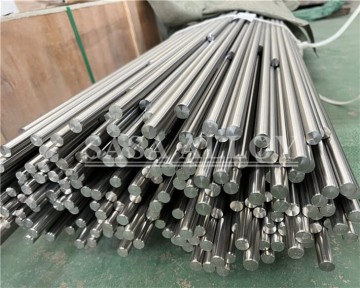
Even the best machining tools can underperform if the titanium bar has inconsistent composition or surface defects. That’s why sourcing titanium bars from sakyalloy gives you a competitive edge.
sakyalloy Titanium Bar Advantages:
-
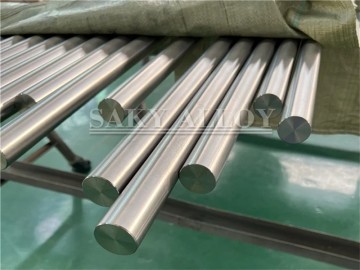
The material standard and revision must be explicitly agreed for the ordered bar; ASTM and AMS specifications are not blanket interchangeable approvals.
-
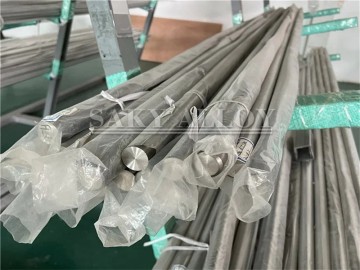
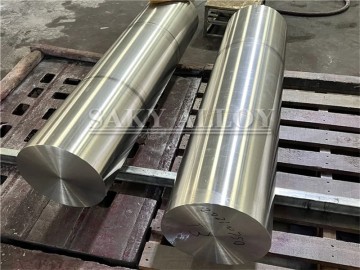
Confirm diameter or section tolerance, length, straightness and surface requirements in the quotation.
-
Specify the material condition and any project-specific structure or inspection requirement; predictable tool wear cannot be guaranteed from a product name.
-
Product test certificates can be provided. Agree the required information before ordering.
A defined bar specification gives the machining team a clearer starting point. Productivity, tool life and final-part quality still depend on the validated machining process and inspection.
Conclusion
Choose tools by operation: carbide end mills and indexable mills for milling, suitable drills for hole creation, titanium-rated turning inserts for lathe work, and a qualified reaming or boring process where hole finishing is needed. Specialist ceramic or PCD processes require separate validation.
By understanding the strengths of each tool and applying best practices in feed, speed, coolant, and fixturing, manufacturers can overcome titanium’s challenges and unlock its full potential.
For a titanium bar quotation, send grade, product standard and revision, section, dimensions, tolerance, condition, surface, quantity and the planned machining route. Product test certificates can be provided.