

Titanium Grade 11 vs Grade 2: Which Alloy Suits Your Application?
Titanium and titanium alloys continue to grow in popularity across global industries due to their exceptional strength-to-weight ratio, corrosion resistance, and biocompatibility. Among the commercially pure titanium grades, Grade 2 and Grade 11 are two of the most widely used materials for industrial, chemical, and marine applications. Although both grades fall under the commercially pure titanium category, they possess distinct characteristics that influence their performance, durability, and suitability for specific working environments.
This article provides a comprehensive comparison between Titanium Grade 11 and Titanium Grade 2, examining their chemical composition, mechanical strength, corrosion behavior, welding properties, cost considerations, and ideal applications. As major titanium suppliers such as sakyalloy continue to supply high-purity materials to critical industries, understanding these differences helps engineers, designers, and procurement teams select the alloy that best fits their operational needs.
1. Introduction to Commercially Pure Titanium Grades
Commercially pure (CP) titanium grades range from Grade 1 to Grade 4, each offering a different balance of strength and ductility. These grades are defined predominantly by their oxygen content, which directly influences mechanical strength. Grade 2 and Grade 11 are similar in purity but differ in one significant aspect: the addition of palladium (Pd) in Grade 11.
1.1 Titanium Grade 2 Overview
Titanium Grade 2 is known for:
-
Excellent corrosion resistance
-
Moderate strength
-
High ductility
-
Good formability
-
Strong performance in seawater and mildly corrosive environments
It is one of the most commonly used titanium grades, particularly in chemical processing, heat exchangers, and marine hardware.
1.2 Titanium Grade 11 Overview
Titanium Grade 11 is essentially Grade 2 with a small addition of palladium (0.12 to 0.25 percent), which significantly enhances corrosion resistance in reducing acids and crevice environments. This makes Grade 11 a premium choice for:
-
Harsh chemical processing
-
High-chloride environments
-
Reducing acid exposure
Industries often select Grade 11 when stronger corrosion protection is required without transitioning to much more expensive titanium alloys.
2. Chemical Composition Differences
The key difference between the two grades lies in palladium content.
2.1 Composition of Grade 2
-
Titanium (Ti): balance
-
Oxygen (O): 0.25 percent max
-
Iron (Fe): 0.3 percent max
-
Carbon, nitrogen, hydrogen: trace limits
2.2 Composition of Grade 11
-
Titanium (Ti): balance
-
Palladium (Pd): 0.12 to 0.25 percent
-
Oxygen (O): 0.25 percent max
-
Other elements: similar to Grade 2
Even this small amount of palladium dramatically improves corrosion behavior, especially in reducing media.
3. Mechanical Properties Comparison
While both grades share similarities, the slight compositional differences influence mechanical performance.
Grade 2 Mechanical Properties
-
Tensile strength: 344 MPa
-
Yield strength: 275 MPa
-
Elongation: 20 percent minimum
-
Modulus of elasticity: 103 GPa
Grade 11 Mechanical Properties
-
Tensile strength: 331 MPa
-
Yield strength: 241 MPa
-
Elongation: 24 percent minimum
Interpretation
Grade 2 exhibits marginally higher tensile and yield strength, while Grade 11 offers slightly better ductility. In most real-world applications, the performance difference is negligible, and the selection depends more on corrosion requirements than mechanical factors.
4. Corrosion Resistance: The Key Differentiator
Corrosion behavior is where Grade 11 outperforms Grade 2 significantly.
4.1 Performance of Titanium Grade 2
Grade 2 offers excellent resistance to:
-
Seawater
-
Brackish water
-
Oxidizing acids
-
Organic compounds
-
Alkaline environments
However, its resistance decreases in:
-
Reducing acids
-
Strong chlorides in low-oxygen environments
-
Crevice or stagnant conditions
4.2 Performance of Titanium Grade 11
The addition of palladium improves resistance in:
-
Reducing acids (sulfuric, formic, and phosphoric)
-
Crevice corrosion zones
-
High-chloride process streams
-
Low-pH environments
The palladium addition can support passivation in certain reducing or crevice-prone conditions. Performance still depends on acid concentration, temperature, aeration, contaminants and equipment geometry.
4.3 Industrial Implications
Where corrosion conditions are uncertain, material selection should be based on service data, published corrosion information and, when necessary, representative corrosion testing rather than grade name alone.
5. Weldability and Fabrication
Both grades provide excellent weldability, but specific considerations are important.
5.1 Welding Grade 2
-
Weldable with qualified titanium procedures, complete inert-gas shielding and strict contamination control
-
Embrittlement risk must be controlled by shielding the hot weld and preventing oxygen, nitrogen, hydrogen and surface contamination
-
Can be considered for fabricated structures after design and procedure qualification
5.2 Welding Grade 11
-
Weldability similar to Grade 2
-
Filler-metal selection and welding procedure must match the grade, product form and governing specification
-
The specified grade and corrosion design basis must be maintained through qualified welding, cleaning and inspection
5.3 Fabrication and Forming
Both grades are:
-
Formability depends on grade, thickness, condition, bend radius and tooling
-
Machining requires suitable tools, speeds, feeds, cooling and control of heat generation
-
Rolling, bending and deep drawing require product-specific forming limits and process control
Grade 2 is often preferred in projects requiring extensive forming due to its superior availability and lower cost.
6. Cost Considerations
Material cost is a significant factor in alloy selection.
6.1 Grade 2 Cost
Grade 2 is one of the most economical titanium grades due to:
-
High availability
-
Simpler chemical composition
-
Widely established production processes
6.2 Grade 11 Cost
Grade 11 is more expensive than Grade 2 because:
-
Palladium is a precious metal
-
Manufacturing requires tighter quality controls
Grade 11 normally carries a material premium. Any lifecycle-cost advantage must be evaluated from the actual corrosion rate, equipment design, inspection plan, downtime risk and expected service life.
6.3 Cost-to-Performance Evaluation
Grade 2 is commonly evaluated for general corrosion service. Grade 11 may be justified where its palladium addition provides a documented benefit under the specified process conditions.
7. Typical Applications of Grade 2 and Grade 11
7.1 Titanium Grade 2 Applications
Commonly used in:
-
Heat exchangers and condensers
-
Marine components and offshore structures
-
Chemical processing equipment
-
Oil and gas piping systems
-
Architectural structures
-
Medical devices
-
Automotive and aerospace hardware
Grade 2 is preferred for general-purpose applications requiring moderate strength and corrosion resistance.
7.2 Titanium Grade 11 Applications
Typically used in:
-
Strong reducing acid environments
-
High-chloride production lines
-
Chemical reactors and pressure vessels
-
Desalination and high-salinity water systems
-
Piping systems where Grade 11 is selected after corrosion and design review
-
Electrochemical and hydrometallurgical processes
Grade 11 serves industries that demand higher corrosion resistance without transitioning to costly titanium alloys like Grade 7 or Grade 12.
8. Performance in Key Industrial Sectors
8.1 Chemical Processing
Grade 11 may be evaluated for selected chemical-processing environments, including:
-
Certain sulfuric-acid conditions within verified concentration and temperature limits
-
Certain phosphoric-acid services after review of impurities and temperature
-
Selected wet-chlorine environments under an approved corrosion basis
-
Other reducing or crevice-prone conditions supported by corrosion data
Grade 2 may be considered in many oxidizing or moderately corrosive environments, but suitability still depends on the complete process chemistry and design.
8.2 Marine and Offshore
Both grades perform well, but Grade 11 offers longer service life in:
-
High-temperature seawater
-
Stagnant or low-oxygen marine zones
-
Environments prone to crevice corrosion
8.3 Power Generation
Both grades may be considered for heat exchangers and condensers when the corrosion environment, heat-transfer design, product standard and fabrication requirements support their use.
8.4 Oil and Gas
Grade 2 and Grade 11 may be evaluated for offshore water systems. Sour or high-chloride service requires project-specific corrosion, pressure-design, joining and qualification review.
9. Selecting the Right Grade for Your Application
To determine whether Grade 2 or Grade 11 is appropriate for the application, consider the following criteria.
9.1 Select Grade 2 if you need:
-
A cost-effective titanium solution
-
Good general corrosion resistance
-
Excellent formability
-
Material for marine, architectural, or moderate chemical conditions
9.2 Select Grade 11 if you need:
-
Corrosion resistance in harsh reducing environments
-
Long-term durability in high-chloride or stagnant conditions
-
Superior crevice corrosion protection
-
Application-specific corrosion margin supported by service data or testing
9.3 When in doubt
Choose Grade 11 only where its composition provides a verified benefit for the defined service; grade selection cannot replace corrosion and mechanical design review.
10. Industry Adoption and Market Trends
The global shift toward corrosion-resistant materials is increasing the demand for both titanium grades. SAKY ALLOY supplies Grade 2 and Grade 11 bars, sheets, tubes and drawing-specific components against the grade, product standard, dimensions, inspection and documentation stated in the purchase order.
Current trends include:
-
Rising demand for titanium in renewable energy
-
Increased use in offshore wind and desalination technology
-
Growth of titanium heat exchangers in chemical plants
-
Higher specifications for corrosion-resistant alloys in refinery upgrades
These trends indicate sustained growth for both grades, with Grade 11 gaining traction in advanced chemical engineering applications.
11. Conclusion
Titanium Grade 2 and Titanium Grade 11 are two of the most versatile and widely used commercially pure titanium alloys. While they share many characteristics, including excellent corrosion resistance, high ductility, and superb weldability, their differences make them suitable for different operating environments.
Titanium Grade 2 is commonly evaluated for general industrial service where its strength, formability, corrosion resistance, availability and project cost meet the design requirements.
Titanium Grade 11 contains a controlled palladium addition and may provide additional resistance in specific reducing or crevice-prone conditions. Selection for chemical, desalination or offshore equipment requires review of the actual environment and governing design requirements.
Continue From Material Knowledge to Selection
Use the Grade 2, Grade 5, Grade 7 and Grade 23 selection guide, then review Grade 11 titanium bars, Grade 11 titanium pipe and Grade 11 titanium sheet and plate. When a material requirement is defined, follow the Titanium RFQ Checklist or contact SAKY ALLOY.
Material suitability must be confirmed from the actual environment, load, temperature, fabrication route, applicable standard and responsible engineering approval.
Grade 11 vs Grade 2: Product Form and RFQ Route
Grade selection does not replace the product standard. After choosing the corrosion route, identify the required mill form and the specification that controls its dimensions, condition, testing and acceptance.
| Product form | Grade 2 route | Grade 11 route |
|---|---|---|
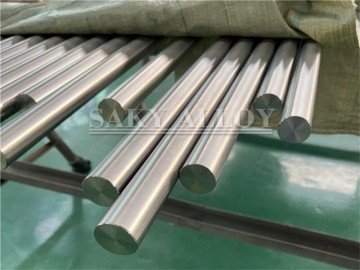
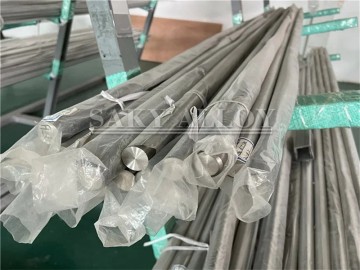
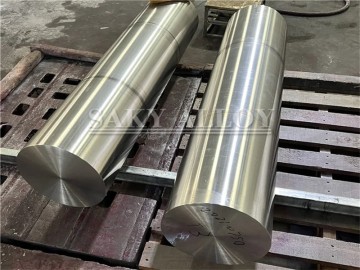
| Bar and rod | Grade 2 titanium bar | Grade 11 titanium bar |
| Plate and sheet | Grade 2 plate and sheet | Grade 11 plate and sheet |
| Pipe and tube | Grade 2 pipe and tube | Grade 11 pipe |
For quotation, send the grade, exact product standard and revision, dimensions, condition, quantity, corrosion environment, inspection documents and destination. Grade 11 contains palladium and should be selected only where its corrosion benefit is supported by service data, testing or responsible engineering review.
Grade 11 vs Grade 2 Selection Summary
| Selection factor | Titanium Grade 2 | Titanium Grade 11 |
|---|---|---|
| Alloy basis | Commercially pure titanium | Commercially pure titanium with controlled palladium addition |
| Primary selection driver | General corrosion resistance with a practical strength and fabrication balance | Additional corrosion resistance in specific reducing or crevice-prone environments |
| Mechanical comparison | Higher minimum strength is commonly associated with Grade 2 | Lower-strength, higher-ductility family; confirm the governing product standard |
| Typical procurement question | Does the general service environment justify standard commercially pure titanium? | Do process chemistry and temperature justify the palladium-bearing grade? |
| Engineering review | Confirm product form, standard, service medium, concentration, temperature, fabrication route and inspection requirements. | |
Frequently Asked Questions
Is Grade 11 automatically better than Grade 2?
No. Grade 11 is selected for particular corrosion conditions, while Grade 2 is widely used where its strength, corrosion resistance and availability meet the design. The better grade is the one matched to the actual environment and specification.
Can Grade 2 be substituted for Grade 11?
Not without engineering and purchasing approval. A substitution changes composition and potentially the corrosion design basis, mechanical requirements, documentation and qualification status.
What information is needed to choose between Grade 11 and Grade 2?
Provide the process medium, concentration, operating and upset temperatures, product form, dimensions, fabrication method, governing standard, inspection requirements and expected service conditions.