

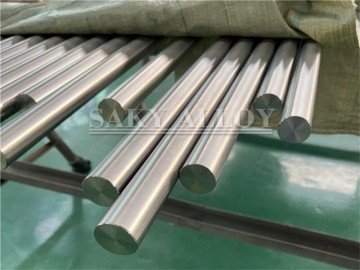
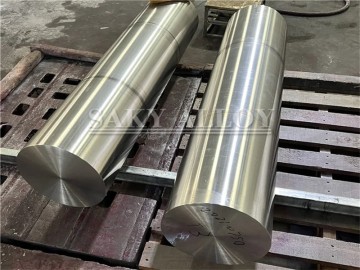
The Application Fields Of Titanium Bar
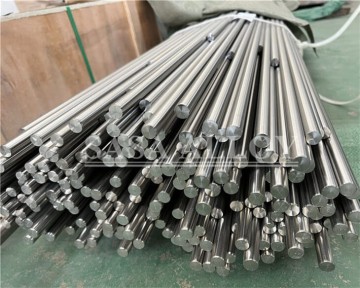
Titanium bars are used in various industries due to their excellent properties, such as high strength, low density, and corrosion resistance. Here are some common application fields of titanium bars:
Aerospace industry: Titanium bars are widely used in the aerospace industry for aircraft components, including landing gear, wing structures, engine components, and fasteners. Its high strength-to-weight ratio makes it an ideal material for aerospace applications.
Medical industry: Titanium bars are biocompatible and non-toxic, which makes them ideal for medical implants such as orthopedic pins, plates, screws, and dental implants.
Automotive industry: Titanium bars are used in high-performance cars to make various parts, including valves, connecting rods, and exhaust systems, as they have excellent high-temperature strength and corrosion resistance.
Chemical industry: Titanium bars are resistant to most chemicals, including hydrochloric acid, nitric acid, and sulfuric acid, and are therefore used in chemical processing plants for heat exchangers, reaction vessels, and other equipment.
Sports equipment: Titanium bars are used to manufacture sports equipment such as golf clubs, bicycle frames, and tennis rackets due to their high strength and lightweight.
Marine industry: Titanium bars have excellent corrosion resistance, and therefore they are used in marine applications such as offshore oil and gas drilling equipment, ship propellers, and naval ships.
Architecture: Titanium bars can be used in architectural applications such as building facades and roofing, as they have a unique metallic appearance and require very little maintenance.
Overall, titanium bars are versatile and widely used in a variety of industries due to their unique properties.
Titanium Bar Application and Procurement Matrix
| Application group | Common bar requirement | Selection checks |
|---|---|---|
| Machined industrial components | Round, flat or shaped stock with machining allowance | Grade, condition, tolerance, straightness, surface and inspection |
| Marine and process equipment | Corrosion-selected bar for shafts, pins, fasteners or valve components | Service chemistry, crevices, mating materials, stress and fabrication |
| Aerospace components | Specification-controlled alloy bar with traceability | Approved material specification, condition, testing and quality requirements |
| Medical or regulated components | Material ordered to the required application-specific specification | Design authority, biocompatibility basis, cleanliness, validation and documentation |
| Energy and high-performance equipment | Grade and product form matched to load, environment and temperature | Design limits, fatigue, inspection, product standard and lifecycle conditions |
Frequently Asked Questions
Which titanium grade is most common for bar applications?
There is no universal grade. Commercially pure and alloy grades serve different corrosion, strength, fabrication and regulatory needs. Select the grade from the governing design and service environment.
Can titanium round bar and rod be treated as identical purchase terms?
Terminology varies by market and specification. Define the governing product standard, diameter, tolerance, condition, length and inspection rather than relying on “bar” or “rod” alone.
What information should a titanium bar RFQ include?
State grade, standard and edition, shape, dimensions and tolerances, length, condition, surface, straightness, quantity, testing, material certificate, processing and destination.