
How to Specify Titanium U-Bend and Coiled Tube
Titanium U-bend tube and coiled tubing solve different layout problems. A reliable RFQ identifies the starting tube specification, exact geometry, service conditions, heat treatment and inspection instead of requesting only a grade and diameter.
U-Bend Tube RFQ Data
State grade, ASTM B338 or approved tube specification, outside diameter, wall thickness, straight-leg length, centerline bend radius, leg pitch, tangent points, end preparation and dimensional tolerances. Define whether stress relief is required after bending and how wall thinning, ovality and surface condition will be accepted.
Coiled Tubing RFQ Data
State grade, applicable specification, OD, wall, required continuous length, coil ID and OD, maximum coil weight, winding direction, ends, cleanliness and joining restrictions. If the tubing is used for heat transfer or instrumentation, add pressure, temperature, fluid and leak-test requirements.
Inspection and Documentation
| Item | U-Bend Tube | Coiled Tubing |
|---|---|---|
| Geometry | Leg length, radius, pitch, tangent and end alignment | Continuous length, coil ID/OD, winding and end access |
| Critical checks | Wall thinning, ovality, surface and bend heat treatment | Wall/OD, continuity, cleanliness, surface and coil build |
| Documents | MTC, heat traceability, dimensions and agreed pressure or NDT reports | |
Product Routes
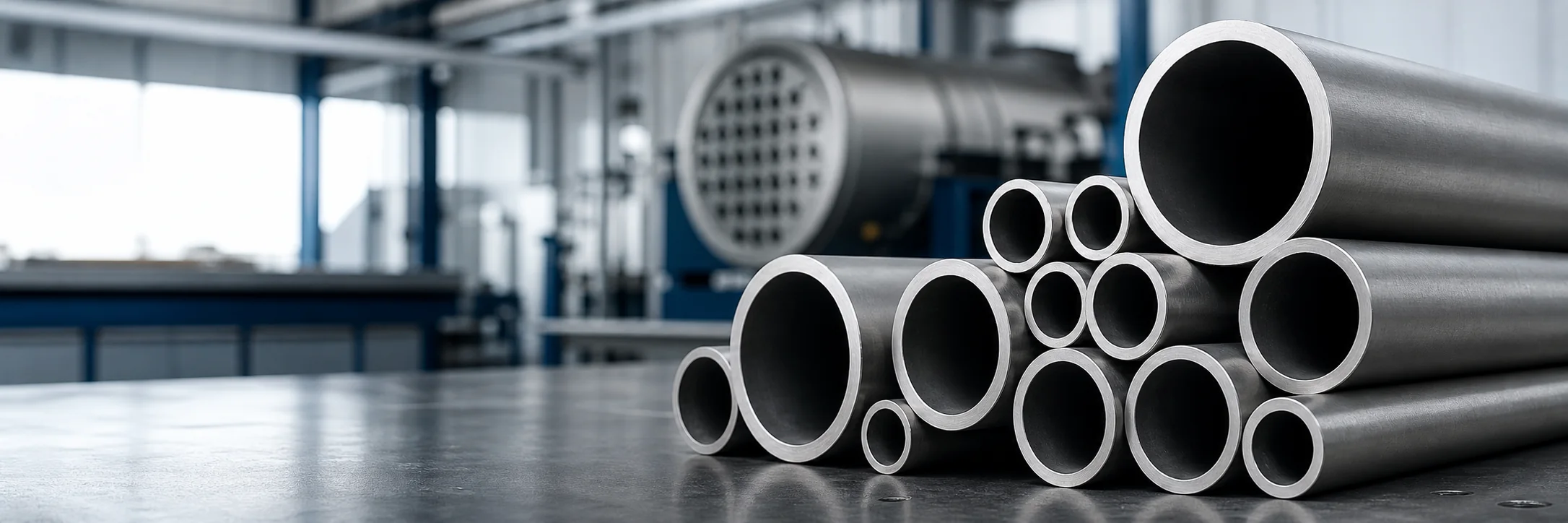
For formed exchanger assemblies, review Titanium U-Bend Tube. For long-length compact routing, review Titanium Coiled Tubing. If straight exchanger tube is required, start with ASTM B338 Titanium Tube.
Quotation Checklist
- Grade and governing standard/revision
- OD, wall and geometry drawing
- Quantity or continuous length
- Service fluid, pressure and temperature
- Heat treatment, testing, cleanliness and certificates