

Titanium Flange Types: Weld Neck, Slip-On, Blind, Socket, Threaded and Lap Joint
Titanium flange type is a functional design choice, not only a product name. Weld neck, slip-on, blind, socket weld, threaded and lap joint flanges connect or close piping in different ways. The piping code, project specification, design conditions and mating components determine which type is acceptable.
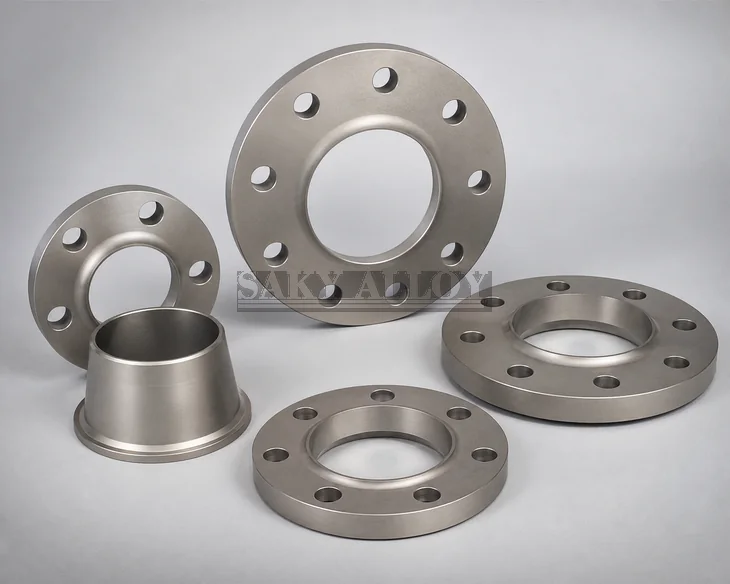
Titanium Flange Type Comparison
| Type | Connection or purpose | Key RFQ data |
|---|---|---|
| Weld neck | Butt welded through a tapered hub | Bore/schedule, bevel and hub |
| Slip-on | Slides over pipe and is fillet welded | Pipe OD clearance and weld arrangement |
| Blind | Closes a flanged end | Thickness, facing and any tapped opening |
| Socket weld | Pipe inserts into an internal socket | Socket bore/depth, pipe OD and root gap |
| Threaded | Internal pipe thread, no flange-to-pipe weld | Thread form, gauge and engagement |
| Lap joint | Backing flange rotates behind a stub end | Stub-end lap, bore radius and compatibility |
Material and Dimensions Are Separate Specifications
ASTM B381 / ASME SB381 may govern titanium forgings. ASME B16.5, EN, DIN, JIS or a project drawing may govern dimensions, pressure class or PN and facing. State both systems rather than assuming one standard supplies every requirement.
Specify Facing and Mating Components
Define raised face, flat face, ring-type joint or drawing-specific facing, finish and gasket. Include the mating flange, pipe or stub-end dimensions and bolt pattern so the complete joint can be checked.
Grade Selection Depends on Service
Grade 2, Grade 5, Grade 7 and Grade 12 have different strength, fabrication and corrosion characteristics. Grade must follow service chemistry, design temperature, pressure, piping code and project approval.
Select the Connection Type Before Requesting a Quote
Review weld neck, slip-on, blind, socket weld, threaded and lap joint titanium flanges.
RFQ Checklist
- Flange type and titanium grade
- Material and dimensional standards
- NPS/DN and Class/PN
- Facing and finish
- Bore, hub, weld end, socket, thread or stub-end details
- Quantity, NDE and certificates