


Titanium Foil vs Strip vs Sheet: How to Define the Correct Rolled Product
Titanium foil, strip and sheet are rolled flat products, but the names alone do not create universal thickness boundaries. A reliable purchase order defines exact dimensions, tolerances, delivery form, surface and inspection instead of relying on trade terminology.
Product-Form Comparison
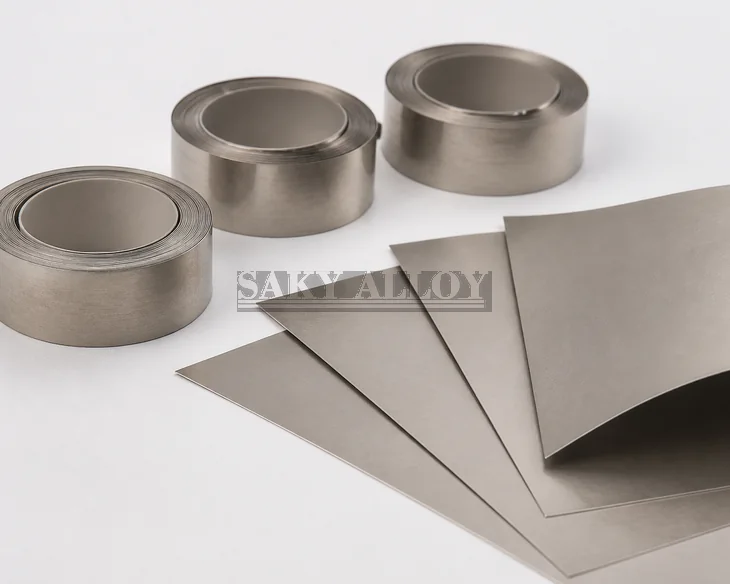
| Form | Common delivery | Important ordering controls |
|---|---|---|
| Foil | Thin roll, slit coil or cut sheet | Exact gauge, local thickness, edge and handling |
| Precision strip | Narrow slit coil or cut length | Thickness, width, camber, burr and coil build |
| Sheet | Flat cut sheet | Thickness, width, length, flatness and surface |
Do Not Rely on a Universal Thickness Boundary
Different mills, specifications and industries may use foil, strip and sheet terminology differently. State nominal thickness and tolerance numerically and identify the invoked product specification and revision.
Strip Requires More Than Width
Precision slit strip may require controlled camber, edge shape, burr direction, coil ID and OD, maximum coil weight, winding direction and interleaving. These details affect stamping, forming and automated feeding.
Grade and Condition Matter
Grade 2 is commercially pure titanium commonly selected for corrosion resistance and formability. Grade 5 Ti-6Al-4V offers higher strength but different forming behavior. The grade, condition, bend requirement and downstream process should be reviewed together.
Define the Rolled Product Before Requesting a Quote
Review Grade 2 titanium foil, precision titanium strip and Grade 2 titanium sheet and plate. Send the grade, thickness, tolerance, width, form, surface, quantity and inspection requirements.
RFQ Checklist
- Grade and governing specification
- Thickness and tolerance
- Width, length or coil dimensions
- Edge, burr, camber and flatness
- Surface and condition
- Quantity, tests and certificates
Frequently Asked Questions
Is there one universal thickness limit separating titanium foil from sheet?
No. Commercial terminology and specification scope can vary. The purchase order should define thickness, tolerance, width, delivery form and governing specification instead of relying on the word “foil” alone.
What makes titanium strip different from narrow sheet?
Strip is commonly supplied in coil form with controlled width, edge and winding requirements, but the exact distinction depends on the applicable specification and supplier capability. Define the delivery form and processing requirements.
What should be included in a titanium foil, strip or sheet RFQ?
State grade, standard and edition, thickness and tolerance, width and tolerance, coil or cut-length form, coil ID/OD or piece length, edge condition, surface, flatness or camber, quantity and certificate requirements.