
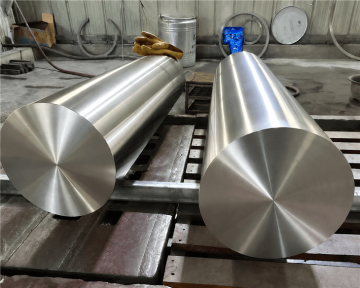
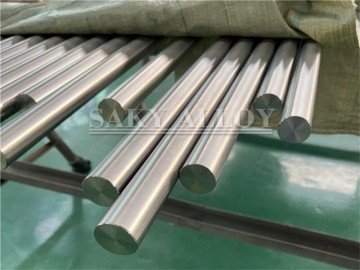
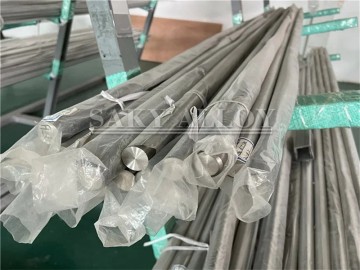
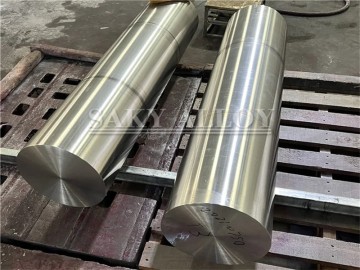
Applications of Grade 23 Titanium Bar in Surgical Implants and Medical Devices
In the world of modern medicine, materials science plays a crucial role in improving patient care and surgical outcomes. Among the wide range of metallic biomaterials available today, Grade 23 titanium bar, also known as Ti-6Al-4V ELI (Extra Low Interstitial), stands out as one of the most important and widely used materials for surgical implants and medical devices. Its unmatched combination of biocompatibility, strength, light weight, and corrosion resistance makes it the preferred choice for orthopedic, dental, and cardiovascular applications.
This article explores in detail the applications of Grade 23 titanium bars in medical and surgical industries, highlighting how their mechanical properties and microstructure make them ideal for long-term implantation. It also discusses how SAKYALLOY, a trusted global manufacturer, produces high-quality titanium bars that meet international medical standards for performance, safety, and precision.
1. Introduction: Why Grade 23 Titanium Is the Medical Standard
Grade 23 titanium, or Ti-6Al-4V ELI, is a high-purity titanium alloy designed specifically for biomedical use. The “ELI” designation — Extra Low Interstitial — means that the content of elements such as oxygen, carbon, and nitrogen is strictly minimized. This modification enhances fracture toughness, fatigue strength, and biocompatibility, making it superior to the standard Grade 5 alloy (Ti-6Al-4V) for medical purposes.
In medical implants, materials must be both strong and biologically safe. Grade 23 titanium fulfills both requirements, offering:
-
High strength-to-weight ratio for durable yet lightweight devices.
-
Excellent corrosion resistance in body fluids.
-
Superior biocompatibility for long-term contact with bone and tissue.
-
Biological suitability must be established for the finished device; Grade 23 material does not guarantee freedom from allergic or inflammatory responses.
These characteristics make Grade 23 titanium the go-to material for critical surgical components that demand reliability and safety.
2. Chemical Composition of Grade 23 Titanium
The chemical composition of Grade 23 titanium bar is carefully controlled to achieve its superior purity and mechanical balance.
| Element | Content (%) | Function |
|---|---|---|
| Titanium (Ti) | Balance | Provides low density, corrosion resistance, and biocompatibility. |
| Aluminum (Al) | 5.5 – 6.75 | Increases strength and stabilizes the alpha phase. |
| Vanadium (V) | 3.5 – 4.5 | Improves ductility and stabilizes the beta phase. |
| Oxygen (O) | ≤ 0.13 | Maintained at low levels to enhance toughness and fatigue resistance. |
| Iron (Fe) | ≤ 0.25 | Strengthens the alloy without affecting biocompatibility. |
| Carbon (C) | ≤ 0.08 | Kept minimal to maintain ductility and prevent brittleness. |
The combination of aluminum and vanadium provides strength and stability, while the low interstitial elements (O, C, N) improve fracture toughness and make the alloy suitable for long-term implantation inside the human body.
3. Key Properties That Make Grade 23 Ideal for Medical Applications
a) Biocompatibility
Titanium forms a passive oxide layer that supports corrosion resistance. This does not eliminate wear, corrosion products or biological responses. Evaluate the finished device, surface condition and intended tissue contact rather than relying on alloy designation alone.
b) High Strength-to-Weight Ratio
Grade 23 titanium has a density of just 4.43 g/cm³, about half that of stainless steel, yet offers comparable or greater tensile strength. This allows the production of lightweight implants that do not burden patients or compromise structural integrity.
c) Corrosion Resistance in Body Fluids
Implant performance depends on device design, surface condition, loading and the local environment. Titanium is not immune to degradation, and material identity alone does not establish an implant lifetime.
d) Fatigue Resistance
In orthopedic and dental implants, repeated stress cycles occur daily. Grade 23 titanium’s fine microstructure and low impurity levels ensure superior fatigue performance, preventing fractures and failures.
e) Imaging Safety and Device Assessment
Titanium material alone does not establish MRI safety or artifact-free imaging. Follow the finished device manufacturer’s MR labeling and specified conditions, with assessment by the clinical imaging team. See FDA MRI safety information for professionals.
4. Manufacturing of Medical-Grade Titanium Bars
Producing Grade 23 titanium bars for surgical applications requires advanced manufacturing and rigorous quality control.
SAKYALLOY employs a multi-stage process that ensures precision, purity, and consistency:
-
Vacuum arc melting (VAR) or electron beam melting (EBM) to eliminate impurities.
-
Hot forging and rolling for a uniform microstructure.
-
Heat treatment (solution annealing and aging) to refine mechanical properties.
-
Ultrasonic testing and eddy current inspection (NDT) to detect internal flaws.
-
Surface finishing and polishing for smoothness suitable for implant use.
Every bar produced by SAKYALLOY meets global medical material standards such as ASTM F136, ISO 5832-3, and ASME SB348.
5. Applications in Surgical Implants
a) Orthopedic Implants
One of the largest applications of Grade 23 titanium bars is in orthopedic surgery. These implants replace or reinforce bones and joints damaged by trauma, arthritis, or congenital conditions.
Common products include:
-
Hip and knee joint replacements
-
Bone plates, screws, and rods
-
Spinal fixation devices
-
Intramedullary nails and orthopedic pins
Titanium’s elastic modulus (approximately 110 GPa) is closer to that of human bone compared to stainless steel, reducing stress shielding and promoting natural bone healing.
b) Dental Implants
In dentistry, Grade 23 titanium bars are used to manufacture implant fixtures and abutments that anchor prosthetic teeth.
Key benefits include:
-
Strong bone integration through osseointegration (bonding with bone).
-
Resistance to bacterial corrosion.
-
Long-term durability with minimal maintenance.
The biocompatibility of Grade 23 titanium ensures that dental implants remain safe and stable in the oral environment, even under constant exposure to saliva and chewing stress.
c) Spinal and Trauma Fixation Devices
Titanium’s combination of light weight and fatigue resistance makes it ideal for spinal implants, rods, and plates used in trauma recovery surgeries. These devices stabilize fractured bones and vertebrae while allowing gradual healing without metal degradation.
Advantages:
-
High mechanical reliability under cyclic stress.
-
MRI and CT suitability require device-specific assessment; do not infer compatibility from the alloy alone.
-
Reduced allergic or inflammatory response.
d) Cardiovascular and Surgical Tools
In cardiovascular surgery, Grade 23 titanium is used for pacemaker casings, vascular stents, and heart valve components, where corrosion resistance and biocompatibility are critical.
Surgical instruments such as forceps, scissors, and drill bits are also made from titanium bars due to their light weight, non-magnetic behavior, and resistance to sterilization chemicals.
6. Role of Surface Treatments in Medical Implants
While Grade 23 titanium already provides excellent properties, surface treatments further enhance its performance in medical applications:
-
Anodizing: Improves corrosion resistance and offers color coding for surgical instruments.
-
Sandblasting and Acid Etching: Increase surface roughness to enhance bone integration.
-
Plasma Coating (Hydroxyapatite or TiO₂): Improves osteoconductivity for faster bone bonding.
SAKYALLOY provides customized surface finishing options for titanium bars and machined implants, ensuring superior compatibility with biological environments.
7. Mechanical Properties for Medical Applications
| Property | Typical Value | Benefit |
|---|---|---|
| Tensile Strength | 860 – 950 MPa | Withstands high mechanical loads. |
| Yield Strength | 780 – 880 MPa | Prevents deformation under stress. |
| Elongation | 10 – 14% | Provides flexibility during surgical use. |
| Hardness (HRC) | 32 – 38 | Balances wear resistance with machinability. |
| Density | 4.43 g/cm³ | Lightweight for patient comfort. |
Mechanical properties support material selection but do not establish comparative implant lifespan or patient safety. Confirm the supplied condition and specification, and evaluate the finished device against its intended use.
8. Comparison with Other Medical Materials
| Property | Grade 23 Titanium | Stainless Steel 316L | Cobalt-Chromium Alloy |
|---|---|---|---|
| Biocompatibility | Excellent | Good | Moderate |
| Corrosion Resistance | Excellent | Good | Fair |
| Density (g/cm³) | 4.43 | 7.90 | 8.30 |
| Elastic Modulus (GPa) | 110 | 200 | 230 |
| MRI Compatibility | Device-specific MR labeling | Device-specific MR labeling | Device-specific MR labeling |
| Longevity in Body | Not determined by alloy alone | Not determined by alloy alone | Not determined by alloy alone |
Compare materials against the finished device requirements and clinical evidence. This table does not establish relative implant lifespan, MRI safety or suitability for an individual patient.
9. Regulatory Standards and Certifications
Medical-grade titanium must meet stringent global standards for safety and performance. SAKYALLOY produces Grade 23 titanium bars certified to the following standards:
-
ASTM F136: Standard specification for titanium alloy for surgical implants.
-
ISO 5832-3: Wrought titanium 6Al-4V ELI for biomedical applications.
-
ASME SB348: Specifications for titanium and titanium alloy bars and billets.
All products undergo mechanical testing, ultrasonic inspection, and metallographic examination to ensure full compliance with these international medical standards.
10. SASYALLOY — Trusted Partner for Medical Titanium Solutions
SAKYALLOY is a leading global manufacturer of Grade 23 titanium bars and forged products, supplying the medical, aerospace, and industrial sectors with precision-engineered materials. Our production facilities feature:
-
Vacuum melting and forging equipment for superior purity.
-
Computer-controlled heat treatment systems.
-
Full traceability and documentation for each production batch.
-
Customized dimensions, finishes, and tolerances for medical device manufacturers.
Through continuous innovation and rigorous quality control, SAKYALLOY ensures every titanium bar meets the highest standards of performance, safety, and reliability for surgical implant applications.
11. Future Trends: Advancing Medical Technology with Titanium
As the demand for minimally invasive surgery, patient-specific implants, and long-lasting prosthetics grows, titanium continues to lead innovation in biomedical engineering. Advances such as 3D printing of titanium implants and nano-surface coatings are further enhancing patient outcomes.
Grade 23 titanium bars are now being used to manufacture customized orthopedic and dental implants with tailored shapes and porosities that promote better bone integration — a clear step forward in personalized medicine.
12. Conclusion
The applications of Grade 23 titanium bars in surgical implants and medical devices reflect the alloy’s outstanding balance of strength, light weight, corrosion resistance, and biocompatibility. From orthopedic joints and dental implants to surgical tools and cardiovascular devices, it remains the gold standard for biomedical materials.
With advanced production technology, strict quality control, and compliance with global medical standards, SAKYALLOY delivers Grade 23 titanium bars that empower medical innovation and improve patient outcomes worldwide.
When precision, purity, and performance matter, surgeons and medical manufacturers trust SAKYALLOY — a global leader in titanium excellence.