
Titanium Cotter Pins
Titanium split cotter pins supplied by grade, wire diameter, overall length, eye form, prong style, mating-hole data, quantity and inspection requirements.
- Material
- Titanium Grade 2 or Grade 5 as specified
- Forms
- Split cotter pin; equal or extended prong
- Dimensions
- Wire diameter, overall length, eye and legs
- Documents
- MTC, dimensions and lot traceability
Product Detail
Product Introduction
Titanium cotter pins provide simple mechanical retention for clevis pins, castellated nuts and other cross-drilled components in corrosion-sensitive assemblies. A complete order defines titanium grade, wire diameter, overall or effective length, eye geometry, equal or extended prongs, mating-hole diameter, installation method, service temperature and inspection.
Selection Priorities
Split-pin function
The legs pass through a cross-hole and are spread after insertion to prevent unintended withdrawal.
Prong style
Equal prongs suit general retention; an extended prong can improve installation access when the approved assembly permits it.
Joint definition
Confirm the retained pin or nut, cross-hole, washer stack, installed clearance, corrosion exposure and replacement practice.
Product Specifications
| Product | Titanium Cotter Pins | Grade | Titanium Grade 2 or Grade 5 |
|---|---|---|---|
| Standard | ISO 1234 and DIN 94 may be used as dimensional references for split cotter-pin forms when expressly invoked. Their standard material clauses do not automatically establish titanium supply; the purchase order must separately define titanium grade, condition, dimensions, testing and permitted deviations. | Size & Form | Wire diameter, overall/effective length, eye geometry, equal or extended prongs and mating-hole data by drawing or invoked reference |
| Tolerance | Drawing-defined wire, length, eye, leg alignment and functional fit | Supply Condition | Wire formed, trimmed, deburred, cleaned and lot identified |
| Inspection | Available controls include MTC review, wire diameter, overall length, eye size, prong length, leg alignment, surface condition, sample fit and heat or lot traceability. | Documents | MTC, heat/lot traceability and agreed inspection reports |
Send the complete material RFQ
Include grade, specification revision, dimensions, tolerance, quantity, condition, tests and destination.
Chemical Composition
Weight percent; maximum unless a range is shown. Titanium is the balance. The ordered specification and grade control.
| Grade / UNS | Principal Alloying Elements | Fe max | O max | C max | N max | H max | Ti |
|---|---|---|---|---|---|---|---|
| Grade 2 / R50400 | — | 0.30 | 0.25 | 0.08 | 0.03 | 0.015 | Balance |
| Grade 5 / R56400 | Al 5.50–6.75; V 3.50–4.50 | 0.40 | 0.20 | 0.08 | 0.05 | 0.015 | Balance |
Mechanical Properties – Annealed Material Reference
| Grade | Ultimate Tensile Strength min | 0.2% Yield Strength min | Elongation min |
|---|---|---|---|
| Grade 2 | 345 MPa | 275 MPa | 20% |
| Grade 5 | 895 MPa | 828 MPa | 10% |
Representative minima only. Product form, section size, heat treatment and the invoked specification determine the certified acceptance values.
Typical Physical Properties
| Grade | Density | Elastic Modulus | Thermal Expansion |
|---|---|---|---|
| Grade 2 | 4.51 g/cm³ | Approx. 105 GPa | Approx. 8.6 µm/m·K |
| Grade 5 | 4.43 g/cm³ | Approx. 114 GPa | Approx. 8.6 µm/m·K |
Typical engineering references, not inspection acceptance limits.
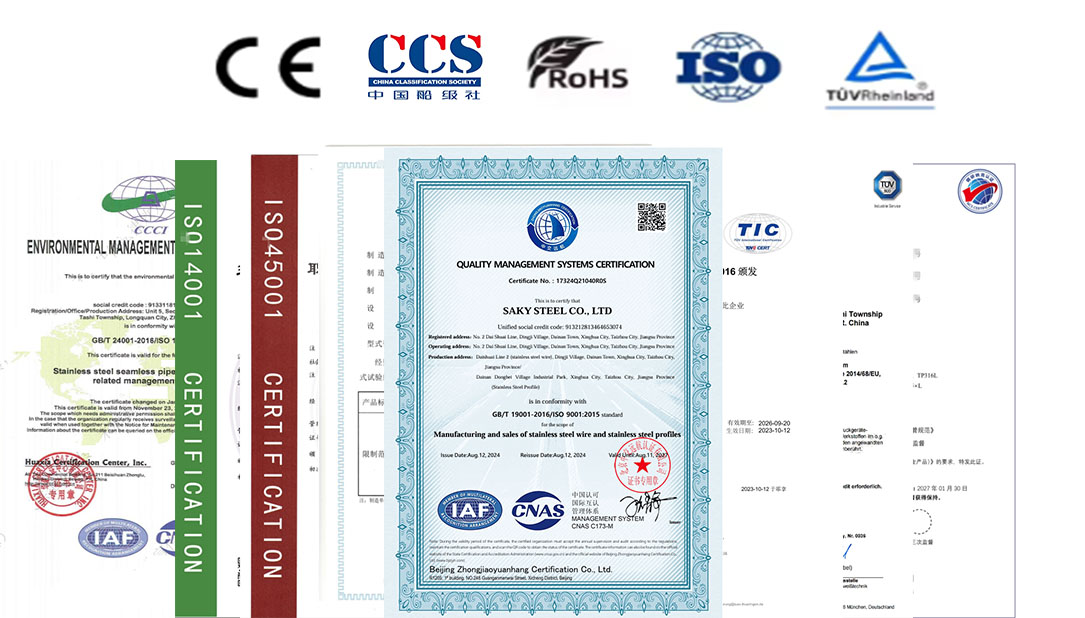
Certificates & Inspection Records
Services We Can Provide
Product Packaging
Products are separated by grade and heat, protected against surface and dimensional damage, and packed with traceability labels according to form, size, quantity and shipping method.
Application Scenarios

Marine clevis joints, hatches and deck equipment
Material grade, dimensions, condition and inspection must be matched to the application requirements.

Aerospace controls, fixtures and removable mechanisms
Material grade, dimensions, condition and inspection must be matched to the application requirements.

Chemical-process valves, guards and equipment linkages
Material grade, dimensions, condition and inspection must be matched to the application requirements.
FAQ
Can a titanium cotter pin be reused?
A spread cotter pin is normally treated as a replace-on-removal retention item unless the approved maintenance procedure specifically allows reuse.
How is cotter-pin size selected?
Select wire diameter and length from the cross-hole, retained stack and required leg engagement, then verify installation clearance and material compatibility.
Are ISO 1234 dimensions enough for ordering?
No. Add titanium grade and condition, prong style, inspection, certificates and any dimensional deviations.
Leave Your Message




Related Technical Guides
Titanium Solid Rivets vs Blind Rivets
Compare access, installation, head style, grip range and inspection.
Read technical guideHow to Specify Titanium Dowel Pins
Define diameter, fit, length, ends, surface and inspection.
Read technical guideRivets and Dowel Pins Application Guide
Review joint function, material compatibility and purchasing data.
Read technical guideTitanium Clevis Pins vs Dowel Pins
Compare retention, alignment, fit, cross-hole and ordering data.
Read technical guideHow to Specify Titanium Retaining Rings
Define internal or external type, groove, section, load and installation.
Read technical guidePins and Retaining Rings Application Guide
Review material compatibility, joint function and inspection.
Read technical guideTitanium Cotter Pins vs Spring Pins
Compare removable retention with interference-fit location and retention.
Read technical guideHow to Specify Titanium Spring Pins
Define pin form, hole limits, interference, insertion force and validation.
Read technical guideTitanium Pin Retention Systems Guide
Select clevis, cotter, spring pin and retaining-ring systems by joint function.
Read technical guide