
Titanium Pipe vs Inconel: High-Performance Material Face-Off
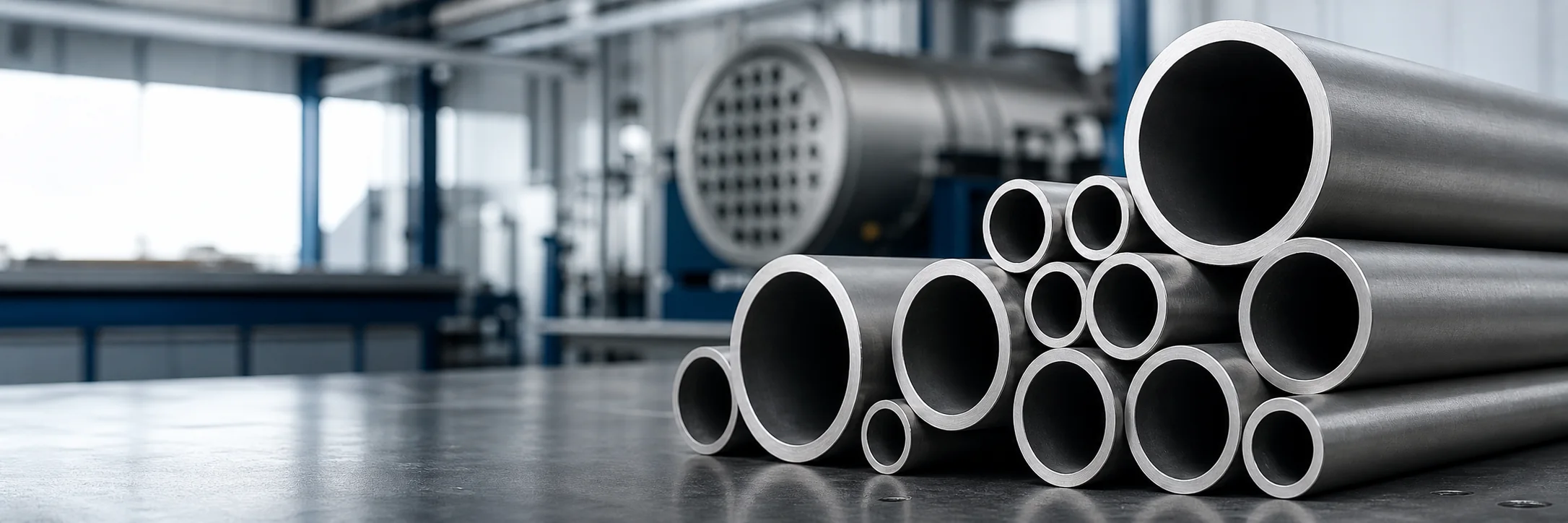
Titanium pipe and nickel-alloy pipe commonly described as Inconel are not interchangeable high-performance materials. Titanium is often evaluated for low density and selected aqueous corrosion environments. Nickel-chromium alloys are often evaluated for high-temperature strength or specific corrosive and oxidizing services. Exact grades, specifications and design conditions are required before comparison.
Titanium Pipe vs Nickel-Alloy Pipe Comparison
| Decision factor | Titanium pipe or tube | Nickel-chromium alloy pipe |
|---|---|---|
| Grade identity | Commercially pure and titanium alloy grades have different strength, formability, corrosion and temperature limits | Alloys such as 600, 625 and 718 have different chemistry, heat treatment, product standards and intended service; the trade name alone is insufficient |
| Density and weight | Lower density can benefit aerospace, marine modules and equipment where mass matters | Higher density; selection is normally driven by temperature, corrosion or mechanical requirements rather than weight saving |
| Temperature capability | Grade-specific temperature, oxidation, creep and hydrogen-related limits require engineering review | Many nickel-chromium alloys are selected for elevated-temperature oxidation resistance or strength, but limits remain grade- and condition-specific |
| Aqueous corrosion | Often considered for seawater, chlorides and selected oxidizing media after service review; reducing acids and crevice conditions can control | Specific nickel alloys may be chosen for acid, chloride or mixed environments, but no single alloy covers every chemistry |
| Fabrication | Cleanliness and complete inert shielding are critical during titanium welding | Qualified nickel-alloy filler, heat input, dilution, hot-cracking controls and post-weld requirements depend on alloy and service |
| Cost and availability | Availability depends on titanium grade, dimensions and route; fabrication capability affects installed cost | High alloy content and grade-specific manufacturing can be costly; availability differs substantially among alloy and product forms |
| Specification | Use the titanium product standard that matches tube, seamless pipe or welded pipe and the exact material grade | State the UNS designation and applicable nickel-alloy product standard; do not purchase only by the Inconel name |
Selection Questions
- Is the controlling requirement aqueous corrosion, elevated-temperature strength, oxidation, weight or a combination?
- What are the normal, upset, startup, shutdown and cleaning conditions?
- Which exact titanium or nickel-alloy grade and product specification apply?
- What joining, heat treatment, NDT and code qualification are required?
Information Required for a Technical Comparison
- Complete fluid composition, concentration, contaminants and phases
- Normal and upset pressure and temperature
- Required design life, construction code and allowable corrosion rate
- Exact grade or UNS, product standard, OD or NPS, wall and length
- Seamless or welded route, heat-treatment condition and ends
- Welding procedure, inspection, certificates, quantity and destination
Continue to a Titanium Pipe Specification
Browse Titanium Pipe, Tube & Tubing, compare Grade 2 titanium pipe and tube with Grade 5 titanium pipe and tube, and review the ASTM B338 vs B861 vs B862 guide. Send the service conditions, standard, grade, dimensions, route, quantity and documents for quotation.
Frequently Asked Questions
Is Inconel one material grade?
No. Inconel is a family trade name covering different nickel-chromium alloys. Specify the exact alloy or UNS designation, condition and product standard because properties and corrosion behavior differ.
Is titanium suitable for every high-temperature application?
No. Temperature capability depends on grade, condition, environment, stress and design criteria. Nickel alloys may be more appropriate for some elevated-temperature duties, while titanium may suit weight-sensitive or selected aqueous services.
Which material is more corrosion resistant?
There is no universal answer. Compare service-specific data for the exact titanium and nickel-alloy grades at the actual chemistry, concentration, temperature, aeration, velocity, crevice and stress conditions.