

Titanium Weld Neck vs Slip-On Flange: Selection and RFQ Guide
Titanium weld neck and slip-on flanges both create bolted piping joints, but their connection geometry and welding are different. The choice must follow the governing piping design and project specification rather than price alone.
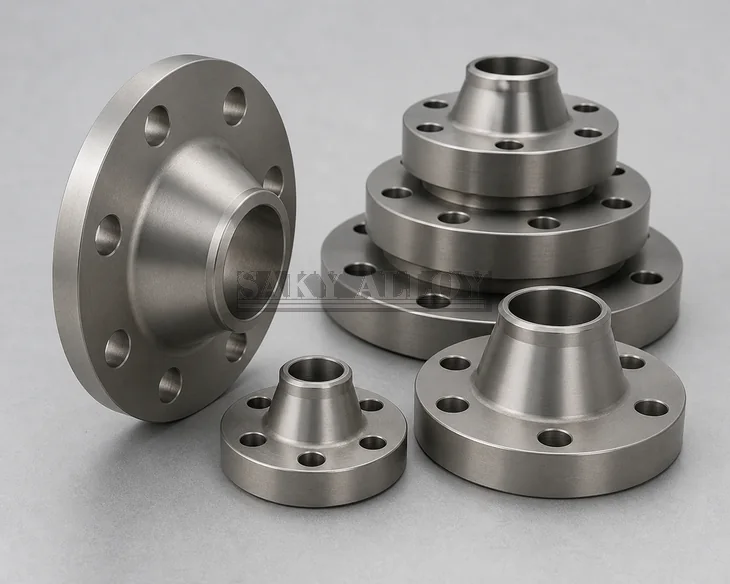
Weld Neck vs Slip-On Comparison
| Decision point | Weld neck | Slip-on |
|---|---|---|
| Pipe connection | Butt weld at tapered hub | Pipe passes through bore and is fillet welded |
| Bore data | Match pipe bore/schedule and bevel | Define pipe OD clearance and weld space |
| Alignment | Bore transition is part of the joint definition | Pipe insertion position controls fit-up |
| Selection | Used where approved for higher-integrity welded connections | Used where project design permits the slip-on arrangement |
Do Not Interchange Types Without Design Approval
Changing from weld neck to slip-on changes the hub, weld configuration, pipe fit-up and sometimes the project acceptance route. The responsible piping designer must approve the type and rating.
Define Bore and Weld Preparation
For weld neck flanges, provide pipe schedule or bore and the required bevel. For slip-on flanges, provide pipe OD, bore clearance, insertion position and front/back fillet weld requirements.
Send the Piping Specification With the RFQ
Compare the titanium weld neck flange and titanium slip-on flange. Include grade, standards, size, pressure class, facing, pipe dimensions, welding details, quantity and inspection.
RFQ Checklist
- Approved flange type
- Titanium grade
- Material and dimensional standards
- NPS/DN, Class/PN and facing
- Pipe bore/schedule or OD clearance
- Weld end or fillet-weld details
- Quantity, NDE and certificates
Frequently Asked Questions
Can a slip-on flange replace a weld neck flange?
Not without piping-design approval. The flange geometry, weld arrangement, bore transition, fatigue behavior, pressure-temperature rating and applicable code or project specification must be reviewed before changing type.
Why must the weld neck flange bore be specified?
The bore should match the connected pipe and required weld preparation so the internal transition and wall alignment meet the design. Nominal pipe size alone may not define the required bore for every schedule or project.
What information is needed for a titanium flange quotation?
Provide flange type, titanium grade, dimensional standard and edition, nominal size, pressure class, facing, bore or matching pipe schedule, weld preparation, surface finish, quantity, testing and documentation.