

Titanium Heat Exchanger Tube vs Condenser Tube: What Buyers Should Specify
Titanium heat exchanger tube and titanium condenser tube can be manufactured to the same applicable tube specification, but the equipment duty and purchase data are not identical. A useful RFQ connects grade, dimensions and testing to the actual process or cooling-water conditions.
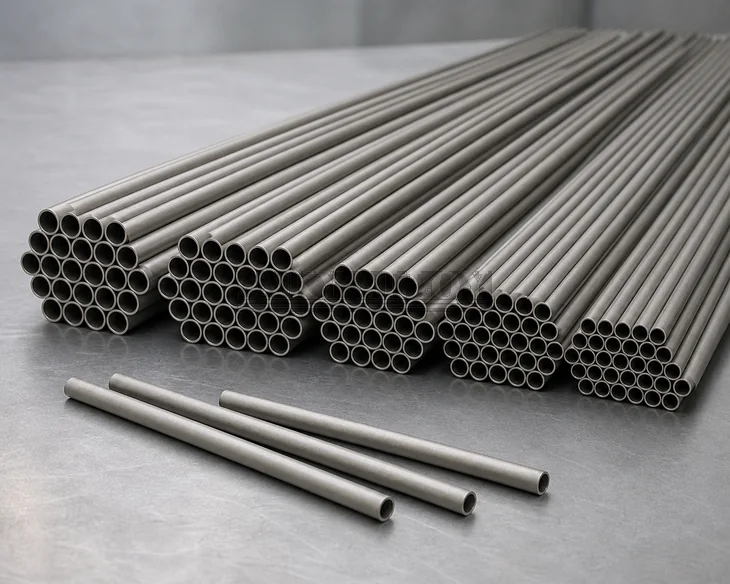
Heat Exchanger Tube and Condenser Tube Comparison
| Decision point | Heat exchanger tube | Condenser tube |
|---|---|---|
| Service data | Process and utility fluids, temperature, pressure and corrosion | Cooling-water chemistry, temperature, velocity, fouling and condenser duty |
| Joint data | Tube-end preparation for expansion or welding | Tube projection, tube-sheet expansion groove, rolling or welding procedure |
| Acceptance | Dimensions, cleanliness, NDT or pressure test | Dimensions, bore cleanliness, end condition, NDT or pressure test |
ASTM B338 Does Not Replace the Equipment Datasheet
ASTM B338 / ASME SB338 commonly covers seamless and welded titanium tubes intended for condensers and heat exchangers. It does not by itself define the process medium, tube-sheet joint, corrosion allowance, supplementary testing or project documentation.
Select Grade From the Service Environment
Grade 2 is widely used for corrosion resistance and fabrication. Grade 7 or Grade 12 may be considered for specific qualified corrosive conditions. Final selection should follow process chemistry, temperature, flow, equipment design and the governing code.
Define the Tube-to-Tubesheet Interface
State OD, wall, length, tolerances, tube-end condition, projection and whether the joint is expanded, welded or combined. End cleanliness, roundness and surface condition affect fit-up and procedure qualification.
Send the Equipment Data With the Tube RFQ
Review titanium heat exchanger tube and titanium condenser tube. Include grade, standard, OD, wall, length, quantity, service medium, tube-sheet joint, testing and required certificates.
RFQ Checklist
- Grade and governing specification
- Seamless or welded route if controlled
- OD, wall, length and tolerances
- Service medium and design conditions
- Tube-end and tube-sheet joint requirements
- NDT, pressure tests, cleanliness and documentation
Frequently Asked Questions
Are heat exchanger tubes and condenser tubes different ASTM B338 products?
ASTM B338 covers titanium tubing used for heat exchangers, condensers and related service, but the equipment duty still determines grade, dimensions, tolerances, surface, testing and tube-to-tubesheet requirements.
Can nominal tube size replace outside diameter and wall thickness?
No. Tube procurement should state actual outside diameter, wall thickness and tolerances. Do not assume pipe schedule or a nominal description defines heat-transfer tubing dimensions.
What should a titanium heat exchanger tube RFQ include?
Specify grade, standard and edition, seamless or welded construction, outside diameter, wall thickness, length, quantity, dimensional tolerances, surface, eddy-current or other testing, tube ends, material certificate and service conditions.