

Titanium Sheet vs Titanium Plate: Thickness, Standards and Applications
Titanium Flat-Rolled Product Guide
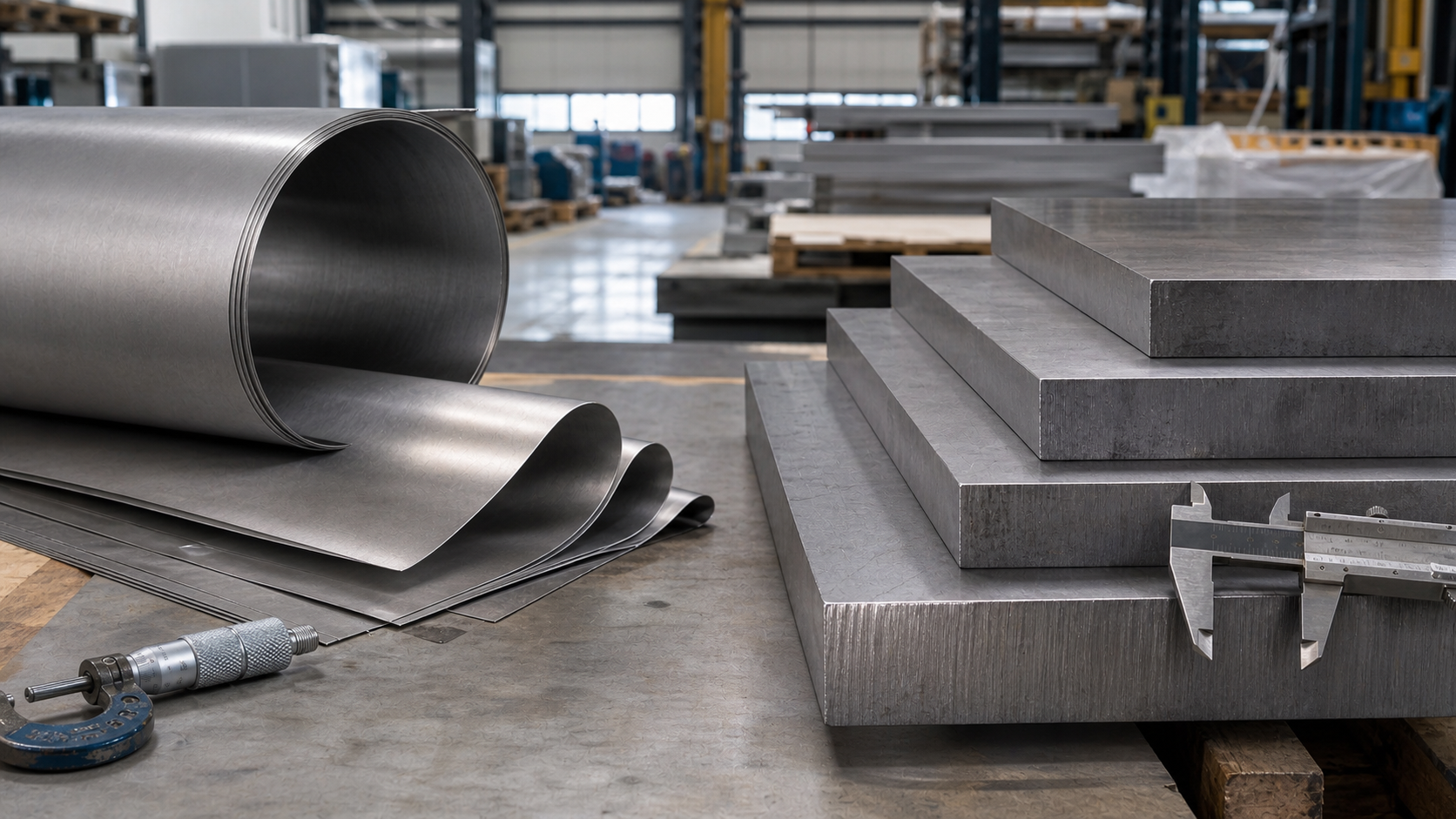
Titanium sheet is the thinner, more formable flat product; titanium plate is the thicker product used where section thickness, load capacity or machining stock is required. In North American titanium supply, 3/16 in (about 4.8 mm) is a common dividing line—but the purchase specification always controls.
Titanium sheet vs titanium plate is primarily a thickness and product-form distinction, not a difference in titanium grade. Grade 2, Grade 5, Grade 7 and Grade 23 can all be supplied as flat-rolled products, subject to mill capability and the applicable material standard.
For buyers and engineers, the label matters because sheet and plate follow different stocking ranges, forming and cutting routes, dimensional tolerances, inspection plans and cost structures. This guide explains the practical boundary, the standards to reference and the applications best suited to each form.
Titanium Sheet vs Titanium Plate at a Glance
| Selection Factor | Titanium Sheet | Titanium Plate |
|---|---|---|
| Common thickness direction | Up to about 0.187 in (4.75 mm) in common North American stocking practice | From about 0.188 in (4.78 mm) upward in common North American stocking practice |
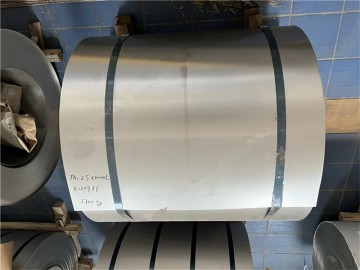
| Typical supply form | Cut sheet, coil or slit strip, depending on thickness and alloy | Discrete hot-rolled plate, cut rectangular stock or near-net profile |
| Primary processing | Shearing, laser or waterjet cutting, bending, deep drawing and forming | Sawing, waterjet cutting, machining, drilling, pocketing and heavy fabrication |
| Design use | Skins, covers, liners, formed parts, diaphragms and lightweight corrosion barriers | Pressure equipment, structural parts, tube sheets, base plates and machined components |
| RFQ emphasis | Gauge tolerance, surface, flatness, coil or sheet form, grain direction and bendability | Thickness tolerance, flatness, machining allowance, cut shape, edge condition and NDT |
Buyer’s rule: Do not rely on the words “sheet” or “plate” alone. State the exact thickness, width, length, grade, specification, condition, tolerances and certificate requirements on the purchase order.
What Thickness Separates Titanium Sheet from Plate?
A widely used North American titanium mill convention places the sheet-to-plate transition at 3/16 in, or approximately 4.8 mm. TIMET technical information describes sheet up to 0.187 in and plate over 0.187 in; its current service-center inventory lists sheet through 0.187 in (4.75 mm) and plate beginning at 0.188 in (4.78 mm).
This is a practical market boundary, not a universal law. European stockholders, project specifications and individual mills may use a 5 mm or 6 mm commercial breakpoint. A customer may also use “sheet” generically for flat material outside the supplier’s formal product definition.
Material at or near the boundary should be ordered by its numerical thickness and applicable standard. If a drawing calls for 5 mm titanium “sheet,” the supplier may quote it from plate inventory. That can affect available width, surface condition, flatness, edge preparation and price.
Why the Terminology Varies
- Different standards: Product definitions, dimensional tables and required tests vary by national, industry and application specification.
- Mill capability: Rolling equipment, alloy, width and heat-treatment route determine whether a thickness is produced as coil, sheet or discrete plate.
- Commercial practice: Distributors may group products according to their own inventory and cutting equipment.
- End-use language: Fabricators often describe a formed flat part as sheet metal even when the starting stock is commercially classed as plate.
- Metric conversion: The exact conversion of 3/16 in is 4.7625 mm, so rounded catalog limits may appear as 4.75, 4.76, 4.8 or 5.0 mm.
Titanium Sheet and Plate Standards
The material grade and the product standard must be specified together. A grade identifies chemistry and a family of properties; the product standard defines the requirements for the supplied form.
| Standard or Document | Role | Purchasing Note |
|---|---|---|
| ASTM B265 | Core ASTM specification for annealed titanium and titanium alloy strip, sheet and plate | State grade, dimensions, condition, finish, tests and required edition |
| ASME SB-265 | ASME material specification used in code-governed pressure-equipment procurement | The design code, allowable stresses, joint rules and project edition remain separate requirements |
| AMS specifications | Aerospace material specifications for specific alloy, condition and product requirements | Use the exact AMS number and revision shown on the approved drawing or material list |
| ASTM F67 / ASTM F136 | Application-focused requirements for unalloyed titanium or Ti-6Al-4V ELI used in surgical implants | Confirm permitted product form, regulatory route and all drawing-specific requirements |
| EN 10204 3.1 | Inspection-document type reporting order-specific test results | It is not a titanium grade or dimensional standard; request it in addition to the material specification |
Specification discipline matters: ASTM, ASME, AMS and medical standards are not automatically interchangeable. Equivalent chemistry does not prove equivalent dimensions, heat treatment, testing, traceability or acceptance criteria.
How Titanium Sheet Is Manufactured and Supplied
Titanium sheet is produced by rolling slab or hot band through controlled reductions, with intermediate or final annealing as required. Thin products may be supplied in coil, slit strip or cut-to-length sheet. Surface scale is removed through approved descaling and pickling processes, followed by leveling, inspection and cutting.
The thinner section makes sheet suitable for bending, brake forming, stamping, deep drawing and—in selected alloys and qualified processes—superplastic forming. Formability depends on grade, condition, rolling direction, surface quality, bend radius, temperature and tooling.
Sheet buyers should pay particular attention to gauge tolerance, flatness, camber, surface finish, edge condition and grain direction. A cosmetic enclosure and a welded chemical-process liner may require very different surface and inspection scopes even at the same grade and thickness.
How Titanium Plate Is Manufactured and Supplied
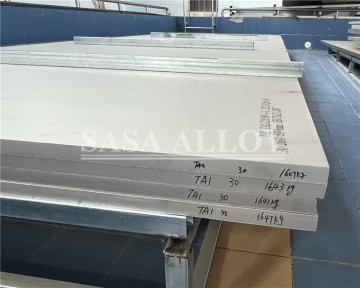
Titanium plate is generally rolled as a discrete product from slab, then heat treated, flattened, descaled, conditioned and inspected. Thicker sections provide stock for structural components, pressure equipment, tube sheets, flanges, blocks and machined parts.
Plate may be ordered as a full rectangle, cut-to-size blank or near-net waterjet profile. Near-net nesting can reduce raw-material waste and machining time, especially when parts have large internal openings or irregular geometry.
Plate RFQs should define thickness tolerance, flatness, surface condition, cut tolerance, edge quality, machining allowance, ultrasonic testing and test-report requirements. Heavy or unusual dimensions can also affect mill minimums, yield and lead time.
Applications: When to Use Sheet and When to Use Plate
| Application | Typical Product Direction | Why |
|---|---|---|
| Aircraft skins, fairings and formed ducts | Sheet | Low mass, controlled gauge and forming capability |
| Chemical liners, covers and diaphragms | Sheet | Corrosion barrier with minimal material volume and good weldability |
| Heat-exchanger plates and formed transfer surfaces | Sheet | Thin section supports heat transfer and forming |
| Pressure-vessel shells and heads | Plate, subject to design calculation | Required section thickness, forming route and code compliance |
| Tube sheets, base plates and structural brackets | Plate | Section depth, stiffness, drilled features and load transfer |
| Machined aerospace, marine and energy components | Plate | Machining stock, near-net cutting and through-thickness control |
Does Plate Have Stronger Material Properties Than Sheet?
Not necessarily. A thicker plate can carry more load because it has a larger cross-sectional area, but that does not mean its material is inherently stronger. Tensile and yield properties are controlled by alloy, chemistry, processing, heat treatment, section size and the applicable specification.
Never use the thickness label as a substitute for a mechanical-property requirement. Compare the certified values and minimum requirements for the actual grade, condition, orientation and product specification.
Choosing a Titanium Grade for Sheet or Plate
- Grade 2 (UNS R50400): a common choice for formed and welded corrosion-resistant sheet, plate and chemical-process equipment.
- Grade 5 (UNS R56400): selected for higher-strength aerospace, energy and structural sheet or plate applications.
- Grade 7 (UNS R52400): palladium-alloyed commercially pure titanium for demanding corrosion environments where Grade 2 may not provide the required margin.
- Grade 23 (UNS R56407): Ti-6Al-4V ELI for application-specific medical, aerospace, cryogenic or damage-tolerant requirements.
For a detailed grade comparison, see our guide to choosing Titanium Grade 2, Grade 5, Grade 7 and Grade 23.
Fabrication and Cutting Considerations
Sheet cutting and forming
Shearing, laser cutting and waterjet cutting are common options, subject to thickness, alloy and edge-quality requirements. Heat-affected edges, burrs and contamination must be controlled when they could affect forming, welding or service performance.
Plate cutting and machining
Waterjet cutting is useful for near-net shapes and material-yield optimization. Sawing and machining are used for straight blanks, precision edges and finished features. The RFQ should distinguish between mill dimensions, saw-cut allowance and final-machined dimensions.
Welding cleanliness
Both sheet and plate require clean joint preparation and effective inert-gas shielding. Titanium absorbs oxygen, nitrogen and hydrogen while hot; contamination can reduce ductility and weld quality. Welding procedures must match the grade, thickness, joint geometry and governing code.
Weight, Cost and Material Yield
Flat-product weight is calculated from length × width × thickness × density. Commercially pure titanium has a density near 4.51 g/cm³, while Ti-6Al-4V is slightly lower. Use the grade-specific density and the ordered thickness tolerance for accurate shipping or design calculations.
Approximate Grade 2 weight examples
1 m² × 1 mm sheet ≈ 4.51 kg
1 m² × 5 mm flat product ≈ 22.55 kg
1 m² × 10 mm plate ≈ 45.10 kg
Price is influenced by grade, thickness, width, quantity, surface, flatness, cutting, machining, inspection and certification. Near-net plate profiles can lower total cost even when the cutting charge is higher, because they reduce purchased weight and machining waste.
Titanium Sheet and Plate RFQ Checklist
Grade, UNS, standard, revision and condition
Thickness, width, length, quantity and tolerances
Coil, strip, cut sheet, full plate or cut profile
Mill finish, pickled, ground, polished or project-defined
Flatness, camber, edge condition, grain direction and bend radius
Shearing, waterjet, sawing, forming or machining allowance
MTC, EN 10204 3.1, UT, surface and dimensional reports
Destination, packing, Incoterm and required schedule
Common Purchasing Mistakes
- Writing only “titanium plate” without grade, thickness, standard or condition.
- Assuming every supplier uses the same sheet/plate thickness boundary.
- Comparing quotations that use different thickness tolerances, cut allowances or certificate scopes.
- Treating EN 10204 3.1 as a material specification rather than an inspection-document requirement.
- Ignoring rolling direction and bend requirements for formed sheet parts.
- Ordering a full plate when a nested near-net profile would reduce waste and machining time.
Related Titanium Sheet and Plate Products
- Titanium plate and sheet product range
- ASTM B265 titanium plate
- Titanium Grade 2 sheet and plate
- Titanium Grade 5 sheet and plate
- Titanium Grade 7 sheet and plate
- Titanium Grade 23 sheet and plate
Frequently Asked Questions
What thickness is considered titanium sheet?
A common North American titanium supply convention classifies material up to about 0.187 in (4.75 mm) as sheet. Confirm the supplier’s range and the governing standard because terminology varies.
What thickness is considered titanium plate?
Plate commonly begins around 0.188 in (4.78 mm) in North American mill and service-center practice. Some markets use a rounded 5 mm or 6 mm commercial boundary.
Is 5 mm titanium sheet or plate?
It is near the conventional boundary and is often supplied from plate inventory. Order it as 5 mm flat product under the required standard and confirm the supplier’s classification, tolerances and surface.
What ASTM standard covers titanium sheet and plate?
ASTM B265 covers annealed titanium and titanium alloy strip, sheet and plate across multiple grades. The purchase order should state the grade, dimensions, condition, tests and required edition.
Can the same titanium grade be supplied as sheet and plate?
Yes. Many grades are available in both forms, but actual thickness, width, condition and certification availability depend on the mill and specification.
Is titanium plate stronger than titanium sheet?
Thicker plate can carry more load because of its greater section area. Material strength, however, depends on grade, condition, processing and the applicable specification—not on the sheet or plate label alone.
Can titanium sheet replace plate?
Not without engineering approval. A substitution changes section thickness, stiffness, load capacity, buckling behavior, tolerances and potentially the applicable product requirements.
Technical References
Use the current project specification and qualified engineering review. Primary references used for this guide include:
- ASTM B265 — Titanium and Titanium Alloy Strip, Sheet and Plate
- TIMET — Commonly Stocked Sheet and Plate Sizes
- TIMET — Titanium Sheet Products
- TIMET — Titanium Plate Products
Request a Titanium Sheet or Plate Quote
Send SAKY ALLOY your titanium grade, standard, thickness, width, length, quantity, condition, surface and certification requirements. We can review sheet, plate and cut-profile availability for your project.
Submit Your Titanium RFQ