
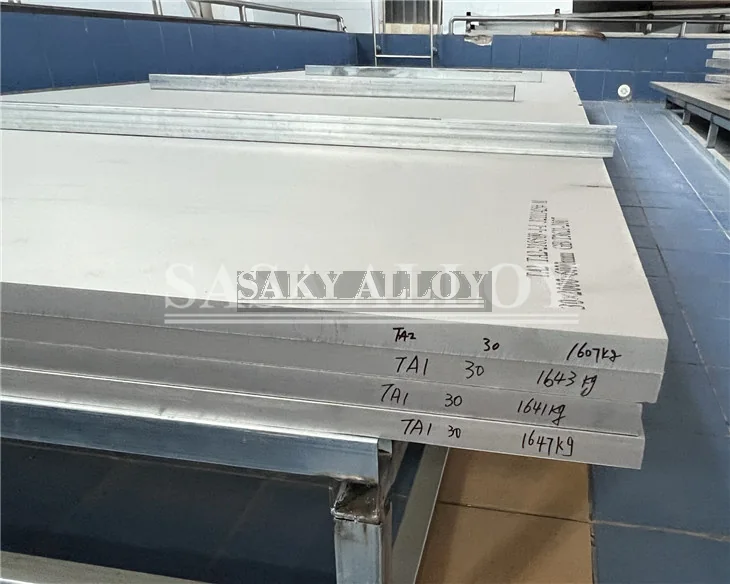
Cold Rolled Titanium Sheet
Cold rolled titanium sheet supplied by grade, gauge, width, length, condition, flatness, surface finish, inspection and traceable certification.
- Material
- Titanium Grade 1, Grade 2, Grade 5, Grade 7, Grade 12 or specified alloy
- Standard
- ASTM B265 / ASME SB265 or expressly invoked project specification
- Product Form
- Sheet, plate and cut blanks; thickness, width, length, flatness and edge condition are confirmed by RFQ
- Documents
- MTC, inspection and heat/lot traceability
Product Detail
Product Introduction
Cold Rolled Titanium Sheet is supplied for corrosion-resistant fabrication and precision manufacturing. The final purchase definition must identify the exact material designation, governing specification and revision, dimensions, condition, tolerances, tests and documentation; trade-name or cross-standard equivalence is not assumed.
When should cold rolled titanium sheet be specified?
Selection answer: Cold rolled sheet is considered when controlled gauge, surface, flatness and downstream forming or fabrication requirements favor a flat-rolled route over thicker hot-rolled plate.
Selection boundary: Do not describe cold rolled material as automatically stronger, more corrosion resistant or more precise. Grade, final condition, thickness range, finishing route and explicitly ordered tolerances determine the delivered product.
RFQ data to confirm: Send grade, specification and revision, final condition, thickness and tolerance, width and length, surface, flatness, edge, forming use, quantity, inspection and documentation for RFQ review.
Product Specifications
| Product | Cold Rolled Titanium Sheet | Grade | Titanium Grade 1, Grade 2, Grade 5, Grade 7, Grade 12 or specified alloy |
|---|---|---|---|
| Standard | Cold rolled describes a manufacturing route or supply characteristic; it is not a titanium grade or a complete purchasing standard. ASTM B265/B265M covers annealed titanium and titanium-alloy strip, sheet and plate within its scope. State the exact revision, grade and UNS, sheet or strip form, final condition, thickness, width, length or coil data, surface, flatness and dimensional tolerances. | Size & Form | Sheet and cut lengths; gauge, width, length, flatness, edge and grain direction by RFQ |
| Tolerance | Governing material standard or approved customer drawing | Supply Condition | Cold rolled and annealed with pickled, descaled, bright, brushed or order-specific surface |
| Inspection | Verify grade and heat identity, final delivery condition, chemistry and tensile results, gauge and width/length, flatness, camber when applicable, edge, surface acceptance, marking, MTC and heat/lot traceability. Define grain direction, roughness, tighter gauge tolerance, ultrasonic or penetrant examination only when the drawing or purchase specification requires it. | Documents | MTC, heat/lot traceability and agreed inspection reports |
Send the complete material RFQ
Include grade, specification revision, dimensions, tolerance, quantity, condition, tests and destination.
Chemical Composition
Weight percent; maximum unless a range is shown. Titanium is the balance. The ordered specification and grade control.
| Grade / UNS | Principal Alloying Elements | Fe max | O max | C max | N max | H max | Ti |
|---|---|---|---|---|---|---|---|
| Grade 5 / R56400 | Al 5.50–6.75; V 3.50–4.50 | 0.40 | 0.20 | 0.08 | 0.05 | 0.015 | Balance |
Mechanical Properties – Annealed Material Reference
| Grade | Ultimate Tensile Strength min | 0.2% Yield Strength min | Elongation min |
|---|---|---|---|
| Grade 5 | 895 MPa | 828 MPa | 10% |
Representative minima only. Product form, section size, heat treatment and the invoked specification determine the certified acceptance values.
Typical Physical Properties
| Grade | Density | Elastic Modulus | Thermal Expansion |
|---|---|---|---|
| Grade 5 | 4.43 g/cm³ | Approx. 114 GPa | Approx. 8.6 µm/m·K |
Typical engineering references, not inspection acceptance limits.
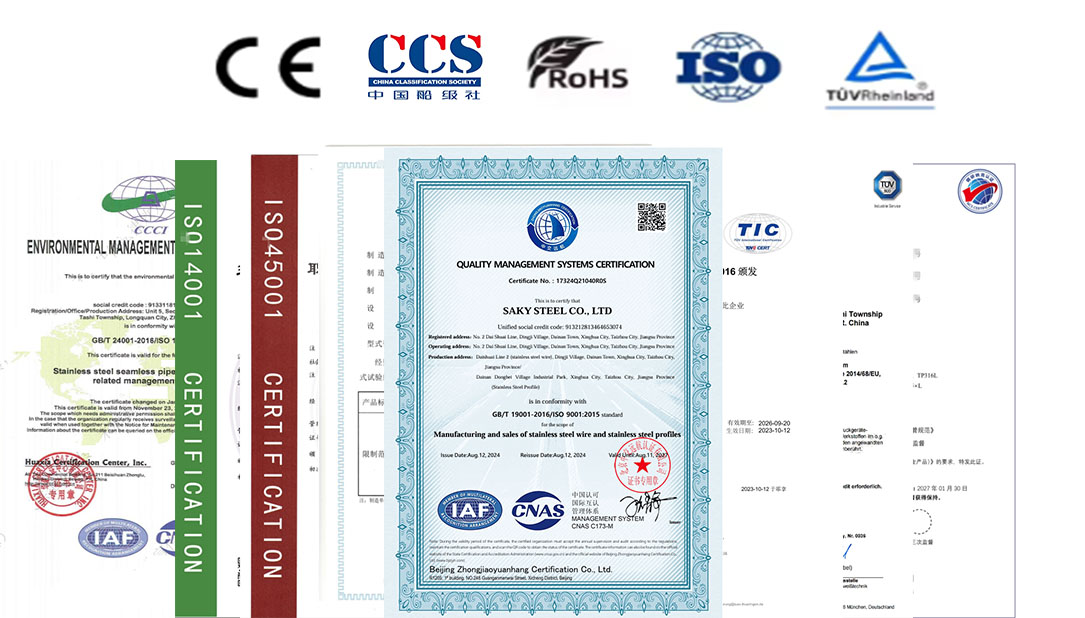
Certificates & Inspection Records
Services We Can Provide
Product Packaging
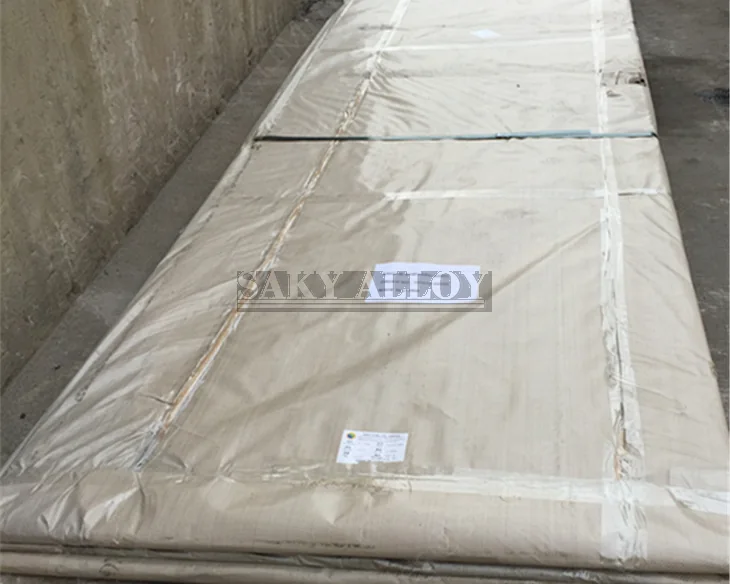
Sheet and plate surfaces are interleaved or wrapped as required, protected at edges and secured on pallets or in export cases with grade, heat and dimensional identification. Typical export packaging for the same physical product form is shown below; final packing is confirmed for each order.
Application Scenarios

Chemical processing equipment
Material grade, dimensions, condition and inspection must be matched to the application requirements.

Marine and desalination systems
Material grade, dimensions, condition and inspection must be matched to the application requirements.

Industrial fabrication and precision components
Material grade, dimensions, condition and inspection must be matched to the application requirements.
FAQ
Does cold rolled titanium sheet mean Grade 2?
No. Cold rolling is a manufacturing route. The material may be Grade 1, Grade 2 or another expressly specified titanium grade, and the grade must appear on the RFQ and certificate.
Is cold rolled titanium sheet always supplied annealed?
Not from the words cold rolled alone. ASTM B265 covers annealed flat-rolled products within its scope, but the order must state the required final condition. Process history and final delivery condition are different purchasing controls.
What information is needed to quote cold rolled titanium sheet?
Provide grade and UNS, ASTM B265 or project specification and revision, sheet or strip form, final condition, thickness and tolerance, width, length or coil data, surface, flatness, edge, quantity, MTC and destination.
Leave Your Message
Related Technical Guides
Bulk Titanium MOQ, Price and Alternatives
Prepare a bulk RFQ and review MOQ, price drivers, documentation and optional alternatives.
Read technical guideHot Rolled vs Cold Rolled Titanium
Compare thickness range, surface, flatness, forming and machining considerations.
Read technical guideHow to Specify ASTM B265 Titanium Plate
Define grade, dimensions, condition, tolerance, surface, tests and certification.
Read technical guideThickness, Tolerance and Flatness Guide
Prepare dimensional requirements that match fabrication and machining needs.
Read technical guideChemical Processing Plate Selection
Review service chemistry, grade, fabrication, inspection and documentation.
Read technical guide