
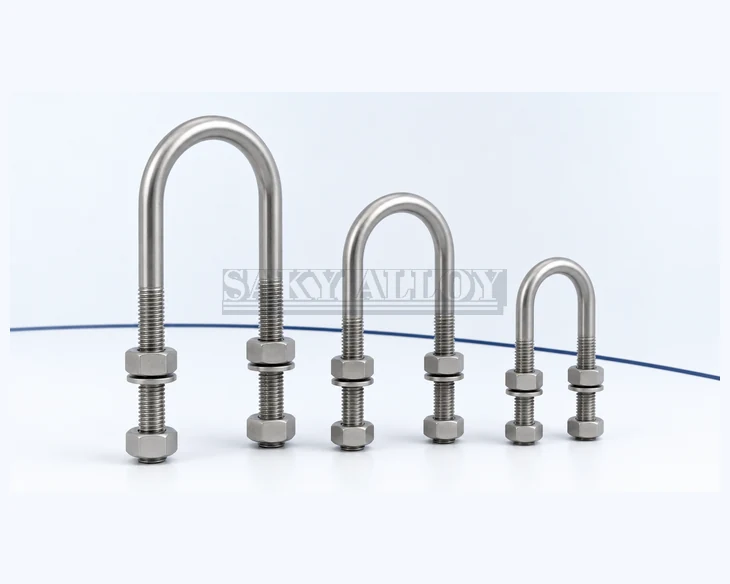
Grade 2 Titanium U-Bolts
Commercially pure Grade 2 titanium U-bolts for corrosion-resistant clamps, supports and equipment attachments. Geometry, thread, forming condition, mating hardware, finish and inspection follow the approved drawing.
- Material
- Grade 2 / UNS R50400
- Forms
- Round, square or drawing-specific
- Threads
- Metric, UNC, UNF or drawing
- Documents
- MTC, dimensions and traceability
Product Detail
Product Introduction
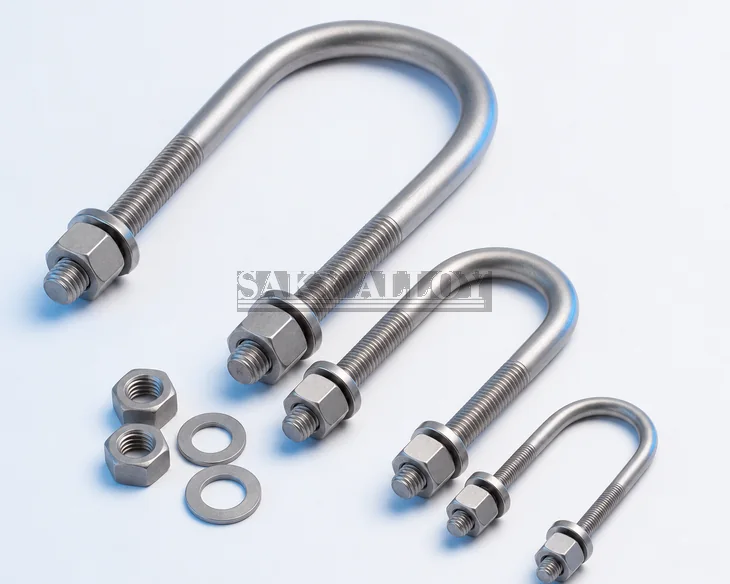
Grade 2 U-bolts are drawing-controlled formed fasteners for corrosion-resistant clamps and supports. The RFQ must define inside width, leg length, bend radius, rod diameter, thread coverage, mating hardware, service load and inspection.
Product Specifications
| Product | Grade 2 Titanium U-Bolts | Material | Titanium Grade 2 (UNS R50400) |
|---|---|---|---|
| Product Form | Round, square or drawing-specific U-bolt | Typical Inquiry Range | M6 to M30 rod diameter typical inquiry range; leg spacing and length by drawing |
| Dimensional References | Customer drawing, DIN, ASME or project specification when invoked | Threads / Dimensions | Metric coarse or fine, UNC, UNF or drawing-specific as applicable |
| Surface | Machined and cleaned; lubricant, anti-galling treatment or coating by agreement | Documents | MTC, heat/lot traceability and dimensional inspection report |
| Inspection | Dimensions, thread gauging, surface and agreed functional or mechanical tests | Supply Basis | Approved purchase order, invoked standard and drawing |
Typical inquiry ranges are not a stock guarantee. Final manufacturability, tolerances and test requirements are confirmed against the complete RFQ.
Selection and Configuration
- Geometry: Provide center spacing or inside width, bend radius, leg length and thread coverage.
- Forming route: Review bend severity, Grade 2 condition, surface acceptance and dimensional springback.
- Assembly design: Confirm saddle geometry, clamp load, vibration, temperature, galvanic exposure and galling controls.
Send a drawing or complete fastener definition
Include dimensions, quantity, mating parts, service conditions, finish and inspection requirements.
Chemical Composition – Titanium Grade 2
Maximum weight percent unless shown otherwise; titanium is the balance.
| N max | C max | H max | Fe max | O max | Residual each / total | Ti |
|---|---|---|---|---|---|---|
| 0.03 | 0.08 | 0.015 | 0.30 | 0.25 | 0.10 / 0.40 | Balance |
Mechanical Properties – Grade 2 Material Reference
| Property | Annealed Grade 2 Material Reference Minimum |
|---|---|
| Ultimate tensile strength | 345 MPa (50 ksi) |
| 0.2% yield strength | 275 MPa (40 ksi) |
| Elongation | 20% |
Material values do not automatically establish finished-fastener loadability. Finished-part acceptance depends on geometry, manufacturing route, condition and the expressly invoked fastener specification or drawing.
Typical Physical Properties
| Property | Typical Value |
|---|---|
| Density | 4.51 g/cm³ |
| Elastic modulus | Approximately 105 GPa |
| Poisson ratio | Approximately 0.34 |
| Thermal conductivity | Approximately 16.4 W/m·K |
| Coefficient of thermal expansion | Approximately 8.6 µm/m·K |
| Melting point | Approximately 1668°C |
Physical values are typical engineering references and are not inspection acceptance limits.
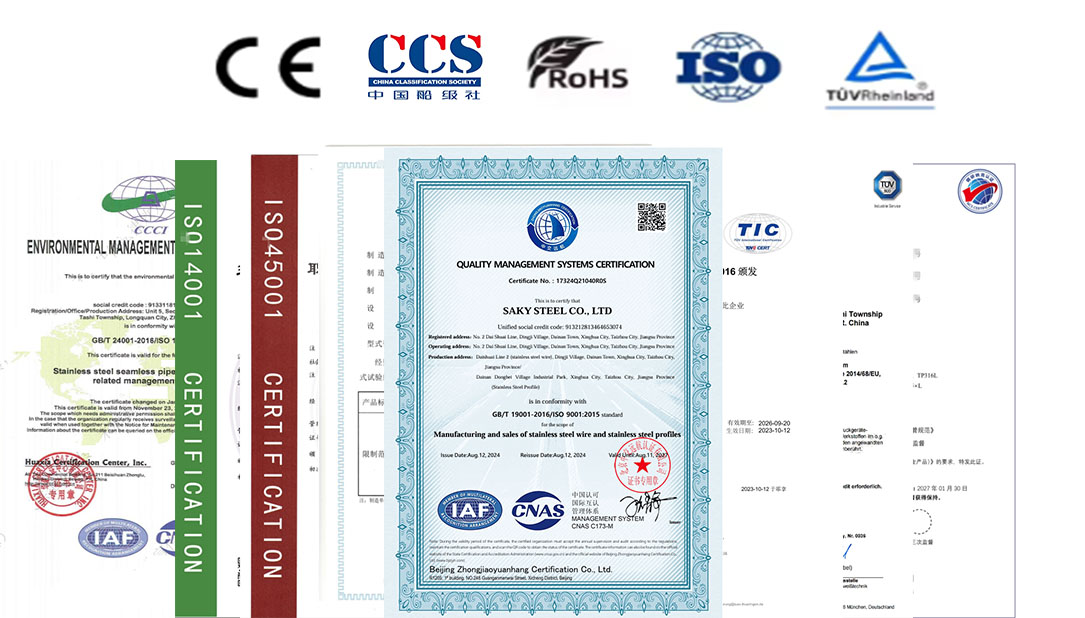
Certificates & Inspection Records
Services We Can Provide
Product Packaging
Grade 2 Titanium U-Bolts are separated by size and lot, protected against thread and surface damage, and labeled with grade, dimensions, quantity and traceability reference. Inner bags, cartons and export cases are selected according to product geometry, quantity and shipping method.
Application Scenarios

Chemical Processing
Corrosion-resistant equipment joints selected against the complete process environment.

Power & Energy
Lightweight engineered assemblies requiring controlled dimensions and traceability.

Marine & Shipbuilding
Corrosion-resistant joints subject to galvanic, preload and service-condition review.
FAQ
What information is required to quote Grade 2 Titanium U-Bolts?
Provide the titanium grade, product form, dimensional standard or drawing, thread or critical dimensions, quantity, surface treatment, mating parts, service conditions and required inspection documents.
Which standards apply to Grade 2 Titanium U-Bolts?
U-bolts are commonly supplied to approved drawings. ASME, DIN or project references apply only when expressly invoked; Grade 2 condition and finished-fastener acceptance remain separately controlled.
How are Grade 2 Titanium U-Bolts inspected?
Available controls include MTC review, leg spacing, bend radius, symmetry, length and thread measurement, GO/NO-GO gauging, surface examination and heat/lot traceability.
Leave Your Message
Related Technical Guides
Titanium Standard Parts Selection Guide
Define material, geometry, loading and inspection.
Read technical guideTitanium Fasteners for Marine Applications
Review seawater exposure and joint design.
Read technical guideHow to Prevent Galling
Plan mating hardware, lubrication and installation.
Read technical guide