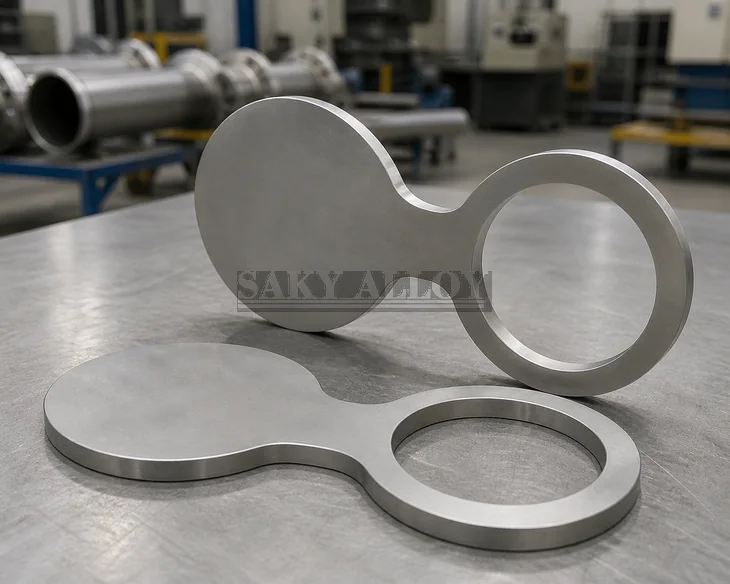
Titanium Spectacle Blind
Titanium spectacle blinds with an integral solid blind and open spacer for visible pipeline isolation, supplied by size, class, facing, thickness, material and marking requirements.
- Material
- Titanium grade and source product specification by RFQ
- Configuration
- Integral figure-eight spectacle blind
- Standard
- ASME B16.48 when expressly applicable
- Documents
- MTC, dimensional report, marking and heat/lot traceability
Product Detail
Product Introduction
A titanium spectacle blind is an operational line blank installed between compatible flanges. Rotating the assembly places either the solid blind or the open spacer in the line and gives a visible indication of isolation status. Specify the applicable standard and revision, NPS/DN, pressure class, material, facing, thickness, bore, handle geometry, corrosion service, gasket arrangement, bolting and marking.
Selection Priorities
Line-blank standard
ASME B16.48 covers operational line blanks in stated NPS and pressure classes for installation between ASME B16.5 flanges; confirm the requested titanium material and project code are permitted.
Joint compatibility
Match class, gasket-facing dimensions, bore, thickness and flange separation; review bolt length and required spreading clearance.
Operation and safety
Define handle orientation, lifting, position marking, isolation procedure, drainage, stored energy and maintenance access.
Product Specifications
| Product | Titanium Spectacle Blind | Grade | Titanium grade by RFQ |
|---|---|---|---|
| Standard | ASME B16.48 is the primary dimensional and pressure-class reference for operational line blanks installed between ASME B16.5 flanges when expressly invoked. State the required revision and verify material listing, pressure-temperature basis and governing piping-code acceptance for titanium service. | Size & Form | NPS 1/2 through NPS 24 and applicable ASME B16.48 classes when within standard scope, or drawing-specific dimensions |
| Tolerance | Invoked standard or approved drawing for outside diameters, bore, thickness, flatness, facing and handle geometry | Supply Condition | Plate-cut and machined with position identification, protected gasket faces and reinforced export-case packing |
| Inspection | MTC and heat identity, chemistry and mechanical results, outside diameters, bore, thickness, spacer and blind geometry, connecting web and handle, facing finish, flatness, surface, marking and agreed PT or PMI. | Documents | MTC, heat/lot traceability and agreed inspection reports |
Send the complete material RFQ
Include grade, specification revision, dimensions, tolerance, quantity, condition, tests and destination.
Chemical Composition
Weight percent; maximum unless a range is shown. Titanium is the balance. The ordered specification and grade control.
| Grade / UNS | Principal Alloying Elements | Fe max | O max | C max | N max | H max | Ti |
|---|---|---|---|---|---|---|---|
| Grade 2 / R50400 | — | 0.30 | 0.25 | 0.08 | 0.03 | 0.015 | Balance |
Mechanical Properties – Annealed Material Reference
| Grade | Ultimate Tensile Strength min | 0.2% Yield Strength min | Elongation min |
|---|---|---|---|
| Grade 2 | 345 MPa | 275 MPa | 20% |
Representative minima only. Product form, section size, heat treatment and the invoked specification determine the certified acceptance values.
Typical Physical Properties
| Grade | Density | Elastic Modulus | Thermal Expansion |
|---|---|---|---|
| Grade 2 | 4.51 g/cm³ | Approx. 105 GPa | Approx. 8.6 µm/m·K |
Typical engineering references, not inspection acceptance limits.
Certificates & Inspection Records
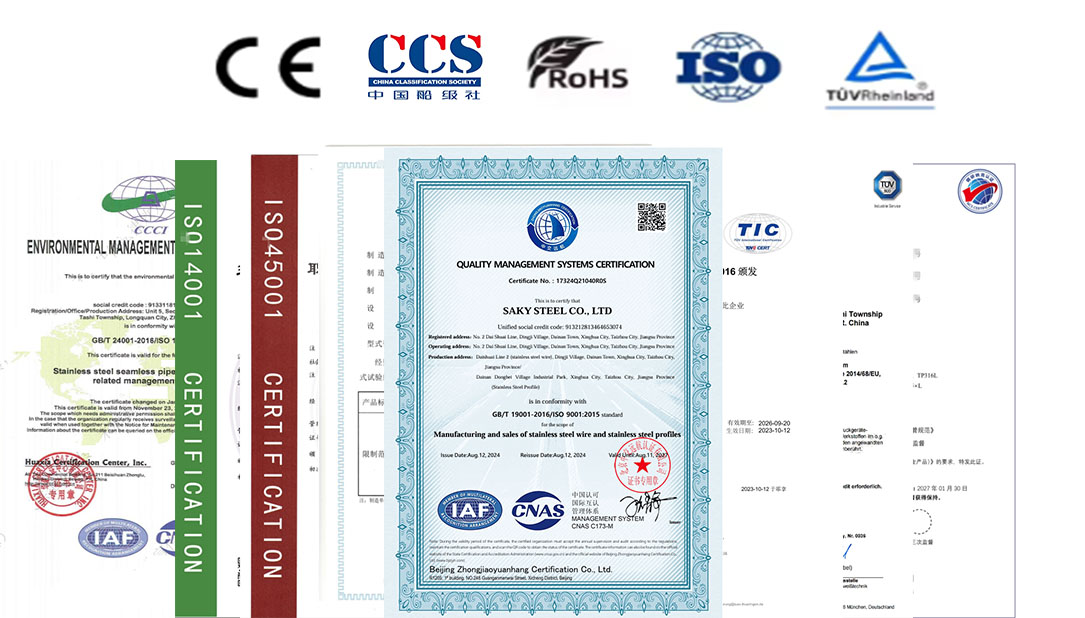
Services We Can Provide
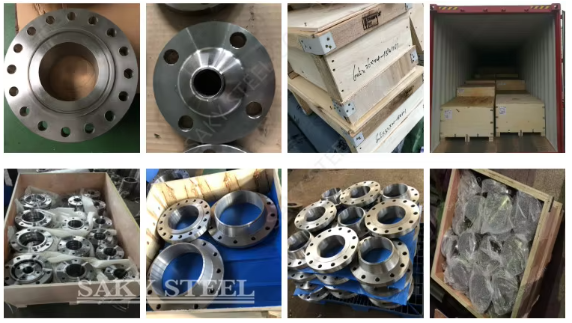
Product Packaging
Machined faces, bores and bevels are protected with covers or wrapping. Flanges are separated by grade, size and heat, then secured in reinforced export cases with traceability labels. Typical export packaging for the same physical product form is shown below; final packing is confirmed for each order.
Application Scenarios
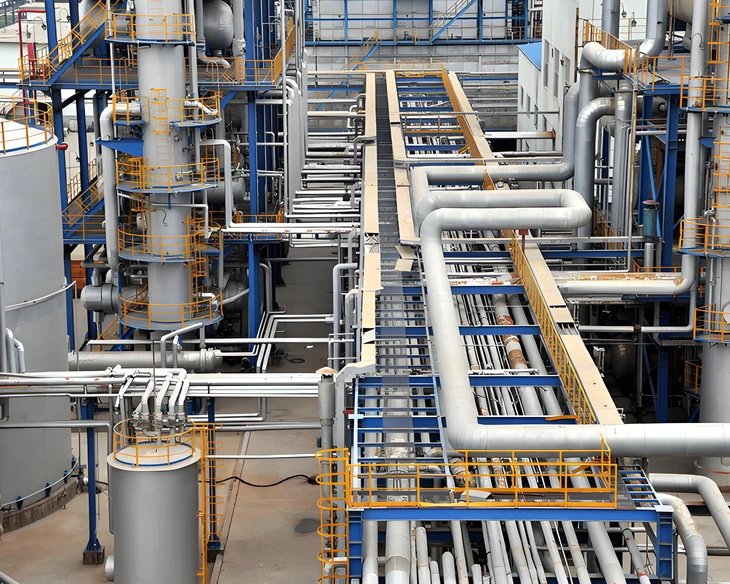
Chemical-process pipeline isolation
Material grade, dimensions, condition and inspection must be matched to the application requirements.

Refinery, energy and maintenance line breaking
Material grade, dimensions, condition and inspection must be matched to the application requirements.
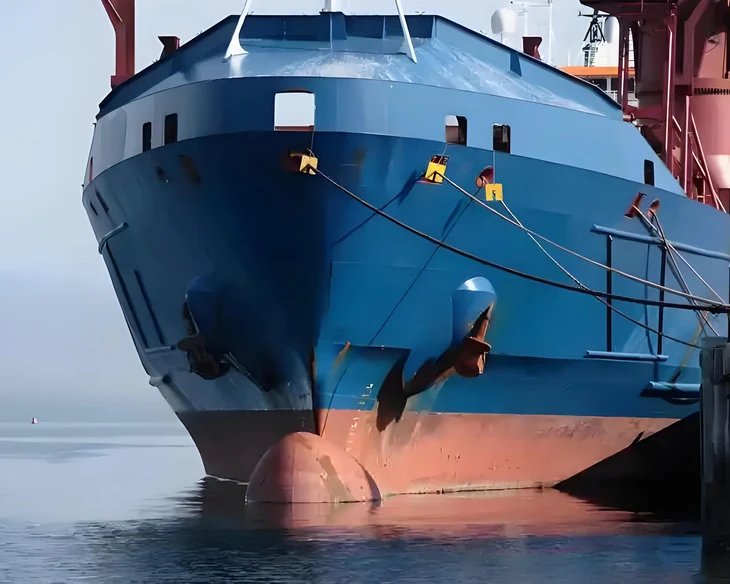
Marine, desalination and corrosive utility systems
Material grade, dimensions, condition and inspection must be matched to the application requirements.
FAQ
What is the difference between a spectacle blind and a blind flange?
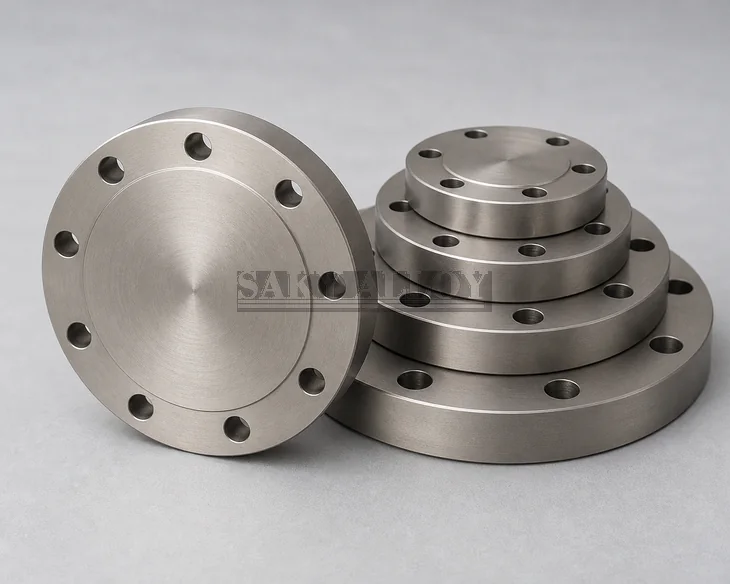
A spectacle blind is an operational line blank installed between two flanges and rotated between open and closed positions. A blind flange is a bolted flange used to terminate a line or nozzle.
Why use a spectacle blind instead of separate paddles?
Its integral figure-eight construction keeps the blind and spacer together and provides a visible operating position, but it requires enough clearance to rotate the assembly.
What information is required for quotation?
Provide standard and revision, NPS/DN, class, grade, facing, bore, thickness, handle orientation, service, quantity, marking, testing and certificates.
Leave Your Message

Related Technical Guides
Titanium Plate Flange vs Forged Flange
Compare manufacturing route, standard scope and pressure-service qualification.
Read technical guideSpectacle Blind vs Paddle Blind and Spacer
Compare operational line-isolation arrangements.
Read technical guideHow to Specify a Titanium Spectacle Blind
Define class, facing, thickness, material and marking.
Read technical guide