Titanium Carriage Bolts vs Hex Bolts: Which Joint Geometry Fits the Application?
Titanium carriage bolts and titanium hex bolts may use the same material grade and thread, but they solve different joint-access and anti-rotation problems. The correct choice depends on head geometry, mating-hole design, tool access, preload and inspection—not on material grade alone.
Head and Anti-Rotation Differences
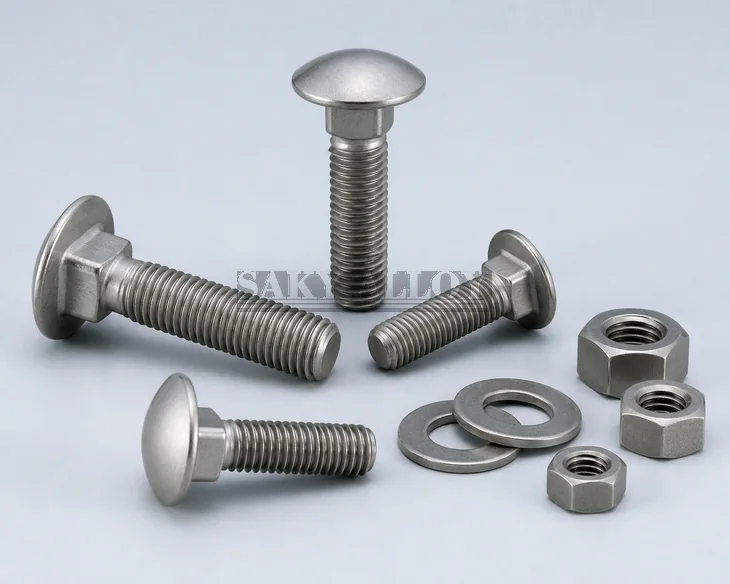
A carriage bolt has a low-profile round head and a square neck beneath the head. The neck is intended to seat in a compatible square hole or material that can restrain rotation while the nut is tightened. A hex bolt uses wrenching flats on the head, so installation normally requires tool access on both the head and nut sides.
When a Carriage Bolt Is Useful
- A smooth exposed head is required
- Head-side tool access is limited
- The mating structure can properly seat and restrain the square neck
- The joint drawing controls neck, hole and bearing geometry
The mating material must be strong enough to resist neck rotation without crushing or elongating the hole. Titanium does not remove this joint-design requirement.
When a Hex Bolt Is Better
- Controlled wrenching is required from the head side
- The joint uses a round clearance hole
- Higher installation flexibility is needed
- Inspection or maintenance procedures require conventional tooling
For either form, specify thread fit, engagement, mating nut and washer, lubrication or anti-galling treatment, preload method and service environment.
Grade 2 or Grade 5?
Grade 2 is commonly selected for corrosion resistance and useful ductility. Grade 5 Ti-6Al-4V is selected when higher source-material strength-to-weight ratio is required. Finished-fastener acceptance still depends on geometry, manufacturing condition and the expressly invoked specification.
Select the Joint Form Before Requesting a Quote
Review Grade 2 carriage bolts, Grade 5 carriage bolts and Grade 5 hex bolts and nuts. Send the drawing, grade, thread, length, quantity, joint materials and inspection requirements.
RFQ Checklist
- Bolt form and dimensional reference
- Material grade and condition
- Head, square-neck or hex dimensions
- Thread, length, grip and quantity
- Mating-hole and bearing-surface details
- Finish, lubrication, tests and certificates