
Titanium Shoulder Bolts vs Socket Head Cap Screws: Key Design Differences
Titanium shoulder bolts and socket head cap screws can share an internal-hex drive and similar head shape, but their functional geometry is different. A shoulder bolt provides a precision unthreaded diameter for locating, guiding or carrying transverse load. A socket head cap screw is primarily selected to clamp components through threaded engagement.
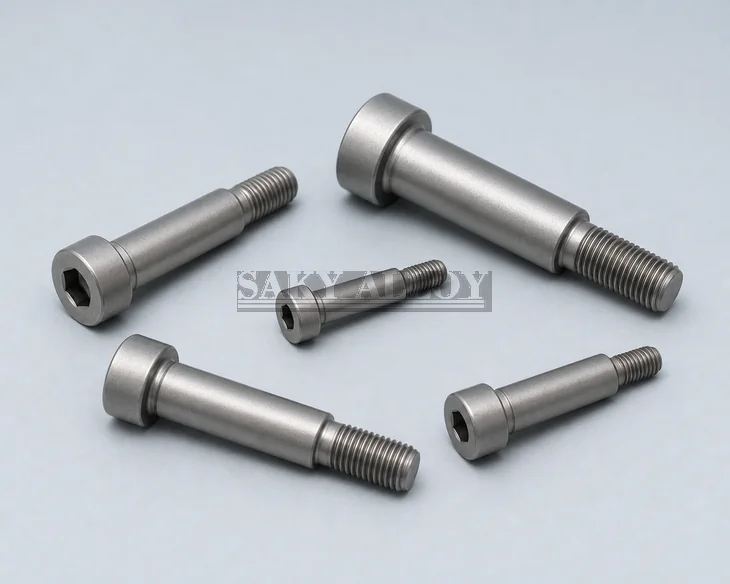
Functional Difference
The shoulder of a shoulder bolt can act as an axle, spacer, guide or controlled bearing surface. Its diameter, length, finish and relationship to the mating bore are critical. A socket head cap screw normally develops joint clamp load, and its unthreaded shank is not automatically a precision locating surface.
Load Path and Fit
When transverse load or controlled movement is intended, the design should place that duty on the specified shoulder and compatible bore. A cap screw joint generally relies on preload and friction between clamped components, with the screw geometry and thread engagement selected for the required clamp load. Neither form should be substituted without checking the load path.
When to Select a Shoulder Bolt
- A precise pivot, guide or locating diameter is required
- Usable shoulder length controls component spacing
- Runout or surface finish affects motion
- The drawing defines a shoulder-to-bore fit
When to Select a Socket Head Cap Screw
- The main requirement is clamping
- Compact wrenching access is needed
- A conventional clearance hole and threaded joint are used
- No precision bearing shoulder is required
Grade 2 or Grade 5 Titanium
Grade 2 is often selected for corrosion resistance and useful ductility, while Grade 5 Ti-6Al-4V is used when higher source-material strength-to-weight ratio is required. Finished-fastener capability still depends on geometry, condition, manufacturing route, inspection and the complete joint design.
Match the Fastener Form to the Joint Function
Review Grade 2 titanium shoulder bolts, Grade 5 titanium shoulder bolts and Grade 5 titanium socket head cap screws. Provide the drawing, load path, fit, thread, quantity and inspection requirements for review.
Information to Include in an RFQ
- Fastener form and dimensional reference
- Material grade and condition
- Shoulder or shank dimensions and tolerances
- Thread, engagement, grip and quantity
- Joint function, load and mating materials
- Surface, lubrication, tests and certificates