
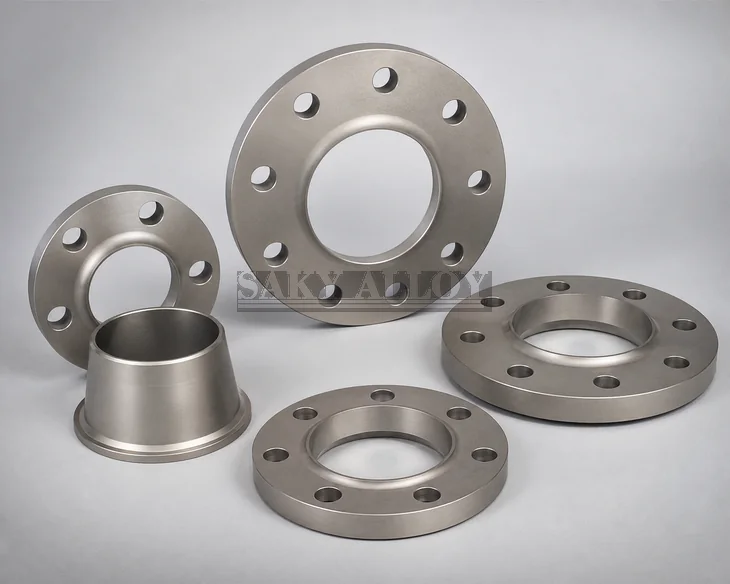
Titanium Lap Joint Flange
Titanium Lap Joint Flange supplied by grade, material standard, nominal size, pressure class, facing, bore, bolt pattern, connection details, inspection and documentation.
- Grades
- Grade 2, Grade 5, Grade 7, Grade 12 or specified grade
- Material
- ASTM B381 / ASME SB381 as applicable
- Dimensions
- ASME B16.5 or approved EN/DIN/JIS/customer drawing
- Documents
- MTC, dimensions and heat/lot traceability
Product Detail
Product Introduction
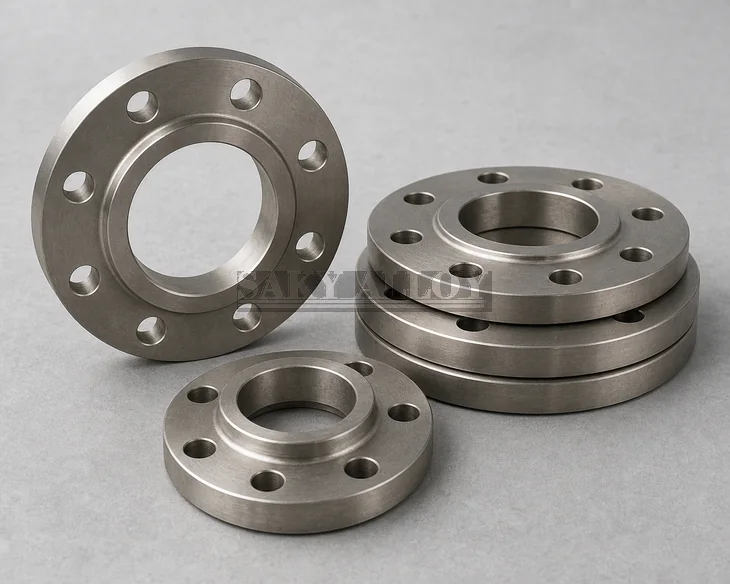
Titanium Lap Joint Flange is a forged and machined titanium piping component identified by its rotating backing flange used with a matching stub end. Material grade, dimensional standard, nominal size, pressure class, facing, mating component and service conditions must be reviewed together.
When is a titanium lap joint flange used?
Selection answer: A lap joint assembly combines a backing flange with a compatible stub end, allowing the flange to rotate for bolt-hole alignment. The wetted stub-end material and backing-flange material must be specified separately.
Selection boundary: The backing flange and stub end are not one interchangeable component. Define their materials, dimensions, lap geometry, facing, pipe schedule, corrosion exposure and pressure design as a complete assembly.
RFQ data to confirm: Provide stub-end and backing-flange materials, NPS, class, dimensional standard, facing, pipe schedule, lap and radius geometry, design conditions, quantity, inspection and certificates.
Product Specifications
| Product | Titanium Lap Joint Flange | Grade | Titanium Grade 2, Grade 5, Grade 7, Grade 12 or specified alloy |
|---|---|---|---|
| Standard | ASTM B381 / ASME SB381 may govern titanium-alloy forgings; ASME B16.5 or an approved EN, DIN, JIS or project standard may govern dimensions, pressure class and facing. The applicable piping code and project specification control selection and rating. | Size & Form | NPS/DN and Class/PN according to the specified dimensional standard or customer drawing |
| Tolerance | Applicable material/dimensional standard and order-defined bore, hub, facing, bolt circle, hole and connection tolerances | Supply Condition | Forged and machined with protected sealing faces, individual identification and reinforced export-case packing |
| Inspection | MTC and heat traceability, PMI when specified, nominal size and pressure class, OD and thickness, bore and connection geometry, bolt circle and holes, facing and surface finish, visual inspection and supplementary NDE when required. | Documents | MTC, heat/lot traceability and agreed inspection reports |
Additional Supply & Ordering Details
Useful, technically consistent information consolidated from earlier product pages.
| Connection function | A lap-joint flange is a loose backing flange used with a compatible stub end. It does not provide the process-wetted sealing lap by itself. |
|---|---|
| Critical dimensions | State NPS, class, dimensional standard, bore, hub or radius clearance, bolt drilling, flange thickness, backing-flange material and the exact mating stub-end geometry. |
| Assembly boundary | Confirm rotation clearance, stub-end lap OD and thickness, facing contact, gasket, bolting and galvanic compatibility. Stub end and backing flange must be reviewed as a pair. |
| Inspection focus | Inspect bore and radius clearance, flange thickness, OD, bolt circle and holes, surface, marking and traceability, then verify free rotation and mating fit with the stub end. |
Send the complete material RFQ
Include grade, specification revision, dimensions, tolerance, quantity, condition, tests and destination.
Chemical Composition
Weight percent; maximum unless a range is shown. Titanium is the balance. The ordered specification and grade control.
| Grade / UNS | Principal Alloying Elements | Fe max | O max | C max | N max | H max | Ti |
|---|---|---|---|---|---|---|---|
| Grade 2 / R50400 | — | 0.30 | 0.25 | 0.08 | 0.03 | 0.015 | Balance |
| Grade 5 / R56400 | Al 5.50–6.75; V 3.50–4.50 | 0.40 | 0.20 | 0.08 | 0.05 | 0.015 | Balance |
| Grade 7 / R52400 | Pd 0.12–0.25 | 0.30 | 0.25 | 0.08 | 0.03 | 0.015 | Balance |
| Grade 12 / R53400 | Mo 0.20–0.40; Ni 0.60–0.90 | 0.30 | 0.25 | 0.08 | 0.03 | 0.015 | Balance |
Mechanical Properties – Annealed Material Reference
| Grade | Ultimate Tensile Strength min | 0.2% Yield Strength min | Elongation min |
|---|---|---|---|
| Grade 2 | 345 MPa | 275 MPa | 20% |
| Grade 5 | 895 MPa | 828 MPa | 10% |
| Grade 7 | 345 MPa | 275 MPa | 20% |
| Grade 12 | 483 MPa | 345 MPa | 18% |
Representative minima only. Product form, section size, heat treatment and the invoked specification determine the certified acceptance values.
Typical Physical Properties
| Grade | Density | Elastic Modulus | Thermal Expansion |
|---|---|---|---|
| Grade 2 | 4.51 g/cm³ | Approx. 105 GPa | Approx. 8.6 µm/m·K |
| Grade 5 | 4.43 g/cm³ | Approx. 114 GPa | Approx. 8.6 µm/m·K |
| Grade 7 | Approx. 4.51 g/cm³ | Approx. 105 GPa | Approx. 8.6 µm/m·K |
| Grade 12 | Approx. 4.54 g/cm³ | Approx. 103 GPa | Approx. 8.6 µm/m·K |
Typical engineering references, not inspection acceptance limits.
Certificates & Inspection Records
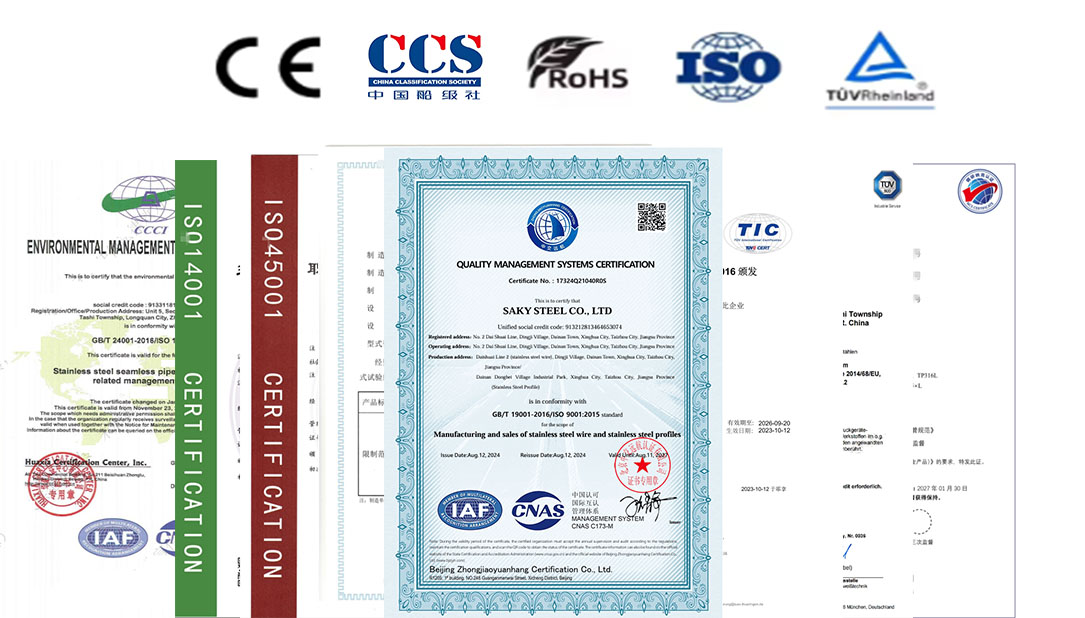
Services We Can Provide
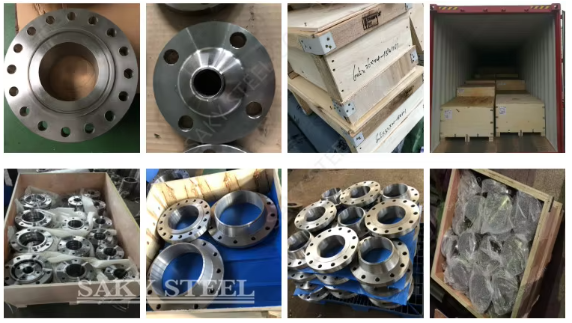
Product Packaging
Machined faces, bores and bevels are protected with covers or wrapping. Flanges are separated by grade, size and heat, then secured in reinforced export cases with traceability labels. Typical export packaging for the same physical product form is shown below; final packing is confirmed for each order.
Application Scenarios

Systems using stub ends where bolt-hole alignment and replaceable backing flanges are required
Material grade, dimensions, condition and inspection must be matched to the application requirements.

Chemical processing and corrosion-resistant piping
Material grade, dimensions, condition and inspection must be matched to the application requirements.
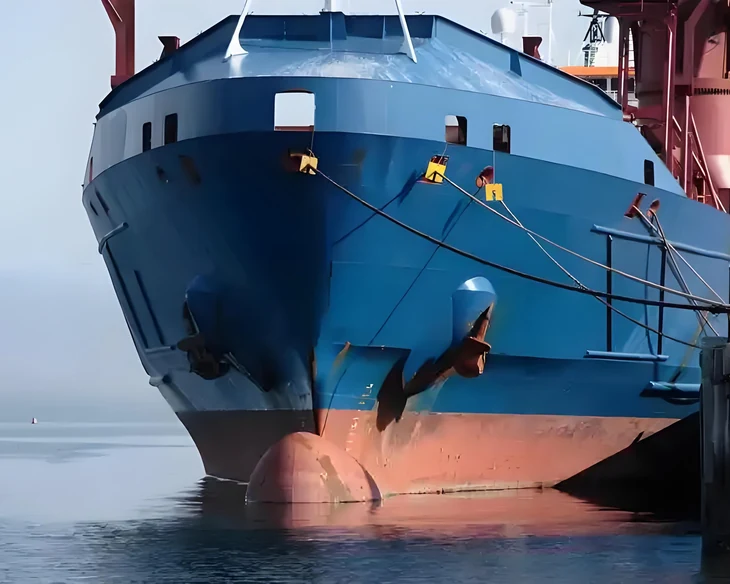
Marine, desalination and industrial equipment connections
Material grade, dimensions, condition and inspection must be matched to the application requirements.
FAQ
Does ASTM B381 define flange pressure class and dimensions?
No. ASTM B381 primarily covers titanium forgings. State the separate dimensional standard, size, class or PN, facing and project requirements.
Which titanium grade should be selected?
Grade selection depends on service chemistry, temperature, strength, mating materials, fabrication and the governing project specification.
What information is required for quotation?
Provide grade, material and dimensional standards, size, class/PN, facing, bore or connection details, quantity, NDE and certificates.
Leave Your Message
Related Technical Guides
Titanium Flange Types and Selection
Compare connection method, facing and ordering data.
Read technical guideWhat Types of Titanium Flanges Are There?
Review common flange families.
Read technical guideTitanium RFQ Checklist
Prepare grade, dimensions and documentation.
Read technical guide